
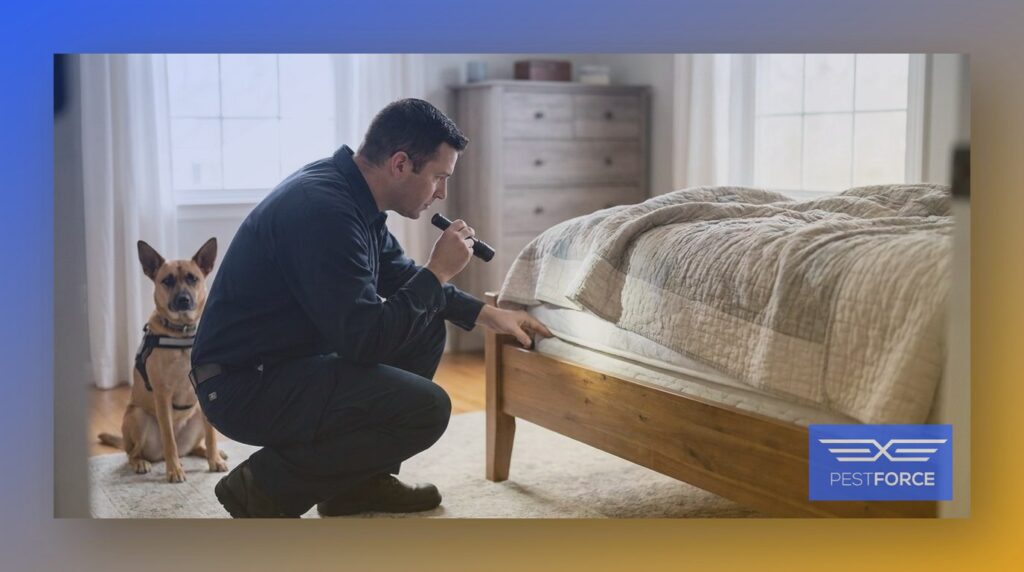
Bed bugs rank among the most psychologically distressing and difficult household pests to eliminate in the United States. Georgia’s warm climate, heavy tourism traffic through Atlanta, the I-85 corridor, and college towns, plus dense transient housing, keep bed bug infestations a persistent statewide problem. Bed bugs spread through luggage, used furniture, and shared walls, and store-bought sprays rarely finish the job. Pest Force resolves bed bug infestations across Georgia with K9 detection and professional heat and chemical treatments.
What are bed bugs, and what do they look like at each life stage?
Bed bugs are small, wingless, blood-feeding insects. Adults measure roughly 5 to 7mm, about the size of an apple seed, with flat oval bodies that shift from mahogany-brown to reddish after feeding. Nymphs and eggs are smaller, lighter, and far easier to miss.
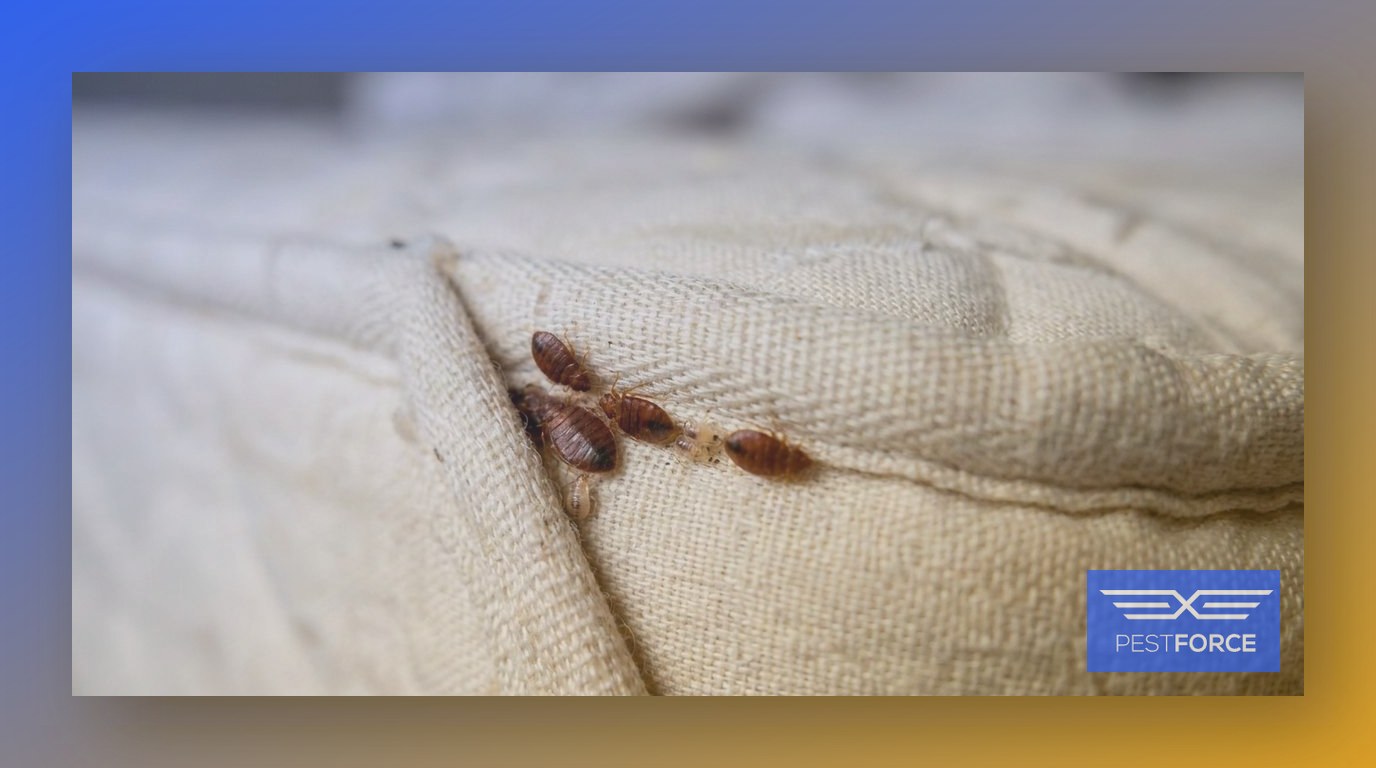
Penn State Extension describes the adult bed bug as about 1/4 inch long, oval, reddish-brown, and wingless. A blood meal takes about 3 to 10 minutes, and the body swells and deepens to a darker red as it fills. Penn State Extension also reports that nymphs can survive several months without a meal, which is why a vacant room does not starve an established population.
The bed bug life cycle has three visible stages:
- Eggs. Bed bug eggs have a 1mm size and a translucent white color that makes them nearly invisible to the naked eye on pale surfaces. A female lays 1 to 5 eggs per day, depositing them in tight clusters inside concealed harborage sites where they stay glued until hatching.
- Nymphs. Virginia Cooperative Extension at Virginia Tech confirms five nymph stages (instars), and each one requires a blood meal before the insect can molt to the next stage. First instars measure about 1/16 inch and fifth instars about 1/6 inch, with yellowish-white, translucent bodies that blend into bedding and light fabric.
- Adults. Both male and female bed bugs must take regular blood meals in order to reproduce, according to Virginia Cooperative Extension at Virginia Tech. Under favorable indoor conditions a fed nymph reaches the next instar within about 5 days, and the full egg-to-adult cycle can complete in roughly 37 days at temperatures above 72°F. That speed is how two hitchhikers in a suitcase become a whole-house problem.
Cimex lectularius is an obligate blood-feeding ectoparasite that survives solely on human and warm-blooded animal blood, and it accounts for nearly every infestation treated across Georgia. The tropical bed bug, Cimex hemipterus, is occasionally identified in South Georgia near the Florida border; it is slightly more elongated than Cimex lectularius and requires the same treatment protocols. The bed bug species and anatomy documents the physical differences technicians use to confirm an identification.
Bed bugs have no association with filth. Carbon dioxide and body heat are the sole attractants, so a spotless luxury hotel room is every bit as viable as an untidy apartment. Cleanliness is irrelevant to infestation risk, and this misconception causes real harm: homeowners delay calling out of embarrassment while the population multiplies. Hiding locations follow the host, not the housekeeping. Primary harborages include mattress seams, box spring folds, headboard crevices, baseboards, electrical outlets, and picture frames.
Knowing what each stage looks like is the difference between catching an infestation at the first instar and finding it after several generations.
How do you detect a bed bug infestation in your home?
You detect a bed bug infestation by finding physical evidence: rusty blood smears on sheets, dark fecal spots along mattress seams, shed exoskeletons near hiding spots, and live bugs. Bites alone cannot confirm bed bugs because many people never react.
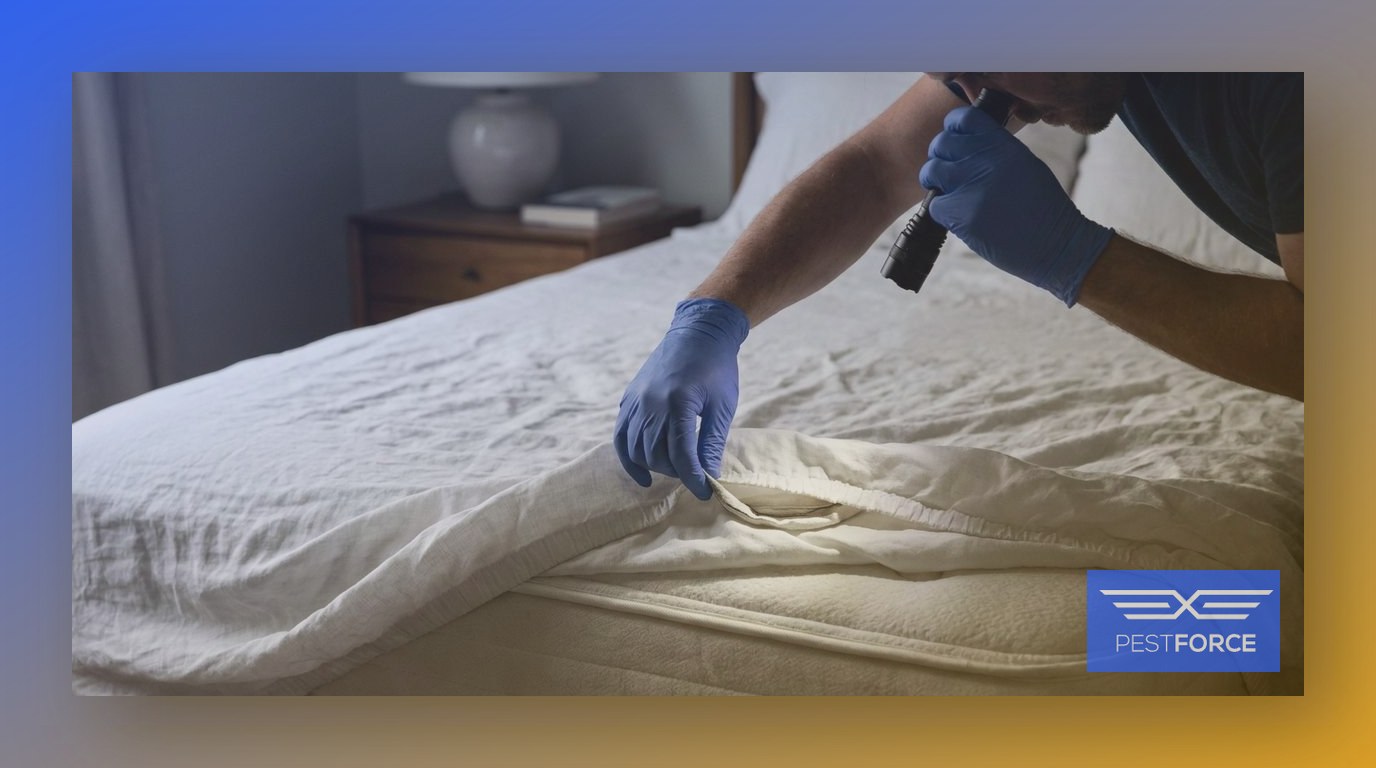
Work the room in this order:
1. Strip the bed and read the sheets. Rusty or reddish smears mark spots where sleepers crushed fed bugs overnight. Dark fecal spots cluster along mattress seams and nearby walls. According to the Georgia Department of Public Health (2022), fecal spots are partially digested blood that will not flake off when rubbed but will smear when wiped with a wet rag, which separates them from ordinary lint or dirt.
2. Drag the seams with a card. A flashlight and a credit card are the standard DIY toolkit. Pull the card through mattress seams, piping, tags, and box spring folds to push hiding bugs and debris into the open. Shed exoskeletons (cast skins) collect wherever bed bugs harbor, and their presence confirms an active, growing population.
3. Check behind the furniture. Bed bugs hide within a few feet of where people sleep, so inspect behind the headboard, inside nightstand joints, and along baseboards. A flashlight held at a low angle makes flat insects and eggs cast shadows.
4. Treat bites as a clue, never as proof. Bed bug bites typically appear as linear or clustered welts on exposed skin like arms, neck, and shoulders. Reactions vary wildly, though. A 2010 Pest Control Technology survey found that almost one in three people (30%) who harbored bed bugs reported no perceived reaction to bites, so an infestation can grow for weeks before anyone itches.
5. Bring in a nose when eyes find nothing. Pest Force’s K9 bed bug detection has an accuracy rate superior to visual-only inspection, and trained detection dogs locate live bed bugs and viable eggs behind walls and under flooring before a visible infestation establishes. Pest Force provides dog-assisted bed bug detection for Georgia homes and businesses and delivers a verified map of the infestation before treatment begins.
What are the most effective bed bug treatment options?
Professional heat treatment ranks as the most effective bed bug treatment option: one visit at 120–140°F kills adults, nymphs, and eggs without chemicals, while licensed technicians also eliminate infestations through residual insecticide protocols and combined inspection, treatment, and follow-up confirmation programs.
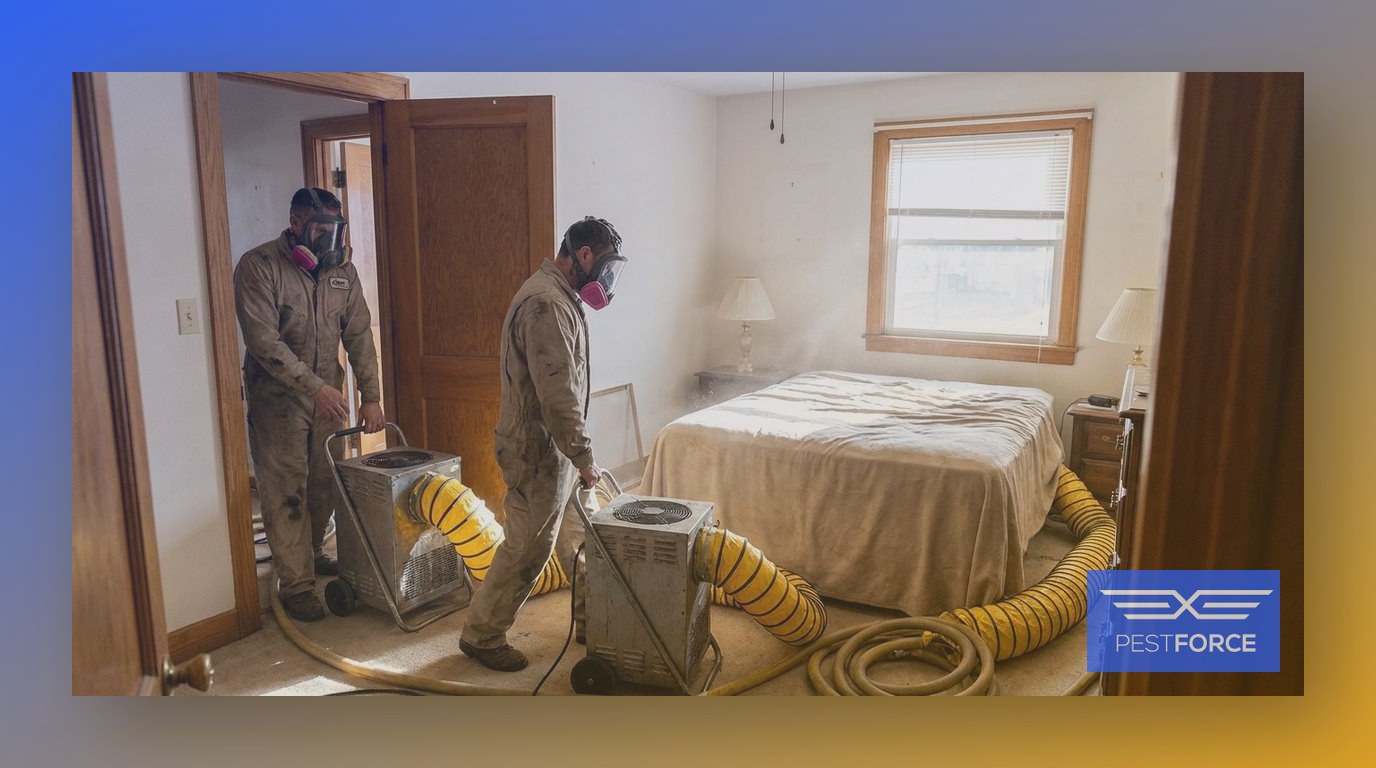
- Professional heat treatment. Professional heat treatment raises entire rooms or structures to 120–140°F for several hours and kills all life stages, including eggs, in a single treatment. The Georgia Department of Public Health cites a label standard of 140°F for two hours or 130°F for three hours, and the U.S. EPA recommends heating infested areas to at least 120°F for 90 minutes to ensure eggs die. Pest Force backs every heat treatment with a 100% Happy or You Don’t Pay guarantee.
- Professional chemical treatment. Licensed applicators apply residual insecticides, typically pyrethroids and neonicotinoids, directly to harborage sites across a multi-visit protocol. The Georgia Department of Public Health reports that insecticides alone are likely insufficient and that applicators must combine insecticide treatment with removing and cleaning infested harborage sites plus a follow-up detection program.
- Combined IPM protocol. The professional standard of care sequences inspection, treatment, and a follow-up confirmation visit. Georgia homeowners and business owners can book the complete bed bug infestation treatment through Pest Force.
- DIY sprays and foggers. DIY bed bug sprays and foggers explicitly do not reach the harborage sites where bed bugs live: inside wall voids, box springs, and electrical outlets. Fogging an infested room disperses bed bugs deeper into the structure, leaving hidden populations intact and causing reinfestation. Scattered populations make the infestation harder and more expensive to treat professionally afterward.
- Diatomaceous earth. Diatomaceous earth kills bed bugs through physical desiccation rather than chemistry, so diatomaceous earth works as a supplement dusted at entry points, never as a standalone cure. Consumers comparing home remedies for bed bug control will find that consumer measures help at entry points and fail inside established harborage.
- Dryer heat. A clothes dryer on high for 30 or more minutes kills all bed bug life stages on clothing and small fabric items; dryer heat helps immediately while awaiting professional treatment but cannot treat furniture or structural harborage.
How do bed bugs spread, and what puts Georgia homes at higher risk?
Bed bugs spread by hitchhiking on objects, not through person-to-person contact. Travelers and renters introduce bed bugs into Georgia homes through four primary vectors, and Georgia’s travel volume and college rental markets raise introduction risk above rural, lower-traffic states.
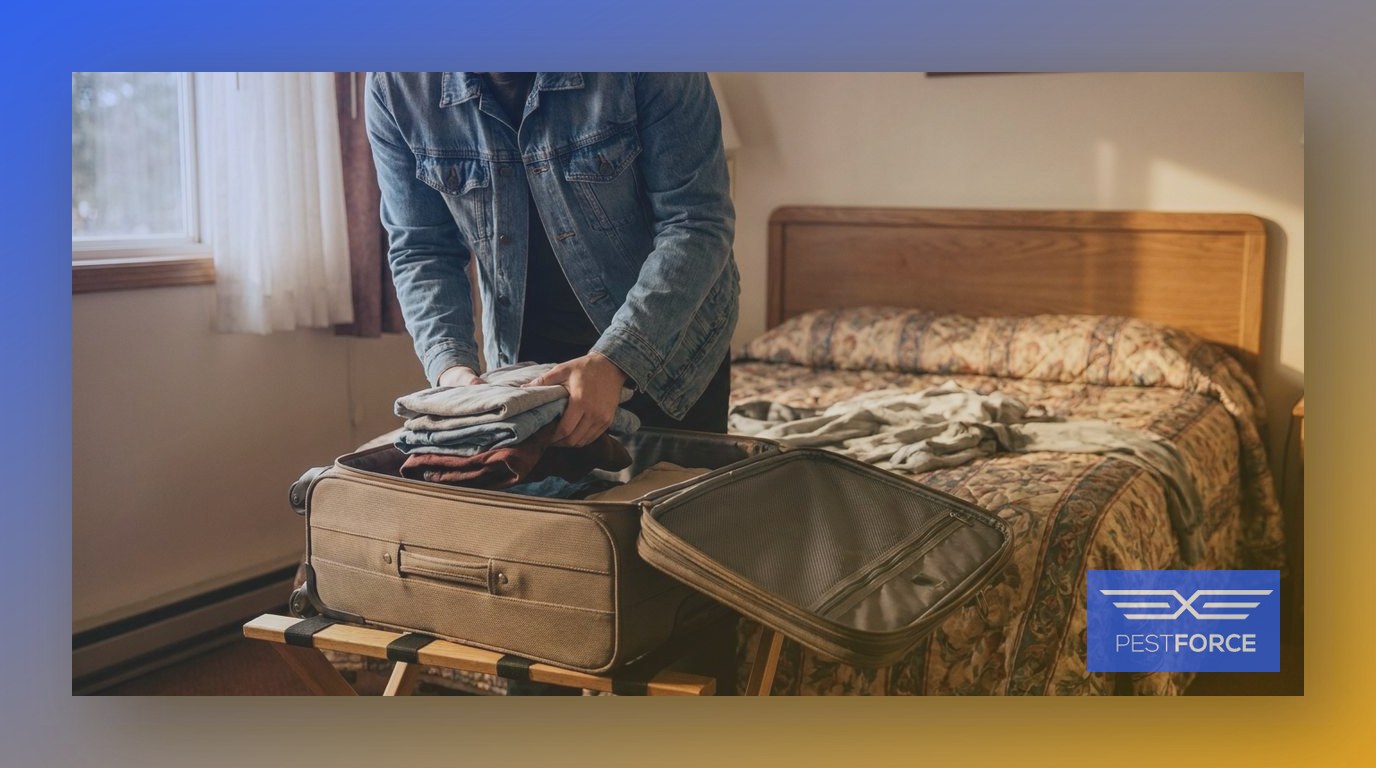
1. Luggage from hotels and motels. Bed bugs climb into suitcases during overnight stays and ride home. 2. Used or secondhand furniture. Infested mattresses, couches, and bed frames carry live bugs and eggs into a bedroom. 3. Clothing in shared laundry facilities. Bed bugs transfer between loads in laundromats and apartment laundry rooms. 4. Moving boxes. Cardboard from infested storage or another unit relocates an established population.
A bed bug will not crawl from one person’s body to another’s. Bed bugs hitchhike on belongings, not bodies.
For Georgia households, the two highest-risk introduction events are renters moving between units and travelers returning from Atlanta conferences. The I-85 and I-20 corridors, Atlanta’s hotel density, and the University of Georgia and Georgia College student rental markets create above-average introduction vectors. Georgia’s travel and college-town density causes elevated bed bug introduction risk relative to rural, lower-traffic states. PubMed Central reports that pyrethroid resistance in bed bugs, documented repeatedly across the USA, has combined with increased international travel to drive the national resurgence.
In apartments and condos, bed bugs travel through wall voids and plumbing chases between adjoining units, so a neighbor’s infestation becomes yours. Georgia renters should notify the landlord in writing immediately upon discovery, because under Georgia landlord-tenant law landlords in multi-unit properties may bear responsibility for treatment costs when an infestation originates from a shared space or adjacent unit.
Georgia homeowners and property managers rely on Pest Force bed bug expertise when infestations spread through Georgia hotels, student rentals, and multi-unit buildings. Bed bugs never swarm or tunnel through structures the way termites do; readers researching wood-destroying pests can consult the authoritative Georgia termite handbook.
How do you prevent bed bugs from entering your home?
Preventing bed bugs requires four habits: inspect hotel rooms before unpacking, refuse secondhand upholstered furniture from unknown sources, seal mattresses and box springs in encasements, and monitor bed legs with interceptor traps. Travelers carry most infestations home in luggage, so travel protocol matters most.
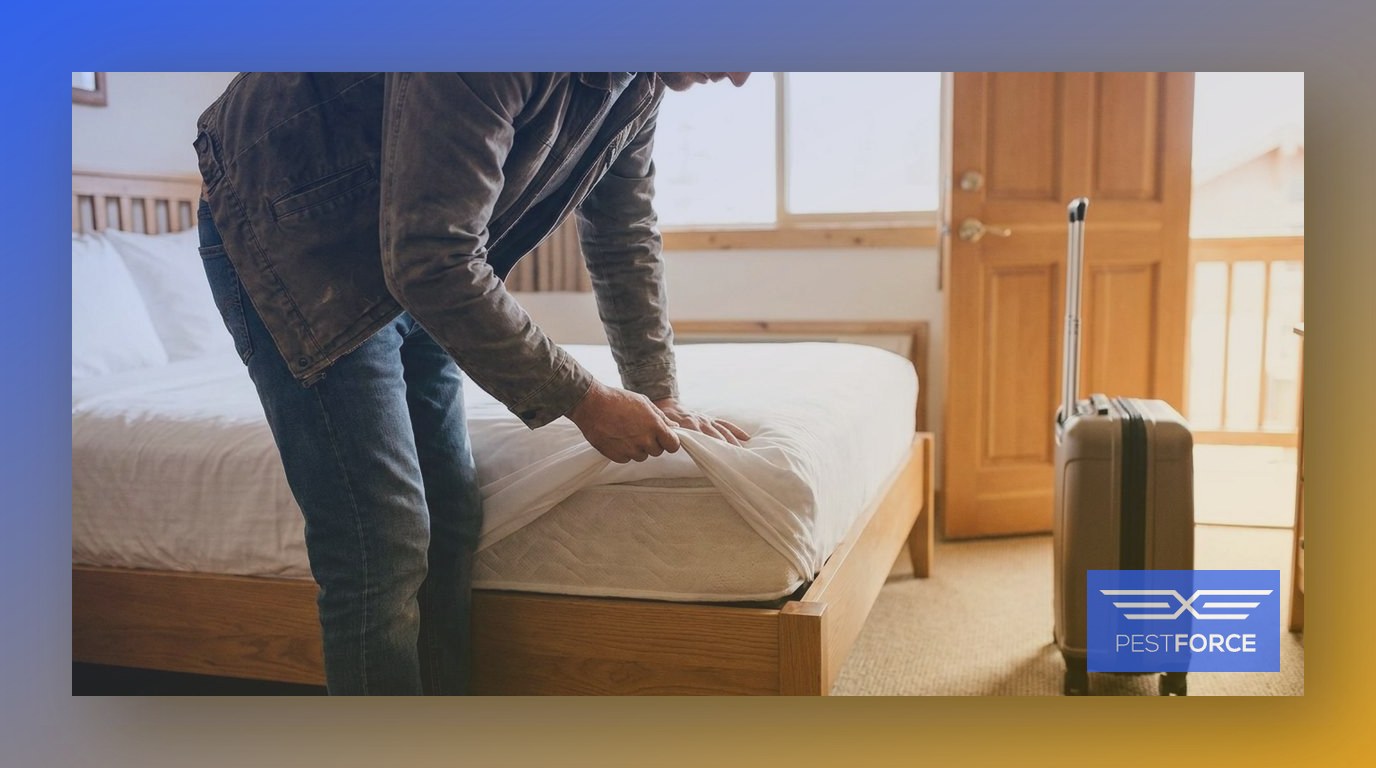
1. Inspect the hotel room on arrival. Pull back the headboard, check mattress seams for dark spots or shed skins, and examine the luggage rack before placing a bag on it. Pest Force recommends a set inspection order for hotels, rentals, and transit seating as part of avoiding bed bugs while traveling.
2. Store luggage on hard surfaces. Keep bags on a tile floor, a metal rack, or in the bathtub, since bed bugs climb fabric and carpet far more easily than smooth surfaces. On return, bag all clothing and launder it immediately on high heat.
3. Refuse curbside upholstered furniture. A free sofa with a hidden bed bug population costs far more in treatment than a new piece. Any secondhand upholstered item deserves a professional inspection before entering the home.
4. Seal mattresses and box springs in encasements. Encasements trap existing bed bugs inside and remove the seam hiding spots where bed bugs breed. Encasements alone do not eliminate an active infestation, since populations already established in baseboards, furniture, and walls remain untouched, a limit product marketing rarely mentions.
5. Set interceptor traps under bed legs. Interceptors catch bed bugs traveling to and from the bed, revealing an early-stage infestation weeks before bites or stains appear.
Bed bug bites do not transmit disease, and the CDC confirms no known pathogen transmission. Bed bug bites trigger allergic reactions, and scratching causes secondary skin infections. Established infestations also produce documented psychological distress, including insomnia, anxiety, and hypervigilance, so prompt treatment protects health, not just comfort.