
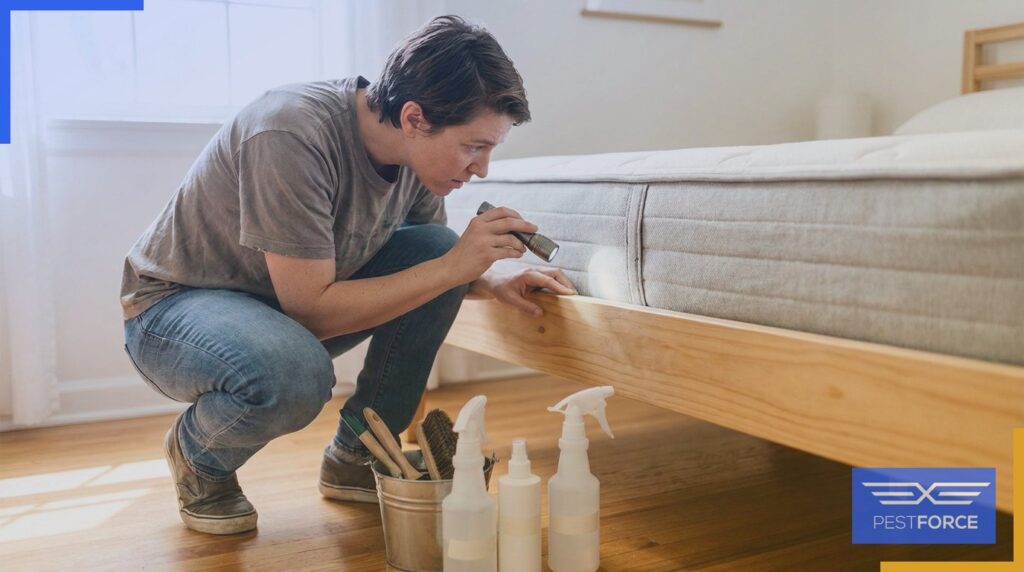
DIY bed bug treatments can suppress small, early-stage infestations when the homeowner applies the treatments correctly and in combination. Every consumer method has a hard ceiling: steam, dryer heat, vacuuming, diatomaceous earth, and over-the-counter sprays cannot reach bed bugs inside wall voids, furniture frames, or deep harborage sites. Professional heat treatment and targeted pesticide programs reach those hidden populations. DIY bed bug treatment succeeds or fails based on infestation size, spread, and how fast the homeowner acts.
Do DIY bed bug treatments actually work?
DIY bed bug treatments do work, with one hard limit: DIY bed bug treatments apply to early-stage, localized infestations only, not multi-room or multi-month infestations. Success requires combining mechanical removal, heat, and a residual barrier across 2 to 4 weeks of repeated effort.
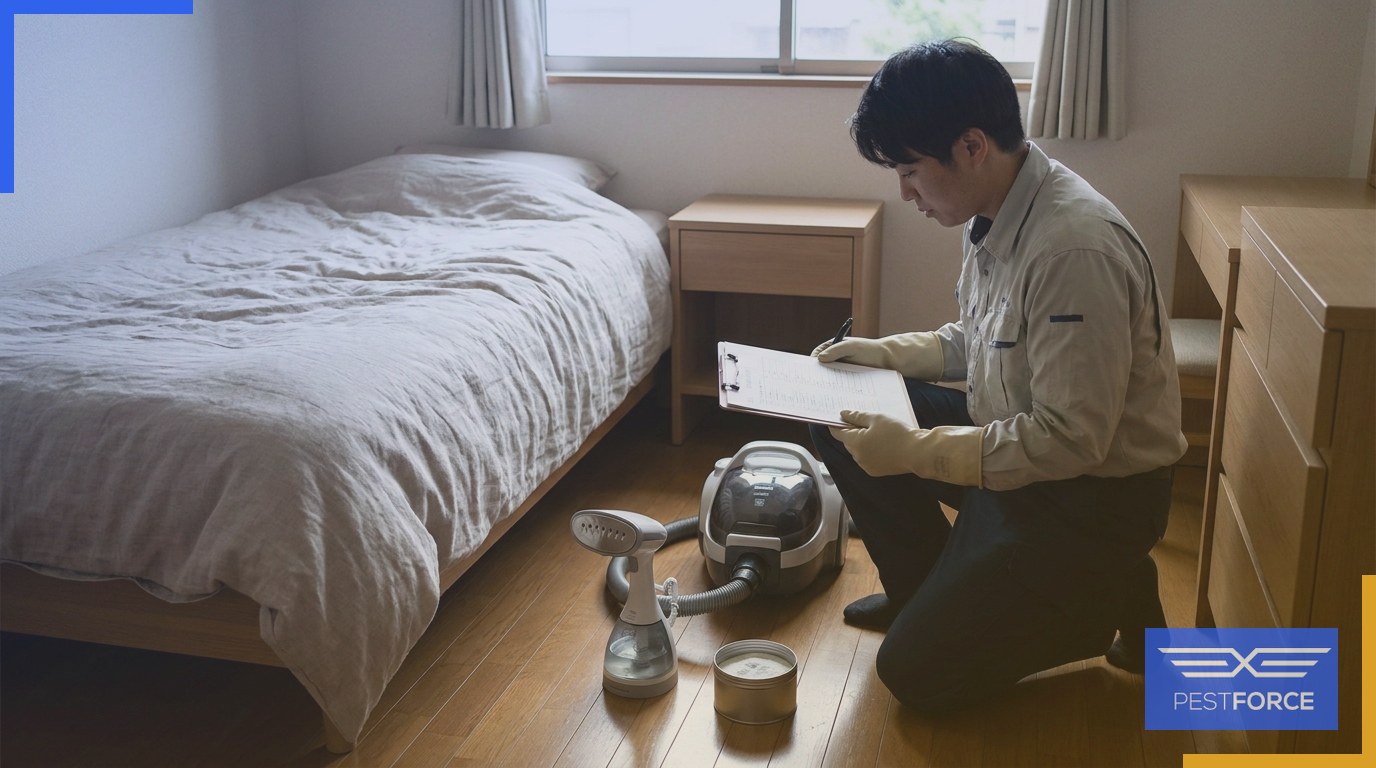
Effectiveness collapses once bed bugs spread beyond a single room or establish harborage inside wall voids, outlet boxes, or furniture framing. A population hiding behind baseboards or inside a couch frame sits beyond the reach of any consumer tool. Store-bought products then kill the bugs you can see and miss the bed bugs doing the reproducing.
No single DIY method is sufficient to eliminate a bed bug infestation, and single-method reliance causes most DIY failures. Steam kills on contact but leaves no residue. Diatomaceous earth kills crawlers only after days of contact. Vacuuming removes live bugs but reaches nothing sealed inside a wall. The only functional DIY approach runs all three methods together: vacuuming for immediate removal, steam or a hot dryer cycle for heat, and diatomaceous earth as the residual barrier that keeps killing after the steamer goes back in the closet.
Bed bug eggs are the hardest target in the room. Most over-the-counter sprays do not kill eggs, so one treatment round always leaves a surviving population that hatches within days. That hatch is why successful DIY takes weeks of repeated passes rather than one Saturday afternoon. Each follow-up round catches newly hatched nymphs before the nymphs mature and lay new eggs.
Mattress and box spring encasements make a useful adjunct: an encasement traps surviving bugs inside to starve and eliminates the mattress as a harborage site. Encasements kill nothing on their own, and encasements must stay on for at least a year because bed bugs survive months without feeding.
Homeowners weighing these odds can use the professional treatment effectiveness comparison in DIY bed bug treatment to see how consumer methods stack up against licensed protocols. When DIY Bed Bug Treatments Fail: Signs You Need a Professional details the failure pattern behind why DIY pest control often falls short. Georgia homes display this pattern every season. Early infestations respond to disciplined combined effort, and established infestations do not.
How does steam treatment kill bed bugs, and what are its limits?
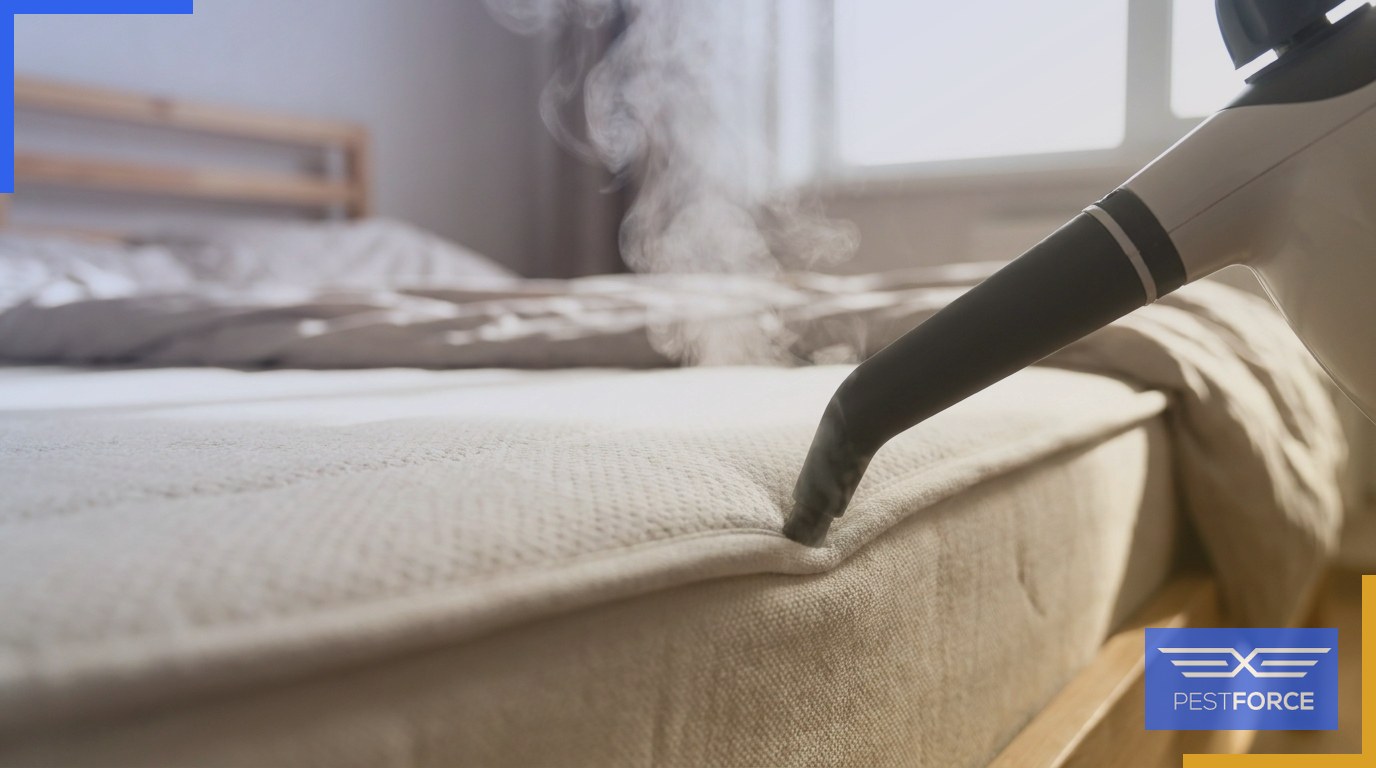
Steam treatment requires sustained surface contact at or above 160°F (71°C) to kill bed bugs and eggs on contact. Steam heats surfaces only, so bed bugs inside wall voids, deep inside box springs, or behind baseboards survive even careful treatment.
A 2011 University of Minnesota study found the lethal temperature for 99% kill was 48.3°C (118.9°F) for adults and 54.8°C (130.6°F) for eggs, yet eggs survived seven hours of exposure at 45°C (113°F). Professionals target 160°F at the surface because the extra heat guarantees a margin of safety.
Dry steam outperforms wet steam on mattresses and upholstery, because wet steam penetrates no deeper than dry steam while the excess moisture soaks fabric and promotes mold. The nozzle must move at roughly one inch per second so the surface itself climbs past the lethal threshold instead of flashing warm and cooling off. The Georgia Department of Public Health confirms that steam kills all life stages of bed bugs, including the eggs, and the department’s guidance stresses that treatment takes time and steps must be repeated.
The most common homeowner failure is speed. Most people sweep the nozzle across a mattress the way they run a vacuum, and the surface never reaches 160°F. Speed creates a false sense of treatment coverage. The bed looks treated while the bugs under the piping survive, and steamed rooms rebound a few weeks later.
Equipment matters as much as technique. Consumer steamers with small boiler tanks lose pressure within minutes, and that pressure drop caps continuous coverage mid-room. Commercial-grade machines hold temperature and pressure through a full treatment, and professional services build steam treatment for bed bugs around that class of equipment.
Can you kill bed bugs with a household dryer?
A household dryer kills bed bugs at every life stage, eggs included, when the load reaches at least 120°F. Dryer heat is a reliable kill method for washable items when run on high heat for at least 30 minutes.
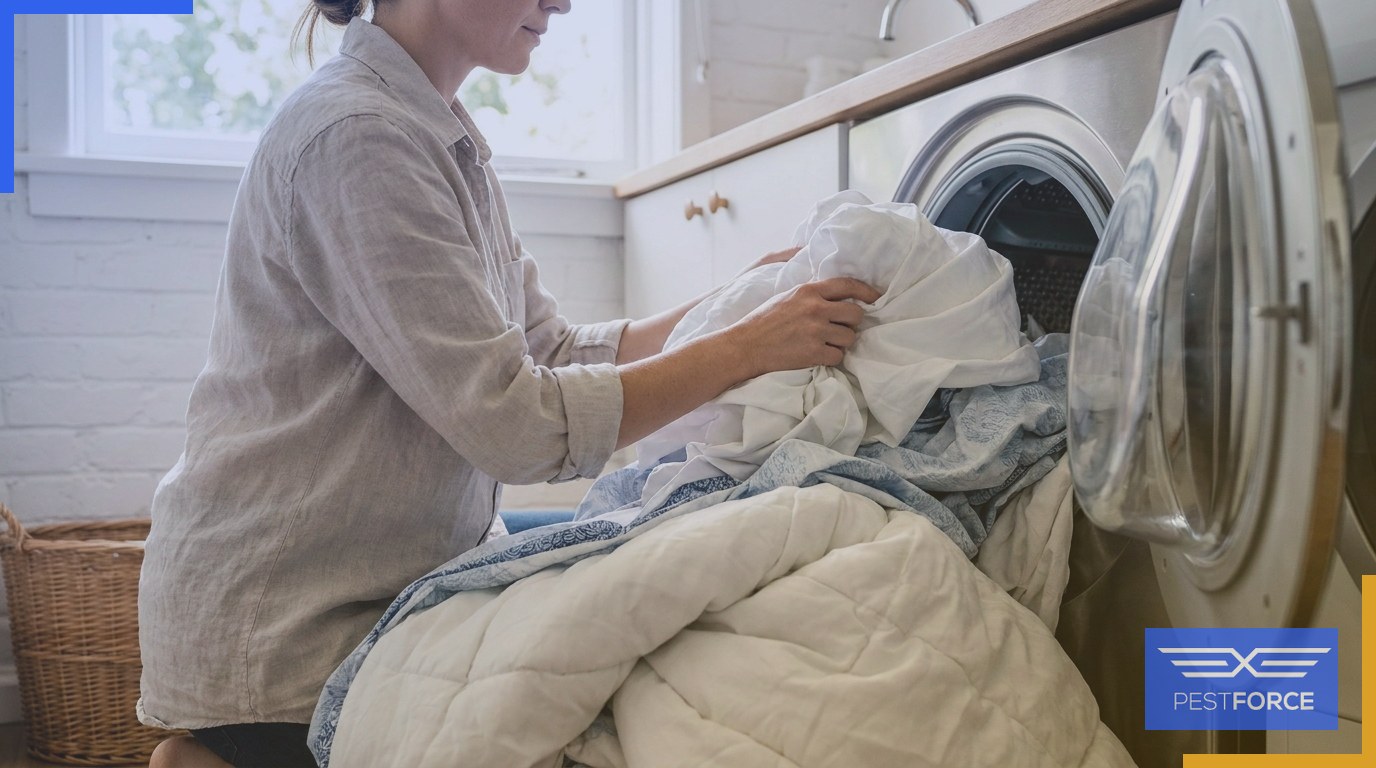
The U.S. Environmental Protection Agency (EPA) recommends that bedding and clothing go in a dryer on high heat for 30 minutes, and notes that washing alone generally does not kill bed bugs. Purdue University Extension Entomology confirms that hot-water washing with detergent, followed by at least 20 minutes of high-heat drying, kills all bed bug stages. The dryer outperforms steam because the machine sustains lethal temperature through every layer of the load, while steam kills only where the nozzle touches.
Load items dry. Wet fabric insulates bed bugs from heat and stretches the time needed to reach lethal temperature, so a damp load gives bed bugs a warm bath instead of a kill cycle.
Dryer treatment applies only to washable, heat-safe items. Furniture, mattresses, and electronics cannot go in a dryer, and the EPA advises that items that cannot be tumble-dried must be heated to at least 120°F (49°C) for 90 minutes to kill bed bug eggs. Homeowners unsure about material tolerance can review which fabrics dryer heat can safely treat before running a high-heat cycle. For small, heat-sensitive items such as electronics or books, a chest freezer held at 0°F kills bed bugs after at least four days of sustained cold. Consumer guidance rarely mentions freezing, yet the method is reliably lethal when the temperature holds.
Does vacuuming get rid of bed bugs?
Vacuuming removes live Bed bug adults, nymphs, and some eggs from exposed surfaces, but Vacuuming does not kill bed bugs or end infestations. Vacuuming is a supplemental reduction method, not a standalone treatment, because captured bed bugs survive and glued eggs remain.
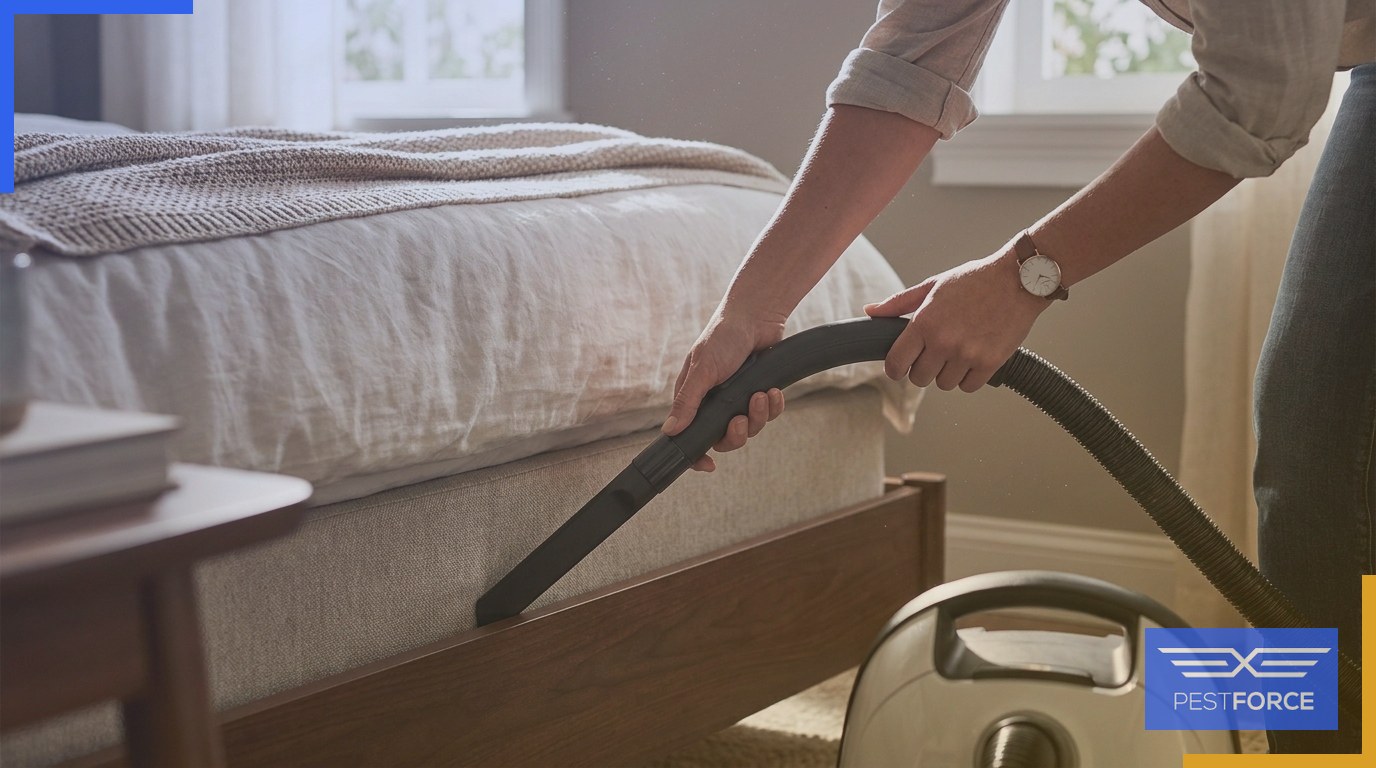
The bed bug vacuuming limitations include live capture: a captured Bed bug stays alive inside the vacuum bag or vacuum canister and turns the vacuum container into a live infestation. Empty a canister into a tightly sealed plastic bag at once. For a bagged vacuum, the U.S. Environmental Protection Agency (EPA) advises placing the used vacuum bag in a tightly sealed plastic bag and disposing of the sealed bag in an outside garbage bin.
Vacuuming reduces the crawling population before steam or chemical applications, and that reduction makes steam or chemical applications more effective because fewer bed bugs remain to find refuge. According to Purdue University Extension Entomology, bed bug eggs are stuck tightly to surfaces and are usually hard to remove by vacuuming, so a standard vacuum nozzle does not reliably extract eggs anchored to fibers.
Is diatomaceous earth effective against bed bugs?
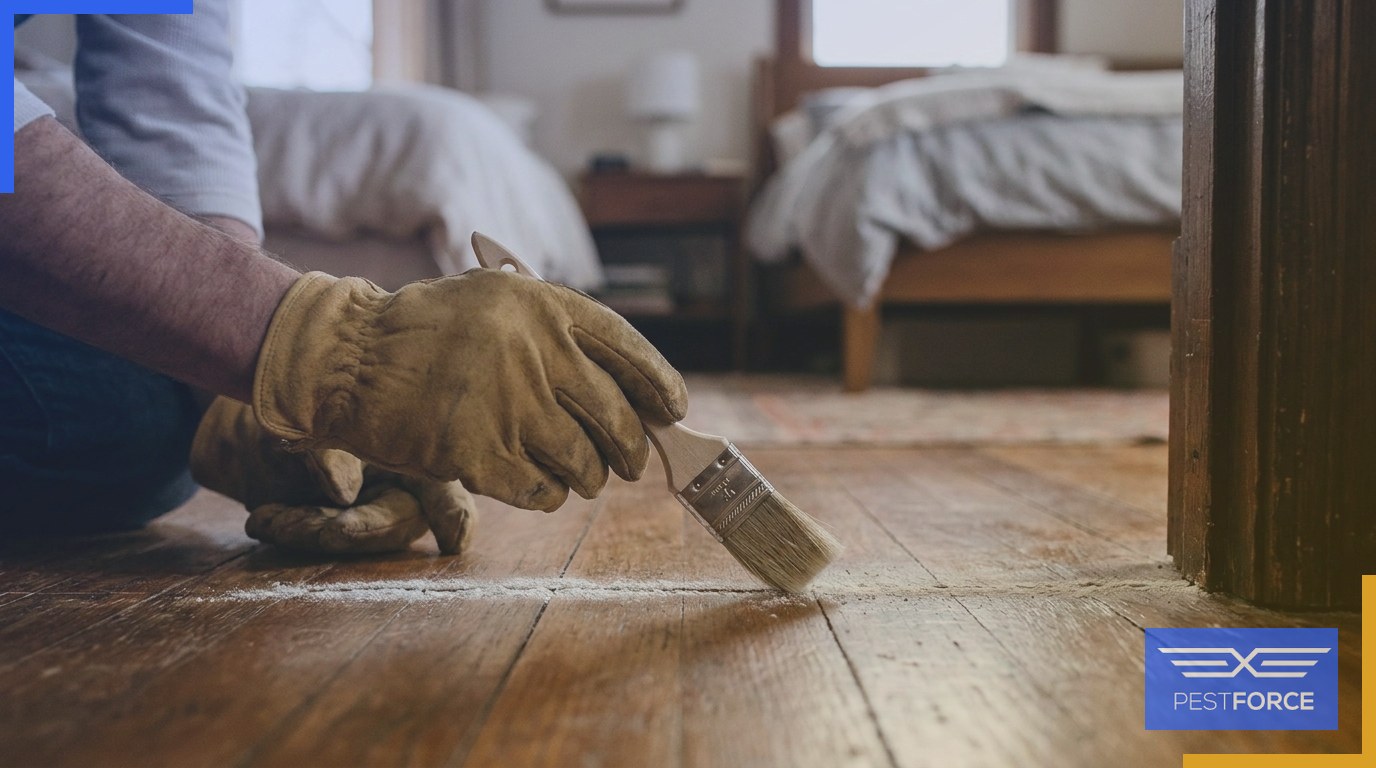
Diatomaceous earth is effective against bed bugs as a residual barrier in dry, undisturbed areas. The powder kills bed bugs by abrading the waxy outer layer of their exoskeletons and causing fatal desiccation, and the kill takes days to weeks, not hours.
Because the kill is mechanical rather than chemical, bed bugs cannot develop resistance to diatomaceous earth the way many Georgia populations have adapted to pyrethroid sprays. That makes the powder a useful long-term partner to other methods.
Placement decides everything. Diatomaceous earth works only where the powder stays dry and untouched, because moisture, including ordinary summer humidity, clumps the particles and destroys the abrasive action. Homeowners use diatomaceous earth as a residual barrier treatment in dry, undisturbed areas such as wall voids, outlet cavities, and the carpet edge along baseboards, not as a primary knockdown agent. Mattress surfaces and high-traffic floors are poor choices, since foot traffic and body moisture ruin the application.
Grade matters just as much. Only pest-control-grade diatomaceous earth belongs in a treatment plan. Pool-grade DE is calcined, chemically different, and harmful to inhale. Food-grade DE is the bag shoppers actually find on store shelves, and substituting it fails: according to a 2024 study published in Parasite, diatomaceous earth from a pest management company achieved 75 to 100 percent efficacy against bed bugs, while supermarket diatomaceous earth and litter-conditioner diatomaceous earth were ineffective. The honest answer to does diatomaceous earth work on bed bugs is yes for the pest-control-grade product, and no for the grocery-store substitute.
Do over-the-counter bed bug sprays work?
Over-the-counter bed bug sprays kill susceptible bed bugs on direct contact, but pyrethroid-based sprays fail against most established infestations. Widespread resistance, hidden harborage sites, and surviving eggs make spray-only treatment unreliable, and established infestations in Georgia homes typically keep growing.

Nearly every consumer spray on Georgia shelves uses a pyrethroid active ingredient, and pyrethroid chemistry has a resistance problem. A 2016 National Institutes of Health survey found that 88% of bed bug populations collected across 17 states carried knockdown resistance mutations against deltamethrin and related pyrethroids. A 2023 Rutgers University study published in Insects found 7 of 13 U.S. field populations had developed very high-level resistance, with the three toughest populations requiring 55 to 2,017 times higher concentrations than a laboratory strain to reach 90% mortality. A 2023 Journal of Pest Science study reported that insecticide-susceptible individuals had vanished from later U.S. samples. Widespread pyrethroid resistance in bed bug populations causes the failure of most over-the-counter bed bug sprays, leaving the sprays effective only against bugs the droplets physically touch. Homeowners comparing individual formulations can consult the companion review Over-the-Counter Bed Bug Sprays: Which Ones Work?
Surviving bed bugs do more than shrug off the residue. Many pyrethroid formulations repel bed bugs, scattering bed bugs deeper into wall voids and furniture, and the EPA warns that over-applying pesticide makes an infestation worse by driving exactly that dispersal.
Labels reading “kills on contact” are technically accurate and practically useless. Bed bugs spend most of their lives packed into harborage sites: mattress seams, box spring corners, baseboard cracks. A homeowner sweeping a room with an aerosol can never touches the bed bugs packed inside those harborage sites, and resistant bed bugs survive even a direct hit from many formulations.
Bed bug eggs survive a spray application as well. The National Pesticide Information Center states that many insecticides do not kill bed bug eggs, so a second treatment is often necessary once juveniles hatch. A spray-only approach leaves the next generation intact, and the infestation rebuilds within weeks.
When should you stop DIY treatment and call a pest control professional?
A homeowner should call a pest control professional when live bugs or new bites continue after 2-3 weeks of consistent DIY treatment, when bed bugs spread into multiple rooms, or when bed bugs reach wall voids, electrical outlets, and baseboards. Professional pest control is a necessary intervention when an infestation spans multiple rooms, persists after 2-3 weeks of consistent DIY effort, or involves wall voids and structural harborage.
A bed bug infestation that persists past the 2-3 week mark under consistent, combined effort holds harborage beyond consumer-method reach. Live bugs or fresh bites after steady steam, vacuuming, and diatomaceous earth work are the clearest marker for recognising a failed DIY treatment. A homeowner weighing continued DIY bed bug treatment against professional help can find every warning sign in When DIY Bed Bug Treatments Fail: Signs You Need a Professional.
Bed bugs confirmed in more than one room signal an established population that spot treatments cannot contain, and multi-room infestations call for professional-grade residual chemical programs or heat.
Bed bugs found in wall outlets or behind baseboards occupy structural harborage that steam wands, vacuums, and OTC sprays cannot reach, and bed bugs in those locations end the DIY debate on the spot.
A building-wide infestation in an apartment requires professional-grade heat treatment or coordinated residual chemical programs. Bed bugs also re-enter through shared walls and electrical conduits from neighboring units, so even a successful unit-level DIY bed bug treatment stays vulnerable to immediate re-infestation.
Professional whole-room heat treatment raises the entire space to 120-135°F and holds that temperature for several hours. Professional-grade heat is the only treatment that penetrates wall voids and structural harborage sites. Pest control professionals deliver heat and chemical work through integrated pest management, the framework that combines inspection, monitoring, heat treatment, and residual chemistry into one coordinated program. Georgia homeowners comparing professional bed bug control options will find whole-room heat and residual chemical programs as the two standard professional approaches.
Sources
- U.S. Environmental Protection Agency (EPA), “Controlling Bed Bugs Using Integrated Pest Management (IPM)” (2026)
- U.S. Environmental Protection Agency (EPA), “Top Ten Tips to Prevent or Control Bed Bugs”
- Purdue University Extension Entomology, “Bed Bugs – Informational Guide to Bed Bugs (Control section)”