

Bed bugs (Cimex lectularius) are small, blood-feeding parasites whose appearance changes dramatically across life stages, making early detection difficult. Eggs, nymphs, and adults each look different, feed on blood, and leave distinct signs. Georgia homeowners who can identify bed bugs on sight catch infestations weeks earlier than those who cannot. Early identification limits spread, lowers treatment cost, and improves control outcomes.
What are bed bugs, and why are they so hard to control?
Bed bugs are small, flat, blood-feeding insects. Cimex lectularius is an obligate blood-feeding parasite in the family Cimicidae that causes nearly all household infestations worldwide. Cryptic nocturnal behavior and months-long starvation tolerance make Cimex lectularius exceptionally hard to eliminate without professional heat or chemical treatment.
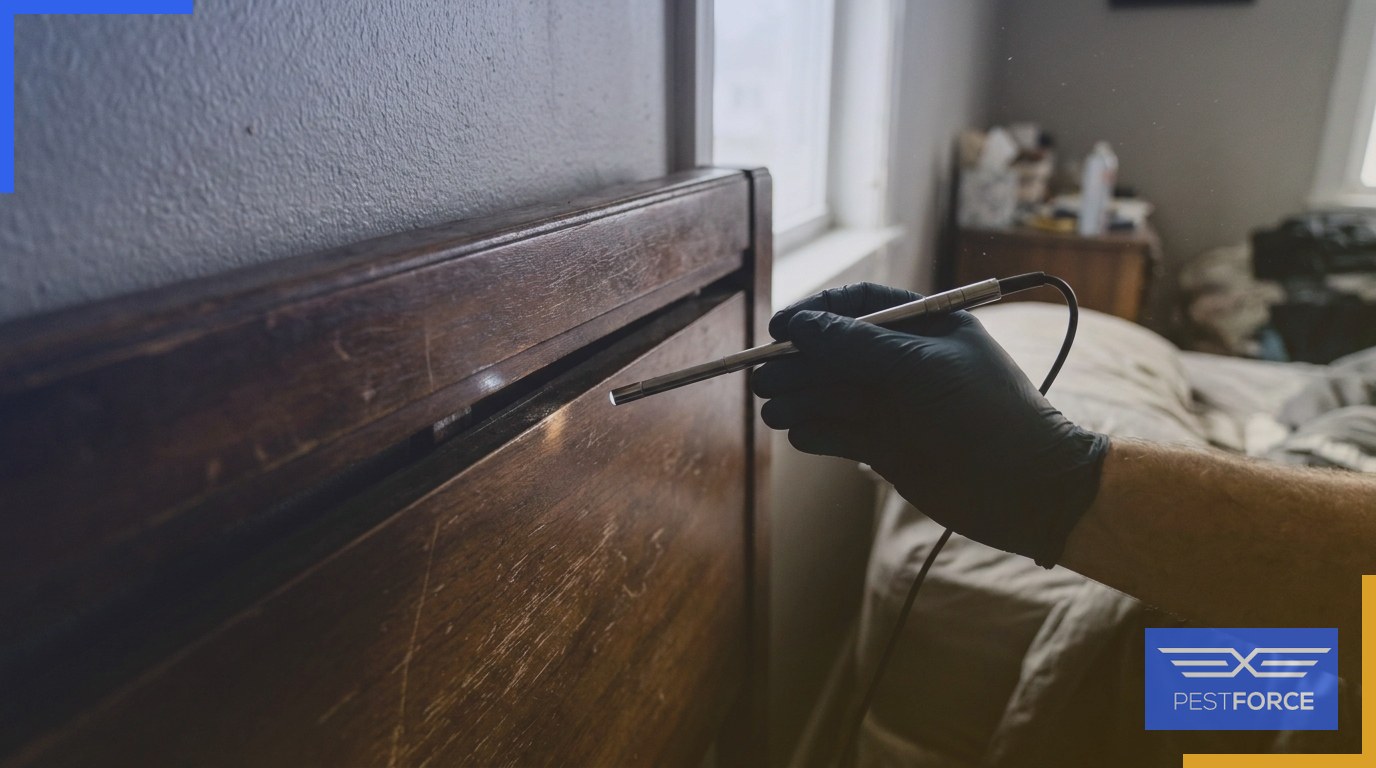
Two bed bug species matter to human health. According to ScienceDirect Topics (Elsevier), Cimex lectularius occurs in the Palearctic and Nearctic regions, which include Georgia, while Cimex hemipterus, the tropical bed bug, occupies tropical areas. Pest inspectors occasionally intercept Cimex hemipterus at international ports, but the species is not established in Georgia, so Georgia infestations are virtually always Cimex lectularius.
Cimex lectularius has no free-living stage. The insect must live near a host, and in practice that means mattress seams, headboards, and furniture close to beds. According to a 2017 review published in the Journal of Hospital Infection and indexed on ScienceDirect, Cimex lectularius requires blood meals for development, reproduction, and sustaining life, with a life cycle that includes eggs, five nymphal instars, and adults. Development runs through hemimetabolism, or incomplete metamorphosis: each nymph hatches resembling a small, pale adult, and because no pupal stage exists, incomplete metamorphosis drives the nymph-by-nymph progression directly, with each of the five instars requiring a blood meal to molt into the next stage.
The flat, oval body explains why bed bug identification trips up so many homeowners. University of Tennessee Extension reported in 2021 that bed bugs are vertically flattened, which lets bed bugs hide in seams, cracks, and voids as narrow as a credit card’s thickness.
Vertical flattening explains how bed bugs hide. The difficulty of eliminating an established population comes down to two biological traits:
- Cryptic nocturnal behavior. Bed bugs feed at night and stay hidden by day, so an infestation can grow for weeks before anyone sees a live bug. Delayed detection makes identifying and treating bed bug infestations dependent on professional inspection.
- Starvation tolerance. Bed bugs survive months without a blood meal, and the biology behind how long bed bugs survive without feeding is why vacating a room never starves an infestation out.
What do bed bugs look like at each life stage?
Cimex lectularius looks different at every life stage. Eggs are pearl-white and about 1 mm long. Nymphs grow through five instars from a translucent 1.5 mm to a tan 5 mm. Adults are flat, wingless, apple-seed-shaped, reddish-brown insects of 5 to 7 mm.

Bed bug eggs have a pearl-white appearance and measure about 1 mm long, roughly the size of a pinhead, according to Colorado State University Extension (2024). The University of Tennessee Extension (2021) reports that the female bed bug cements each egg to a surface with a sticky coating. The female bed bug lays bed bug eggs in clusters inside hidden harborage sites. Because of the sticky coating, locating bed bug egg clusters means checking the tight seams and frame joints where adult bed bugs hide.
Bed bug nymphs have five instars, and each instar requires one blood meal before molting. Colorado State University Extension (2024) sizes first instars at about 1.5 mm and fifth instars at up to 5 mm, and the U.S. Environmental Protection Agency (2026) describes young nymphs as translucent or whitish-yellow and nearly invisible when unfed. An unfed first-instar nymph is effectively invisible against light-colored mattress fabric. A blood meal turns the first-instar nymph yellow-tan, and the yellow-tan color makes the fed first-instar nymph visible. Most people first spot the first-instar nymph only after feeding triggers the color change, and many mistake the fed yellow-tan nymph for a newly hatched adult.
Adult bed bugs measure 5 to 7 mm, according to ScienceDirect Topics (Elsevier), and the U.S. Environmental Protection Agency (2026) compares the adult body to an apple seed: brown, oval, wingless, and flat when unfed but balloon-like after feeding. Colorado State University Extension (2024) reports that the fed adult turns reddish-brown and rounds out like a balloon.
Each of the five molts leaves behind a shed skin, called an exuvium, and the pale, empty husks collect in harborage sites as key evidence of an active infestation. The guide to what do bed bugs look like uses visual bed bug identification by life stage to help inspectors tell shed skins, eggs, and live bugs apart during an inspection.
How do bed bugs feed, reproduce, and spread?
Cimex lectularius feeds at night on sleeping hosts, drawn by carbon dioxide and body heat, then hides to digest and mate. Females lay up to five eggs daily. Spread is passive: bed bugs hitchhike on luggage, furniture, and clothing rather than migrating on their own.

1. Host detection. Bed bug feeding is a nocturnal behavior triggered by carbon dioxide and body heat from a sleeping host. Colorado State University Extension (2024) confirms the insects stay hidden during the day and come out to feed at night. 2. Blood meal. Feeding takes about 3 to 10 minutes, according to Penn State Extension, and the bug returns to its harborage before the host wakes. NCBI/PubMed Central (2016) describes bed bugs as temporary ectoparasites that visit the host only for blood, then retreat to indoor refuges for digestion, waste production, and mating. 3. Egg laying. The U.S. Patent and Trademark Office reports that a female deposits up to five eggs per day and as many as 500 in her lifetime, laid in secluded areas. One pregnant female arriving in luggage can seed an infestation within weeks, and Colorado State University Extension (2024) notes populations produce more than three generations per year under favorable conditions. 4. Passive dispersal. ScienceDirect Topics (Elsevier) documents that bed bugs move with humans via luggage, modes of transport, apartment-to-apartment transfer, and second-hand material such as furniture and books. In Georgia multi-unit housing, how bed bugs spread depends on shared walls and utility penetrations, and bed bug travel between rooms follows these passive routes rather than active migration across open floors.
Bed bugs do not feed every night. The documented answer to how long can bed bugs survive without feeding is 60 to 400 days: a single adult survives 60 to 400 days without a blood meal depending on temperature and humidity. This survival range explains reinfestation in vacant units, where an infestation can appear to disappear and then resurge months after a resident moves out or a treatment misses the harborage.
The same harborage logic applies to bed bugs living in your vehicle. Seat seams, floor mats, and trunk liners in cars and moving trucks shelter hitchhiking bugs, and vehicles are a documented introduction pathway for Georgia residents.
How do you identify a bed bug infestation before it gets worse?
You identify an early bed bug infestation through physical evidence, not bites: fecal spots, blood stains, shed skins, and eggs found on and around the bed. Early bed bug identification precedes smaller infestation size and lower professional treatment cost.
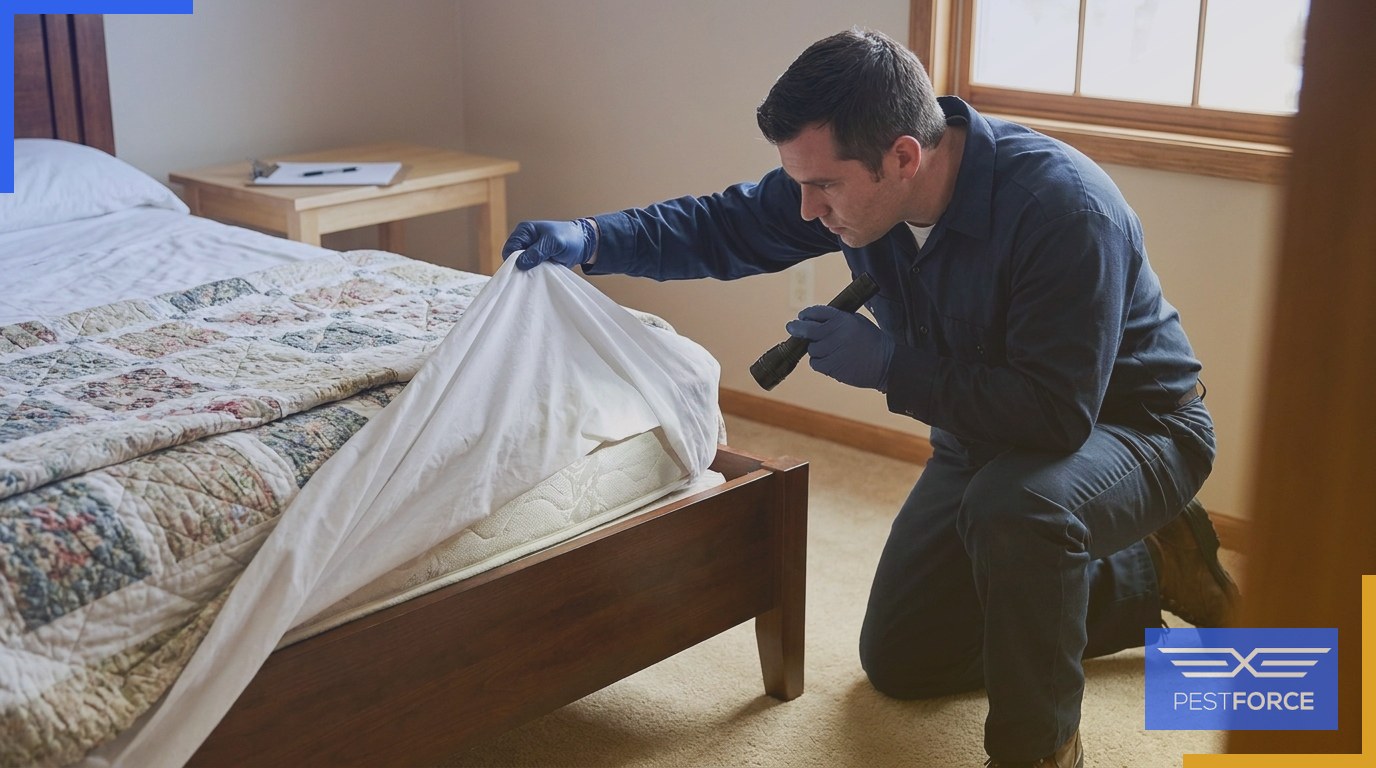
1. Check mattress seams, box spring fabric, and wall outlets for fecal spots. Fecal spotting is the most reliable early infestation sign: dark, ink-like dots that bleed into fabric. The U.S. Environmental Protection Agency (2025) confirms these dark excrement spots may bleed on fabric like a marker.
2. Scan sheets and pillowcases for blood stains. Crushed bugs and feeding puncture sites leave rust-colored smears on bedding, often near the edges where a sleeper’s body rests.
3. Inspect harborage sites for shed skins and egg casings. Bed bugs leave molted skins and eggs in mattress seams, headboard crevices, and baseboards. The U.S. Environmental Protection Agency (2025) describes bed bug eggs and eggshells as tiny, about 1 mm, and pale yellow. Eggs are easy to miss. The U.S. Patent and Trademark Office reports the eggs are roughly the size of a dust speck and sticky when first laid, so the eggs adhere to surfaces. The 15 bed bug harborage locations list every hiding spot worth checking.
4. Treat bites as a clue, never as confirmation. Many people produce no visible skin reaction to bed bug bites, so bites are an unreliable sole indicator. The popular “breakfast, lunch, dinner” three-bite line is not a scientifically validated diagnostic, since multiple bugs can bite in any pattern depending on harborage location relative to the host. The physical symptoms of bed bug activity overlap with flea and mosquito bites, which is why distinguishing bed bug bite patterns cannot confirm an infestation without fecal spots, shed skins, or live bugs.
When a flashlight sweep turns up nothing but suspicion remains, the comparison of visual versus canine bed bug detection shows how trained dogs locate harborages that eyes miss.
Sources
- ScienceDirect Topics (Elsevier), “Cimex lectularius – an overview”
- University of Tennessee Extension, “Biology and Identification” (2021)
- Colorado State University Extension, “Bed Bugs” (2024)
- U.S. Environmental Protection Agency, “How to Find Bed Bugs” (2025)
- U.S. Environmental Protection Agency, “Bed Bugs Appearance and Life Cycle” (2026)
- Penn State Extension, “Biology, Habitat, and Management of Bed Bugs”