
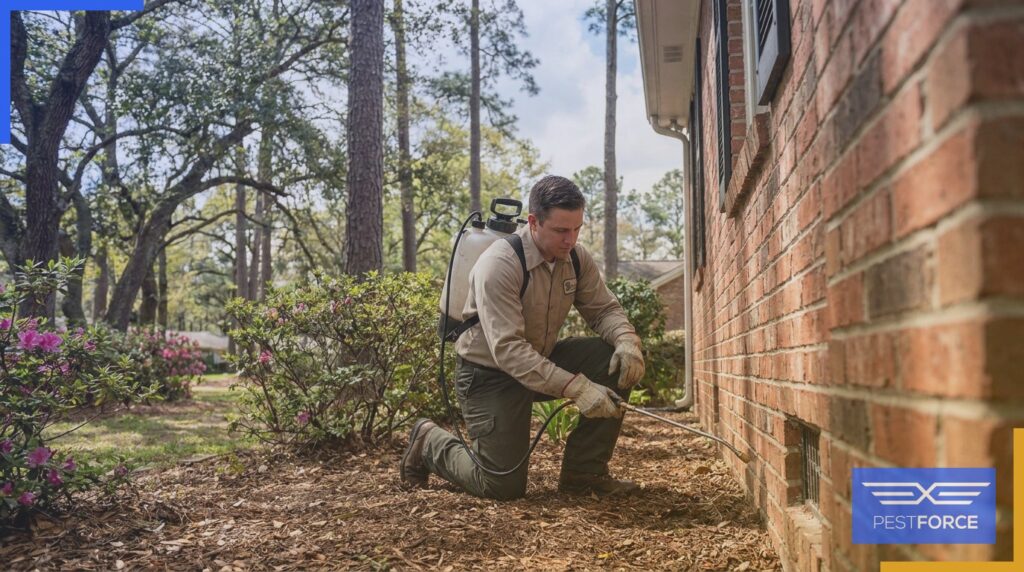
Termite treatment is not one-size-fits-all. Pest Force deploys three termite treatment methods across Georgia: liquid termiticide barriers, bait station systems, and foam treatments. Each termite treatment method addresses a different infestation type and structural condition. Pest Force selects the right method, or a combination of methods, based on a Georgia property’s termite pressure, construction type, and risk profile.
What termite treatment options does Pest Force offer in Georgia?
Pest Force offers three primary termite treatment methods in Georgia: liquid termiticide barriers, bait station systems, and foam treatments. Pest Force selects the method after a termite inspection identifies the species, the extent of the infestation, and the access points termites are using.
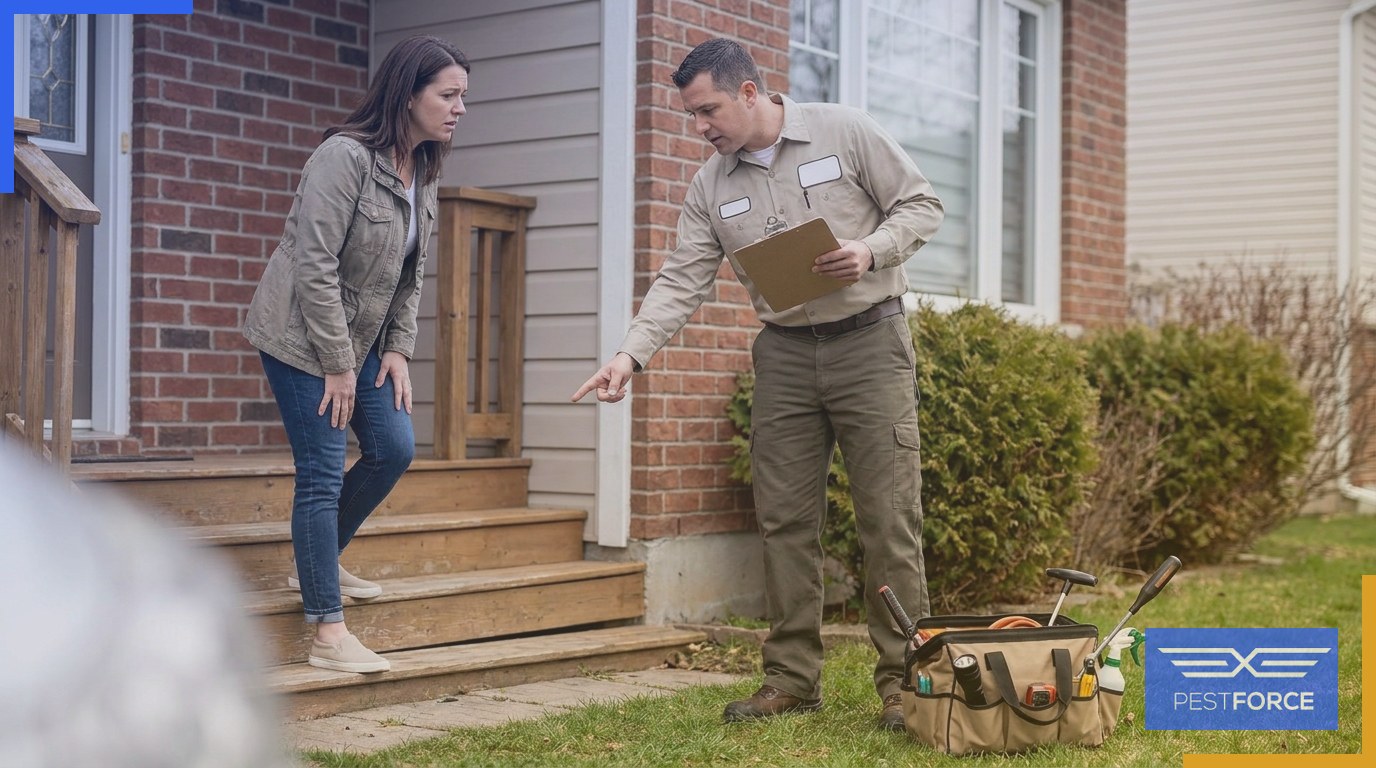
Georgia sits inside the very-high hazard termite belt identified by subterranean termite risk maps of the USA, according to the National Institutes of Health (2022). Three primary termite species live in Georgia, reports A-Z Animals (2022): the Eastern subterranean termite, the invasive Formosan termite, and the less common drywood termite. Species drives method choice. Every Pest Force treatment plan therefore starts with an inspection, not a product.
- Liquid termiticide barriers. Technicians apply termiticide to the soil around and beneath the structure, forming a continuous treated zone. Subterranean termites die as they travel through the barrier between the colony and the building.
- Bait station systems. Technicians install bait stations around the property perimeter. Foraging termites feed on the bait and carry the active ingredient back to the colony, collapsing the infestation at its source.
- Foam treatments. Technicians inject termiticide foam into wall voids and termite galleries. Foam reaches active infestations that soil treatments and bait stations cannot physically touch.
These methods are not mutually exclusive. Pest Force combines them when inspection findings call for it, pairing a perimeter liquid barrier with foam injections in active wall voids or adding bait stations where ongoing colony pressure demands monitoring. All Pest Force termite treatments in Georgia are applied by Georgia-licensed pest control technicians.
Pest Force also applies pre-construction soil treatment on new builds across Georgia. Technicians treat the soil before the slab is poured, creating a treated zone that protects the structure from the ground up. Pre-construction treatment belongs to the building phase, while liquid barriers, bait stations, and foam treat existing structures.
The termite treatment options Pest Force deploys target active infestations, and the stakes justify acting on inspection findings: termites and similar pests cause more than $6.8 billion in U.S. property damage per year, and the average homeowner who discovers termite damage spends approximately $3,000 on repairs, according to Rapid Eye Inspections (2026). Property owners comparing termite damage prevention options alongside treatment can discuss monitoring and moisture control with the Pest Force technician during the inspection visit.
How does a liquid termiticide barrier work to protect a Georgia home?
A liquid termiticide barrier is a continuous chemical zone applied to soil around and beneath a structure’s foundation to block subterranean termite entry. Pest Force applies Termidor (fipronil) as the primary non-repellent liquid termiticide for Georgia barrier treatments.
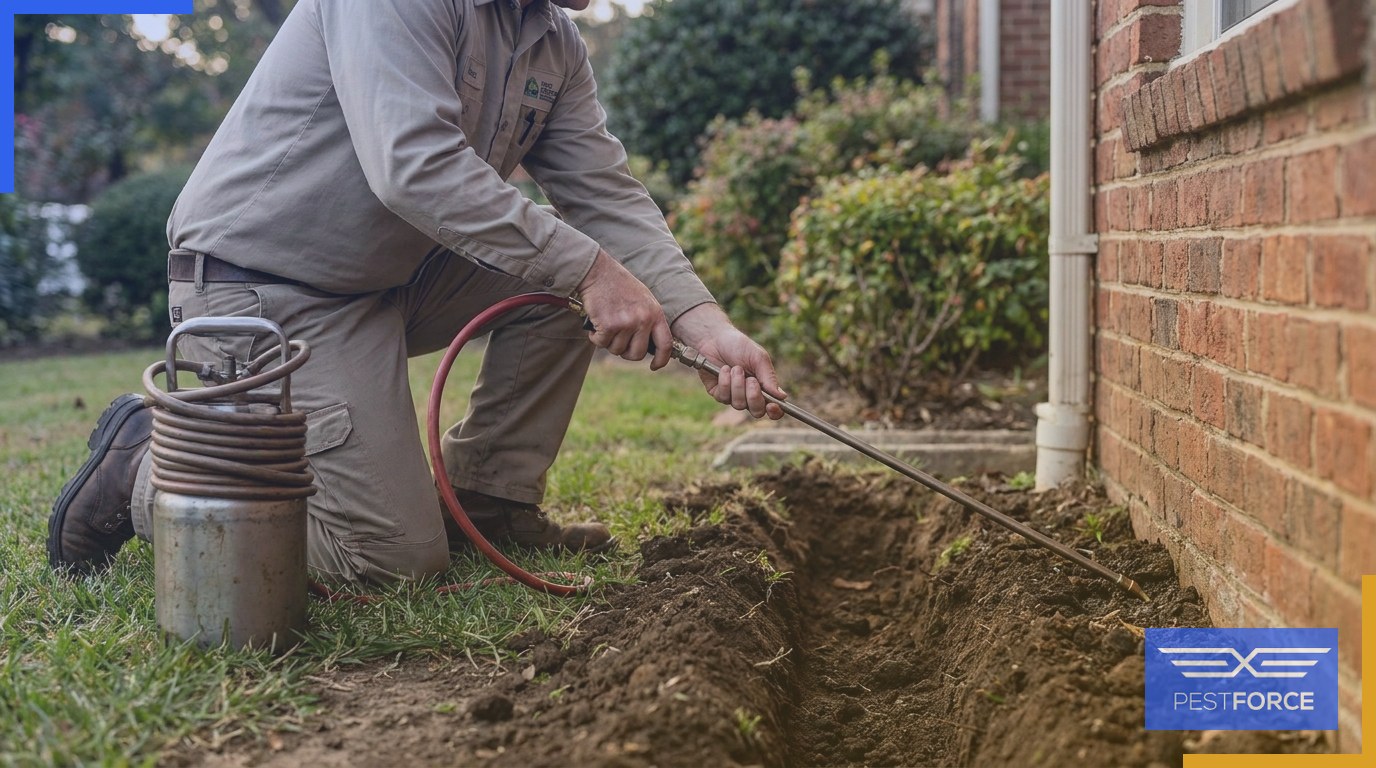
1. Trench and treat. Technicians excavate a narrow trench along the foundation perimeter and treat soil beneath slabs and porches, creating one continuous treated zone around the structure. 2. Termites walk through. Fipronil is non-repellent; according to LegalExaminer (2026), termites cannot detect the chemical in treated soil and pass through it freely. 3. Foragers carry it home. A 2021 National Institutes of Health study confirms workers transport the slow-acting fipronil back to the colony, producing colony-wide suppression in termites that never contacted the barrier. 4. The colony dies. A 2012 Journal of Economic Entomology field study of eight houses found all 11 directly treated Eastern subterranean termite colonies presumed eliminated within 90 days of fipronil treatment.
Repellents work the opposite way, and that is where cheap quotes go wrong. A repellent product only deters termites at the treated strip; the colony detects the gap, disperses, and worsens the infestation rather than being eliminated. This repellent-versus-non-repellent question is the critical distinction Georgia homeowners should ask about when comparing quotes. The chemistry behind how liquid termite treatments like Termidor work is the transfer effect, not a chemical fence.
Subterranean termites forage through soil to reach structures, so a soil barrier matches their biology. Among soil-applied termite control methods, a non-repellent liquid barrier remains the standard for active subterranean infestations. Homeowners weighing how long termite treatment lasts should know a properly applied fipronil barrier keeps protecting the structure for years. Crawlspace homes sometimes need borate applications on exposed framing as well; borates penetrate wood and kill termites feeding on treated members, so wood treatment complements liquid termite treatments rather than replacing them.
How do termite bait stations work, and when does Pest Force use them?
A bait station system is an in-ground monitoring and toxicant delivery network that eliminates termite colonies rather than creating a chemical barrier. Pest Force installs stations around a structure, foraging termites carry slow-acting bait back to the colony, and the colony collapses over the following weeks to months.
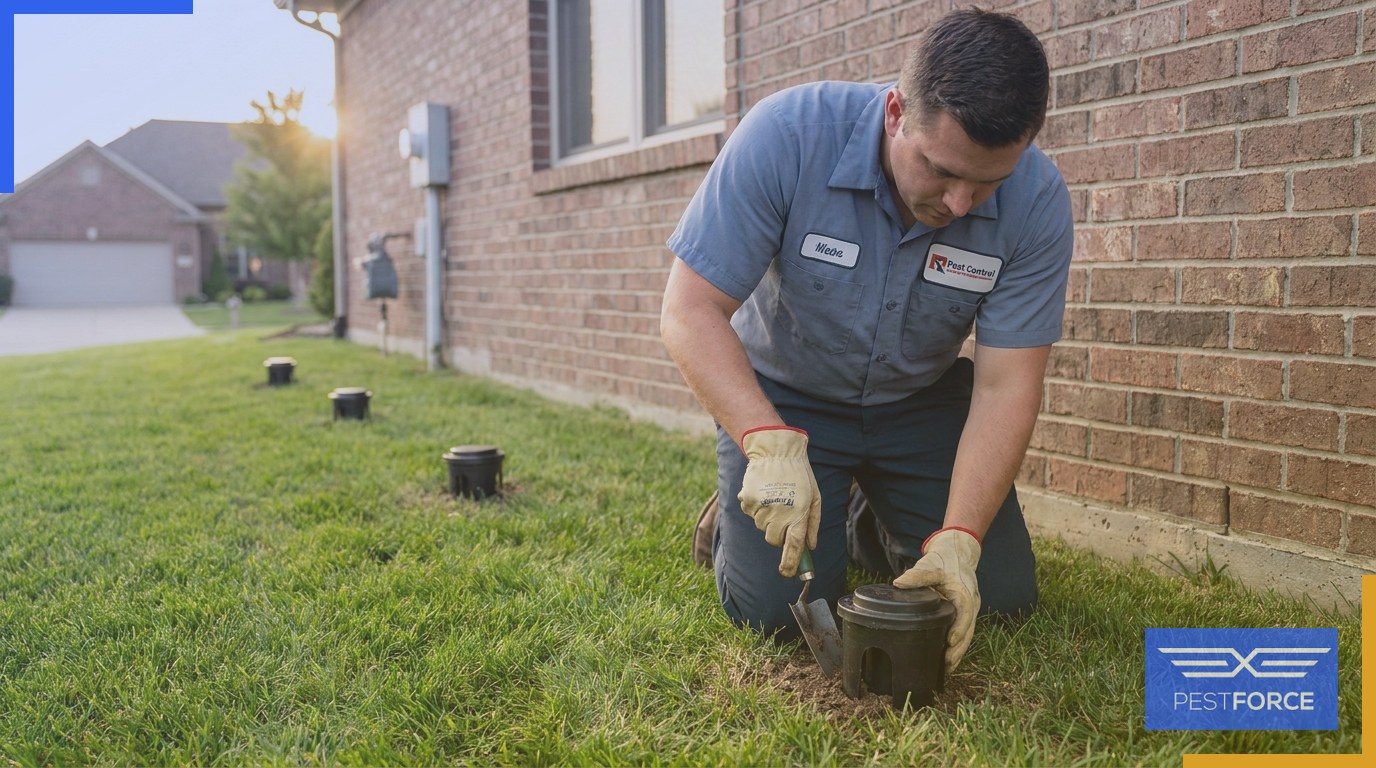
The mechanics of termite bait stations run in four stages:
1. Placement. Pest Force installs stations in the soil at set intervals around the structure, and the stations intercept foraging termites before the termites reach the building. 2. Feeding. Foragers discover a station and consume bait containing a slow-acting insect growth regulator called a chitin synthesis inhibitor. 3. Colony transfer. Workers share the bait with nestmates, and the active ingredient reaches the queen and larvae. Professional Pest Manager reports the active ingredient typically kills the colony by the 20 to 30 day mark, though complete elimination often takes three months or more. 4. Monitoring. Pest Force technicians check and replenish stations on a scheduled basis, with declining bait consumption among the signs your termite treatment is working.
Bait stations do not protect a structure on the day of installation. Foragers must locate a station before anything happens. University of Florida research reported by Futurity in 2020 shows colony elimination follows within a few months once feeding begins. A liquid barrier protects immediately, so bait stations fit prevention and monitoring better than active, fast-moving infestations.
Pest Force recommends termite bait stations for prevention, ongoing monitoring, and structures where liquid application is impractical, such as properties near wells, cisterns, or decorative water features. For active infestations, Pest Force may apply a liquid barrier as the immediate intervention and layer stations afterward for ongoing monitoring. Liquid barriers and bait stations are compatible, and Georgia properties with high termite pressure commonly run both. Homeowners who understand how termite bait stations work set realistic timelines for results.
What is foam termite treatment and which infestations require it?
Foam termite treatment injects expanding termiticide foam directly into wall voids, structural timbers, and the galleries where drywood termite colonies live. Foam termiticide treatment applies to drywood termite infestations and voids inaccessible to liquid barrier application, and foam also spot-treats localized subterranean activity inside enclosed structural voids.
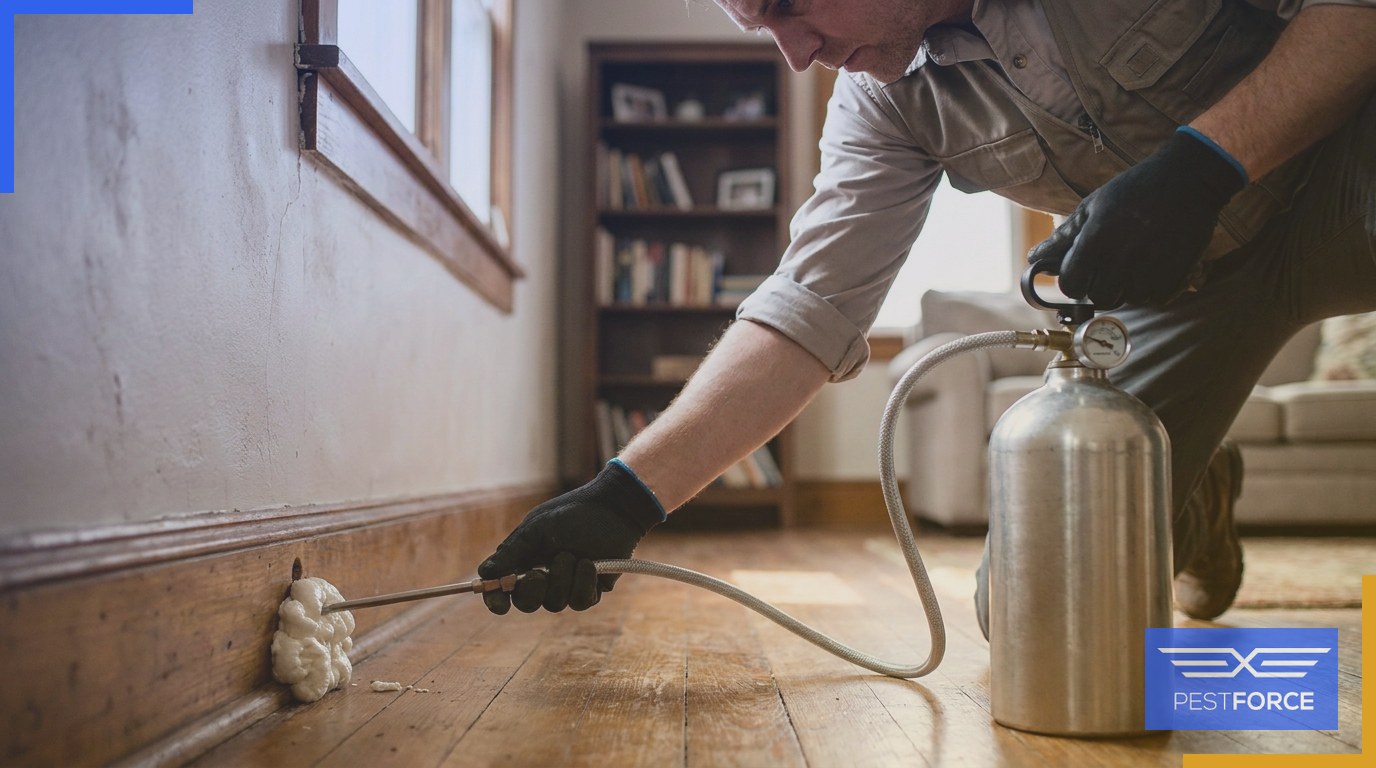
The foam expands after injection, filling irregular voids that liquid sprays and soil treatments cannot penetrate. The termiticide coats the interior surfaces of the void and contacts termites that a spray would never touch.
Two infestation types call for foam:
- Drywood termite colonies (primary use). Drywood termites nest entirely within the wood they consume and never contact soil, according to A-Z Animals (2022). Because of that soil independence, soil liquid barriers and in-ground bait stations have zero effect on drywood termites, so foam is the only method that reaches an active drywood colony.
- Localized subterranean activity (secondary use). Foam serves as a spot treatment when subterranean termites appear inside enclosed structural voids where a technician cannot install a continuous liquid barrier. Think a single beam or wall section, not a perimeter job.
How does Pest Force decide which termite treatment method is right for your property?
Pest Force selects a termite treatment method for each Georgia property based on three factors: the termite species confirmed during inspection, the construction type of the structure, and the severity and location of active damage. Warranty and re-treatment terms then finalize the recommendation.
The selection process follows four steps:
1. Pest Force confirms the species. Every recommendation begins with an inspection before selecting treatment, because species is the primary driver. Eastern subterranean termites call for soil-based methods like liquid barriers or bait stations, while drywood termites call for localized foam or wood treatments.
2. Pest Force assesses the structure. Construction type shapes how technicians apply a liquid barrier. Slab foundations require drilling and injection along the slab edge, crawlspaces require trenching around piers and interior walls, and pier-and-beam structures require treatment around every pier.
3. Pest Force measures the damage. Severity and location determine whether one method can resolve the infestation. Widespread or hard-to-reach active damage can warrant a combined approach, such as liquid-plus-foam for wall voids or liquid-plus-bait for heavy perimeter pressure.
4. Pest Force matches the warranty. Pest Force termite treatments include warranty and re-treatment coverage that varies by the method chosen. Liquid barriers typically carry annual renewal warranties, and bait programs include scheduled monitoring visits.
Property owners comparing liquid treatment vs. bait stations for Georgia homes can review how the two primary systems perform against Georgia’s subterranean pressure. A cost comparison of treatment methods helps owners budget by approach before committing to a plan.
Sources
- Rapid Eye Inspections, “Termite Damage & Treatment Cost Statistics (2026)” (2026)
- A-Z Animals, “Termites in Georgia: Types, Risks, and How to Prevent Them” (2022)
- LegalExaminer, “What Should Consumers Know About Termidor (a.k.a. fipronil) – 2026 Update” (2026)
- Futurity, “When just a few termites take the bait, it kills the whole colony” (2020)
- Professional Pest Manager, “Termite Baiting Research”