
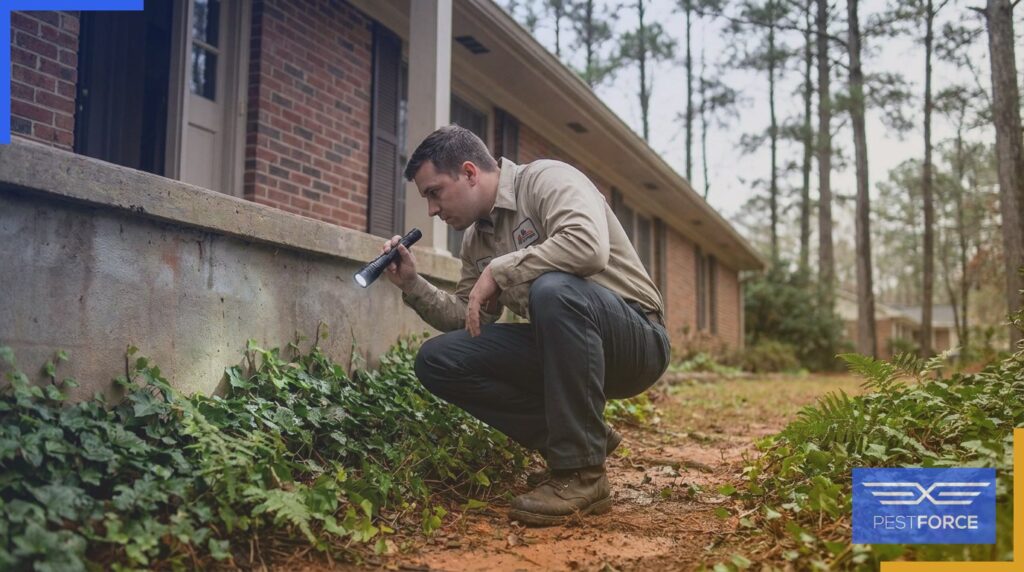
The Eastern subterranean termite destroys more Georgia structures than any other pest in the state. The Eastern subterranean termite stays active year-round because Georgia’s warm climate and clay-rich soils let colonies forage without a winter break. Pest Force answers that pressure with targeted subterranean termite control: liquid barrier treatments, bait station systems, and scheduled monitoring for residential and commercial properties. Georgia’s termite season never ends, so protection cannot take a season off either.
Why is subterranean termite pressure so severe in Georgia?
Georgia is classified as Termite Infestation Probability Zone 1 (very heavy) by the International Residential Code, and the Eastern subterranean termite is the most destructive and prevalent termite species in Georgia, building million-member colonies that forage year-round in warm, moist soil.
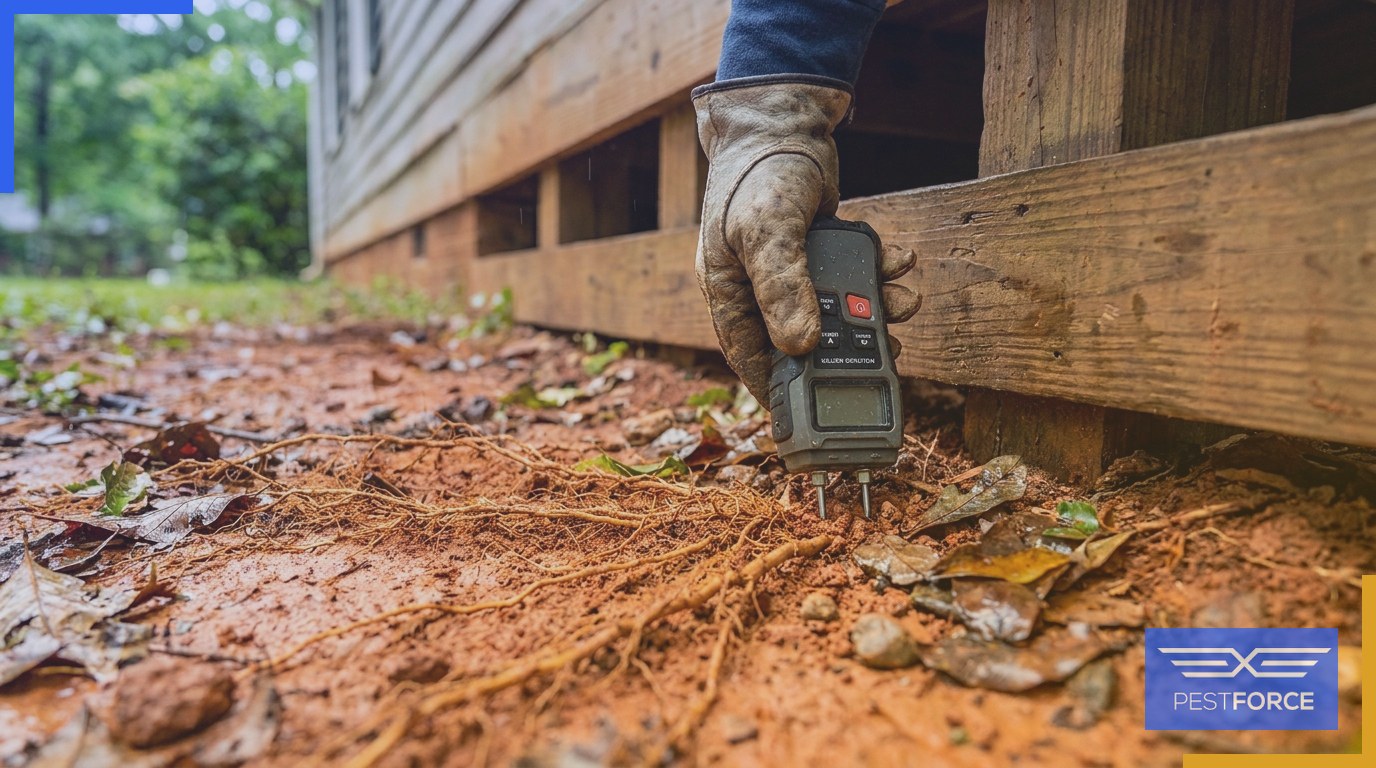
The Georgia Department of Agriculture places the entire state in Zone #1, labeled “VERY HEAVY,” on a map adapted from the 2021 International Residential Code, Figure R301.2(7), which building officials use to set subterranean termite prevention requirements. The U.S. Department of Housing and Urban Development uses the same zones to determine the risk and actions necessary as a requirement for guaranteeing mortgages. Every Georgia county carries that rating.
The species profiled in Eastern Subterranean Termites Georgia’s Most Destructive Pest works through sheer numbers. The National Pest Management Association puts a typical mature colony at 60,000 to two million workers, and University of Maryland Extension reports that a single colony can hold several million individuals and use food sources more than 200 feet apart. A colony that size can ring a foundation and attack from several directions at once.
Georgia’s warm, humid climate removes the one brake colder states rely on, a winter dormancy that terminates foraging. Colonies here stay active through winter, retreating deeper into the soil during cold snaps without shutting down, so a Georgia structure faces feeding pressure twelve months a year.
Soil finishes the setup. Georgia’s red clay, organic loam, and the fill soil placed against foundations during construction each hold moisture where wood meets ground. Red clay in particular carries a reputation for deterring termites. The reputation is wrong. Clay retains moisture, and subterranean termites exploit the interface where fill soil meets native clay, so the foundation perimeter stays especially vulnerable even on seemingly dry lots. The relationship between moisture-retaining soils and subterranean colonies holds from the Piedmont to the coast, and the Georgia Soil Conditions and Termite Risk: A County-Level Guide breaks that risk down county by county.
Formosan subterranean termites add one more wrinkle: they have been detected in parts of coastal and southern Georgia, and they attack more aggressively than the Eastern species. Suspected Formosan activity changes treatment protocols and colony-kill timelines, which is why accurate species identification opens every subterranean termite control Georgia program.
How do subterranean termites damage Georgia homes, and what are the warning signs?
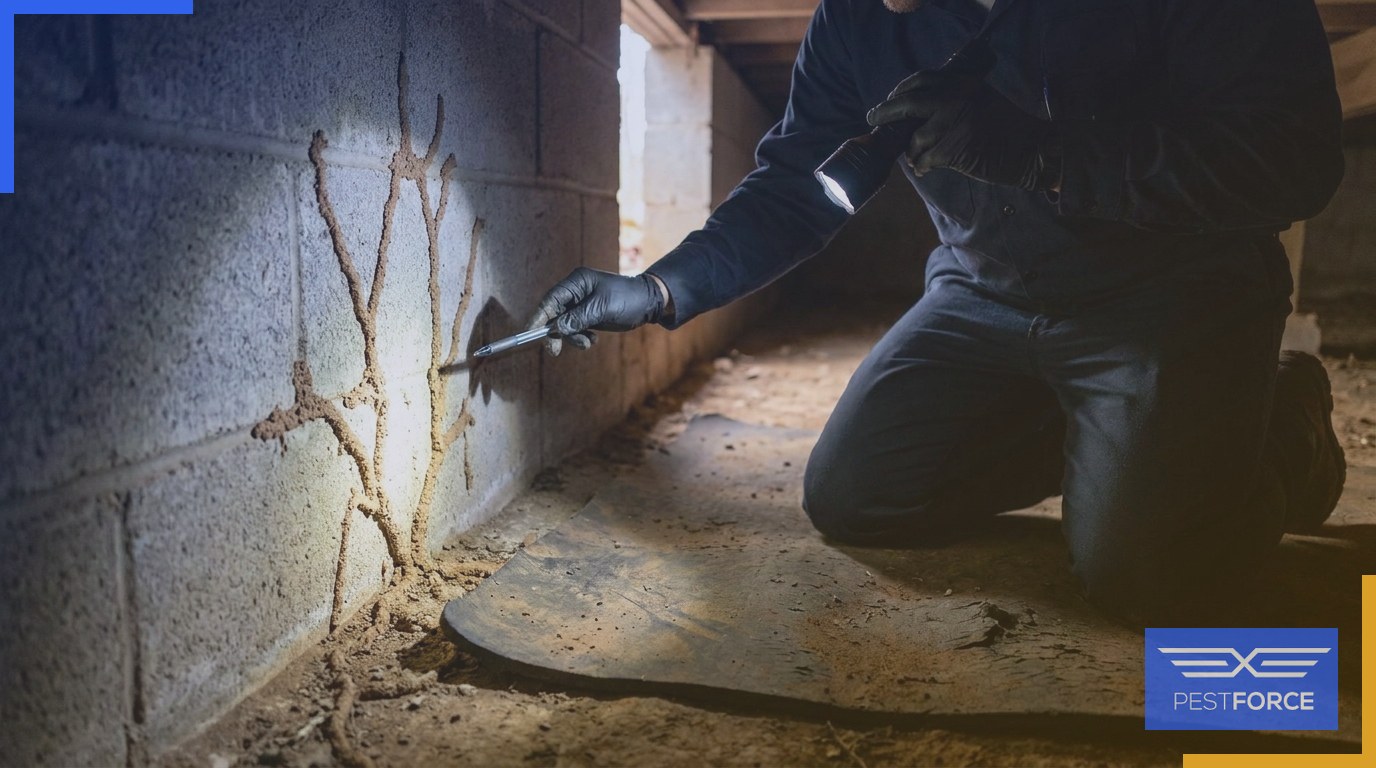
Subterranean termites travel through soil, build mud tubes over foundations, and consume floor joists, sill plates, subflooring, and wall framing near the ground. Georgia homeowners should watch for mud tubes, spring swarms, hollow-sounding wood, and discarded wings near windows.
How subterranean termites reach and damage wood
1. Workers forage in the top six to twelve inches of soil until they encounter wood, according to the Mississippi State University Extension Service. 2. Subterranean termites require ground-to-wood contact or mud tube construction to reach structural wood above the soil line. They neither fly to wood nor bore through concrete. The mud tube construction by subterranean termites carries workers across exposed foundation walls and piers while trapping moisture inside. 3. The colony feeds first on wood closest to the soil: floor joists, sill plates, subflooring, and wall framing. The subterranean termite wood and foundation destruction runs nonstop, because workers eat 24 hours a day, 365 days a year, according to a 2023 Mississippi State University Extension Service report.
Warning signs around a Georgia home
- Mud tubes on foundation walls, piers, or crawl space walls
- Spring swarms. Subterranean termite swarms occur primarily in Georgia’s spring months, February through May, triggered by warm temperatures and rainfall
- Hollow-sounding wood when tapped
- Frass or discarded wings near windows and on window sills
A swarm inside the house does not confirm an active, feeding infestation in structural wood. Swarmers are reproductives called alates, not workers, and alates do not eat wood. Most die of dehydration indoors within hours, according to the University of Maryland Extension. The real threat is the mature parent colony outside, which produces swarmers only after several established years. The job of identifying eastern subterranean termite colonies falls to a professional inspection, and responding to a Georgia termite swarm starts with saving a few specimens for the inspector.
What treatment methods does Pest Force use for subterranean termite control in Georgia?
Pest Force uses three treatment methods for subterranean termite control in Georgia: Termidor liquid soil barriers, Sentricon bait station systems, and foam injection for above-slab activity. Pest Force selects the method based on foundation type, soil conditions, and where the infestation sits.
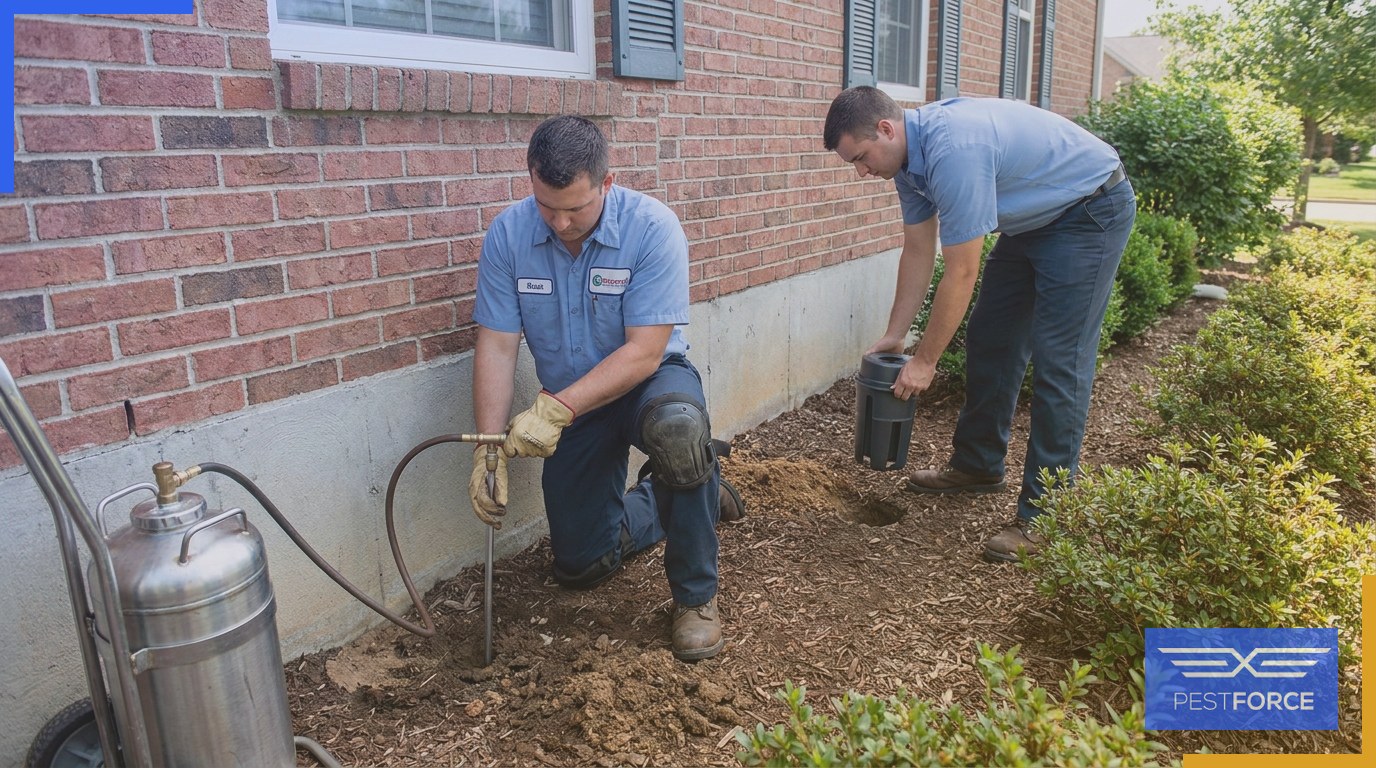
Termidor liquid barrier. Termidor is the industry-standard liquid termiticide for subterranean termite control. Pest Force technicians trench the soil around the foundation and inject Termidor, a fipronil termiticide, to create a continuous treated zone. The Termidor liquid barrier works by a transfer effect: exposed foragers spread fipronil through termite-to-termite contact, so the treatment eliminates colonies whose members never directly contact the treated zone.
Sentricon bait station system. Pest Force installs Sentricon stations in the ground around the structure, where the stations combine ongoing monitoring with a slow-acting bait that foraging workers carry back and share with the colony. Georgia’s red clay, crawl-space foundations, and private wells regularly rule out full-perimeter trenching, and Sentricon fits those properties better than a liquid barrier.
Foam treatment. When termites are active above the slab, Pest Force injects foam into wall voids and structural cavities, reaching galleries that a liquid perimeter treatment cannot touch.
Method selection. Termidor and Sentricon are not interchangeable defaults. A liquid barrier achieves colony kill faster, but Termidor demands complete trench-and-inject access around the foundation perimeter. Bait station systems are preferred over liquid barriers when soil conditions, slab construction, plumbing penetrations, or proximity to wells and water features make trenching and injection impractical. Sentricon is the correct choice under those conditions, not simply a gentler alternative. The subterranean termite control strategies explained on the Termite Treatment Options page detail each method’s application and selection criteria.
What does ongoing subterranean termite protection look like after treatment?
Ongoing subterranean termite protection after treatment combines annual Pest Force inspections, seasonal bait station monitoring, and a renewable termite warranty. Pest Force technicians check bait stations, look for mud tube activity, and flag structural changes that create new entry points around a Georgia foundation.
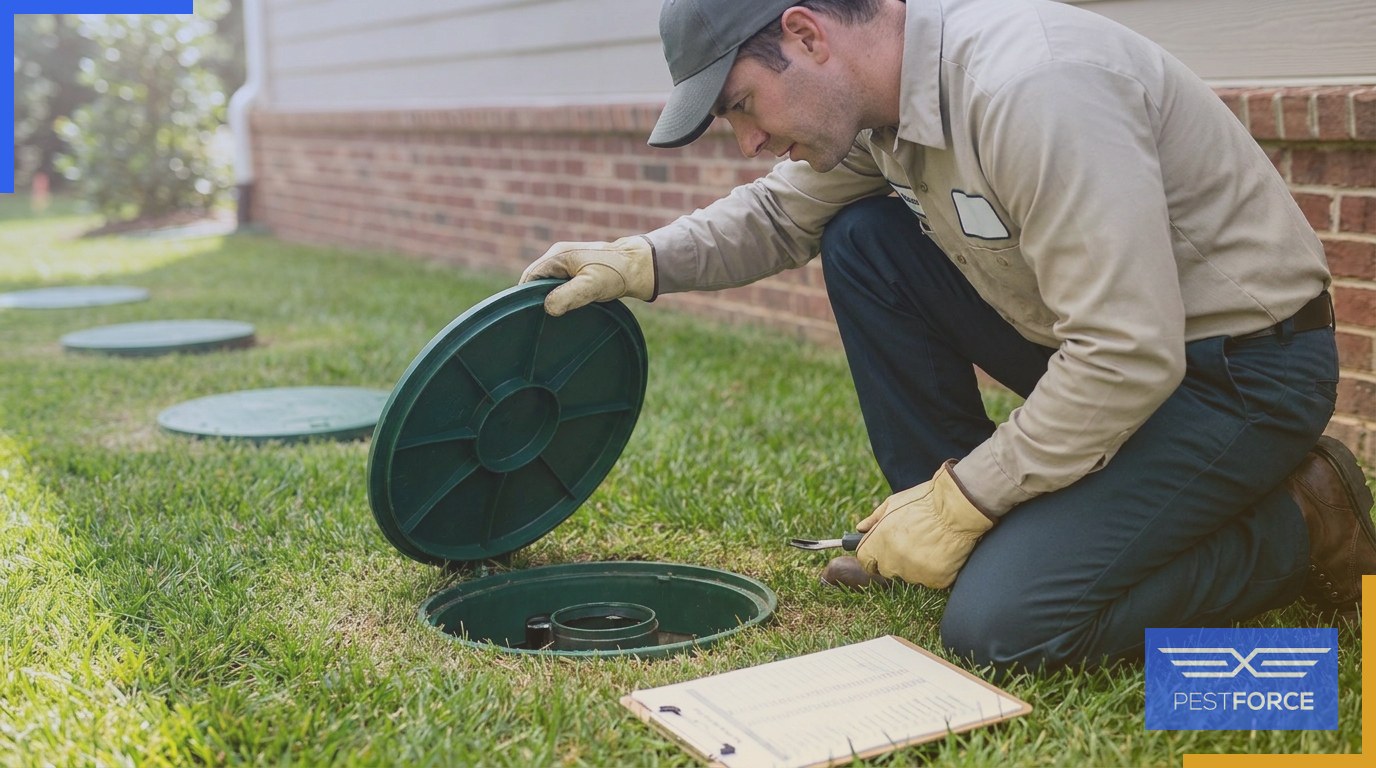
Annual termite monitoring is required to maintain termite warranty coverage for Georgia properties. The Pest Force termite warranty covers re-treatment at no additional cost when technicians find active termites during the coverage period. Missed annual inspections void the warranty, and unauthorized structural modifications void the warranty as well. Skip a year, and the coverage lapses.
Bait station intervals and bait matrix replacement schedules shift with Georgia seasons. Spring and fall bring higher termite activity, so technicians check stations more frequently during those periods than in mid-summer or winter.
A Wood-Destroying Organism (WDO) report is an official inspection document that records visible evidence of termites, wood-boring insects, and wood-decay fungi, along with conditions that invite infestation. Georgia lenders and buyers commonly require a WDO report before closing a real estate transaction, and a Pest Force inspection produces the required WDO documentation. The Termite Inspections page details the full inspection service, and the subterranean termite protection Georgia explains how monitoring, warranty, and documentation fit together long term.
How can Georgia homeowners reduce subterranean termite risk before and during construction or renovation?
Georgia homeowners reduce subterranean termite risk by applying a pre-construction soil treatment before the slab is poured, minimizing soil-to-wood contact, using pressure-treated lumber at ground level, and grading the lot so water drains away from the foundation.
1. Treat the soil first. The soil treatment before foundation pour applies termiticide across the entire footprint, creating a continuous chemical barrier beneath the slab. Bare dirt is the cheapest termite treatment a property will ever get; once concrete covers the ground, reaching that same soil costs more and protects less. 2. Break every soil-to-wood connection. Siding, deck posts, stair stringers, and door frames that touch soil give subterranean termites a direct bridge into the structure. Concrete piers, metal post bases, and a visible inspection gap between soil and wood remove the bridge. 3. Use pressure-treated lumber at ground level. Pressure-treated sill plates and support posts resist termite feeding wherever wood must sit near soil or concrete. 4. Move water away from the foundation. Grade the lot so it slopes away from the slab, and extend downspouts past the backfill zone. Wet soil keeps termites comfortable.
The same rules govern additions and renovations, because new footings and deck posts open fresh paths into an existing structure. How to Prevent Termites When Building or Renovating in Georgia covers termite-proofing new construction in Georgia from site preparation through final grading.
Sources
- Georgia Department of Agriculture, “Appraisal and Property Requirements ATL-HOC Tip Zone Information (NPMA-33)”
- U.S. Department of Housing and Urban Development, “HOC Reference Guide – Pest Control (Page 1-23)”
- National Pest Management Association, “Subterranean Termites: Damage, Prevention, & Control”
- University of Maryland Extension, “Termites”
- Mississippi State University Extension Service, “Termite Facts (for eastern subterranean termites or Formosan termites)”
- Mississippi State University Extension Service, “Eastern Subterranean Termite Swarmers, Vol. 8, No. 2” (2022)
- Mississippi State University Extension Service, “Termite Time!, Vol. 9, No. 02” (2023)