
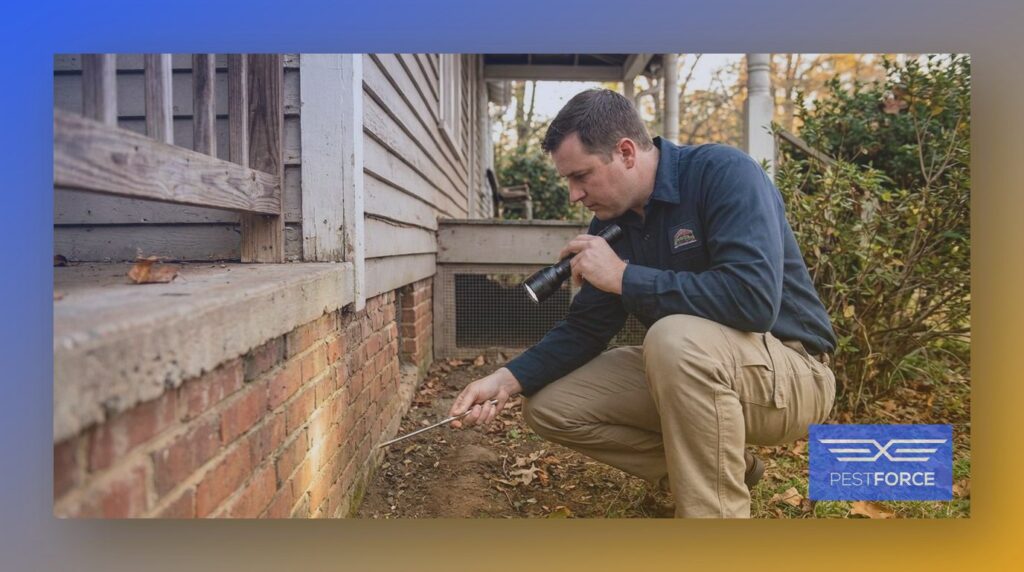
Termites cause more structural damage to Georgia homes than any other pest, and Pest Force protects those homes with licensed termite inspections, liquid Termidor barrier treatments, bait station monitoring, and annual protection warranties. Pest Force’s termite control program eliminates active subterranean and drywood infestations and prevents re-infestation. Every Pest Force treatment carries the 100% Happy or You Don’t Pay guarantee.
Why are Georgia homes especially vulnerable to termite damage?
Georgia homes face elevated termite risk because the state’s warm, humid climate keeps colonies active through an extended foraging season that accelerates structural damage timelines, Eastern subterranean termites dominate the region, and widespread wood-frame, crawl-space construction creates direct soil-to-wood contact.
The University of Georgia College of Agricultural & Environmental Sciences places Georgia inside the “termite belt,” a region where mild temperatures and abundant rainfall keep termites common and abundant. Average annual rainfall in Georgia exceeds 52 inches, and pest management professionals classify most of the state as a very heavy infestation risk area (Arete Pest Control, 2026). Unlike northern states, where cold winters force colonies into dormancy, Georgia colonies keep feeding through winter whenever heated foundations or insulated crawl spaces moderate soil temperatures (Arete Pest Control, 2026).
The Eastern subterranean termite is the dominant and most destructive termite species in Georgia. Eastern subterranean termite colonies nest in soil and send workers into structures through multiple entry points simultaneously, and the University of Georgia College of Agricultural & Environmental Sciences reports that the yard of most Georgia homes hosts one or more related termite groups. A mature subterranean colony holds between 60,000 and two million workers that eat wood around the clock (National Pest Management Association), and Eastern subterranean colonies average roughly 300,000 members (PURCOR Pest Solutions, 2023). Workers, soldiers, and swarmers perform distinct functions within Eastern subterranean termite colonies, and homeowners can explore each caste’s role through the in-depth Georgia termite resource.
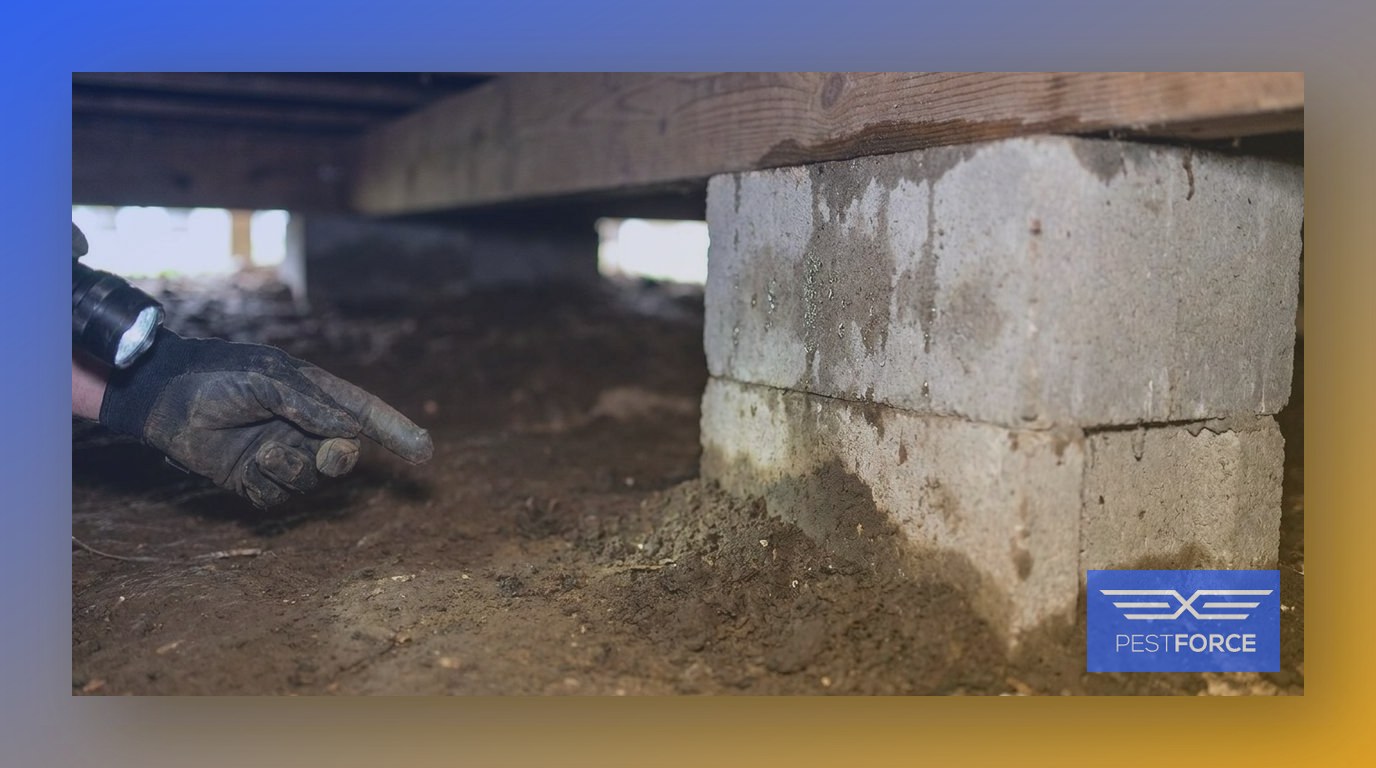
Construction practices amplify the exposure. Most Georgia homes combine wooden structures with crawl spaces that supply both cellulose and moisture (Smart Solutions Pest Control, 2026), and older wood-frame homes frequently rest on piers or foundation walls where soil touches wood directly. Foraging workers exploit that soil-to-wood contact, and homeowners typically discover infestations through mud tubes along foundations, wood that sounds hollow when tapped, or discarded wings that swarmers leave behind. Infestation pressure varies across Georgia, and homeowners can gauge local exposure through the termite risk by Georgia county.
Termites cause more than $5 billion in U.S. property damage each year, a total exceeding the combined damage from tornadoes, fires, and earthquakes, and most homeowners insurance policies do not cover the repair costs (Massey Services, 2025). Standard homeowners insurance exclusions make proactive termite protection a financial necessity for Georgia property owners. Drywood termites, which infest wood directly without soil contact, occur less often in Georgia but do appear in coastal and southern counties. Pest Force, a family-owned Georgia pest control company, holds a license under Georgia’s structural pest control regulations and treats both Eastern subterranean and drywood termites for homes and businesses in Monroe, Loganville, Winder, and surrounding communities.
What does a Pest Force termite inspection include?
A Pest Force termite inspection examines the foundation perimeter, crawl space, attic, interior wood members, and exterior landscaping contact points for active infestation, previous damage, and high-risk conditions, and contains a Wood-Destroying Organism report required for Georgia real estate closings and pre-purchase transactions.
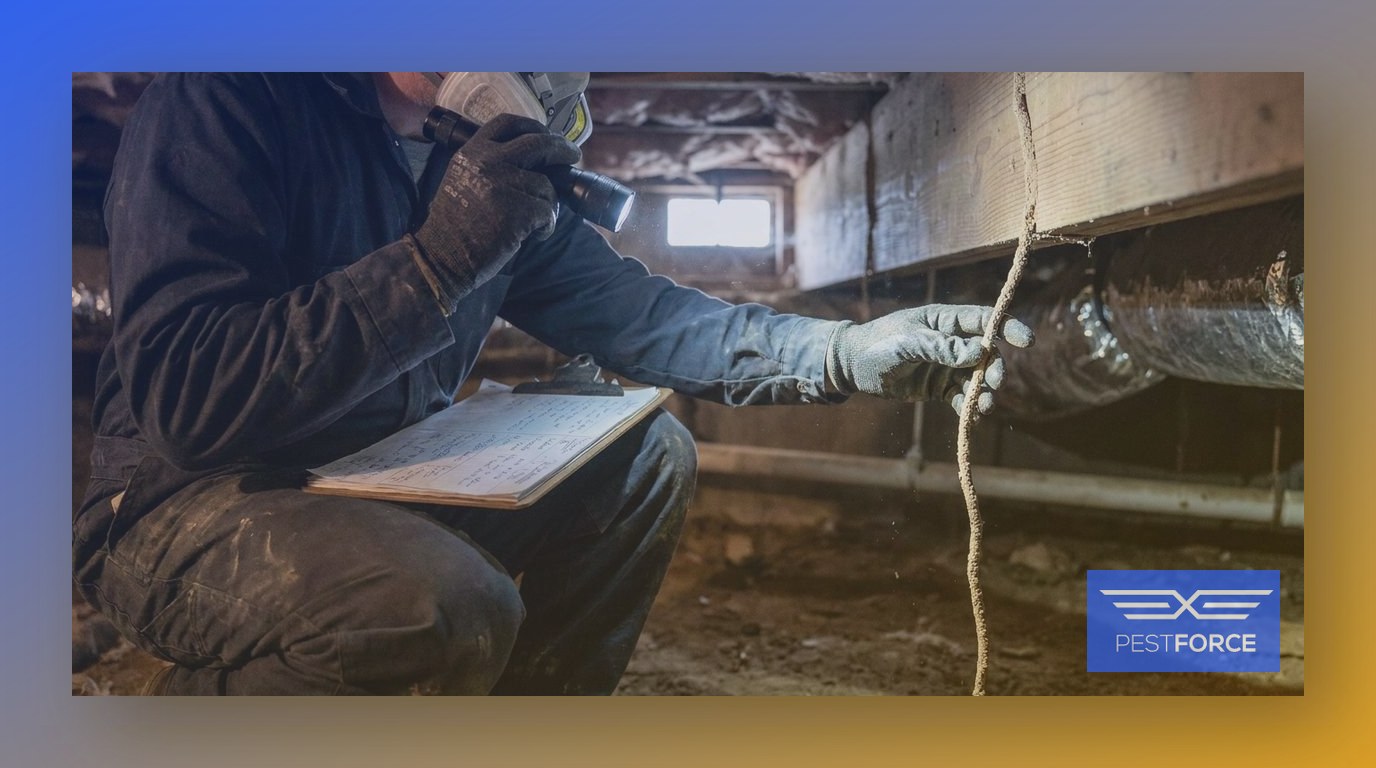
Pest Force inspectors look for the field signs Georgia pest professionals identify as primary warnings. According to Healthy Home Pest Control GA in 2026, subterranean termites build mud tubes to move between soil and wood, and the tubes appear along foundations, crawl spaces, and basement walls. Breda Pest Management lists hollow-sounding wood, mud tubes, and discarded wings near windowsills or doorways as the three primary warning signs for Georgia homeowners. Pest Force inspectors record each finding during the pre-treatment termite evaluation before any barrier or bait work begins.
The Pest Force inspection produces a Wood-Destroying Organism (WDO) report, the document most Georgia mortgage lenders and real estate attorneys require at closing. A WDO inspection report documents visible evidence only. The report is not a warranty, and the report does not guarantee that no termites are present in areas that were inaccessible during the inspection. Homeowners who receive a clear WDO report at closing often mistakenly believe they are protected. Ongoing annual monitoring is a separate, necessary layer.
Active Pest Force warranty plans include annual re-inspection visits, and each visit catches new activity before structural damage develops. Pest Force also offers K9 termite detection for high-sensitivity inspections where visual evidence is inconclusive.
How does Pest Force’s Termidor liquid barrier treatment work?
Pest Force applies Termidor, a non-repellent fipronil termiticide, as a continuous liquid barrier in the soil around and beneath the foundation. Foraging termites pass through the treated zone undetected, spread fipronil to nestmates, and the colony collapses from within.
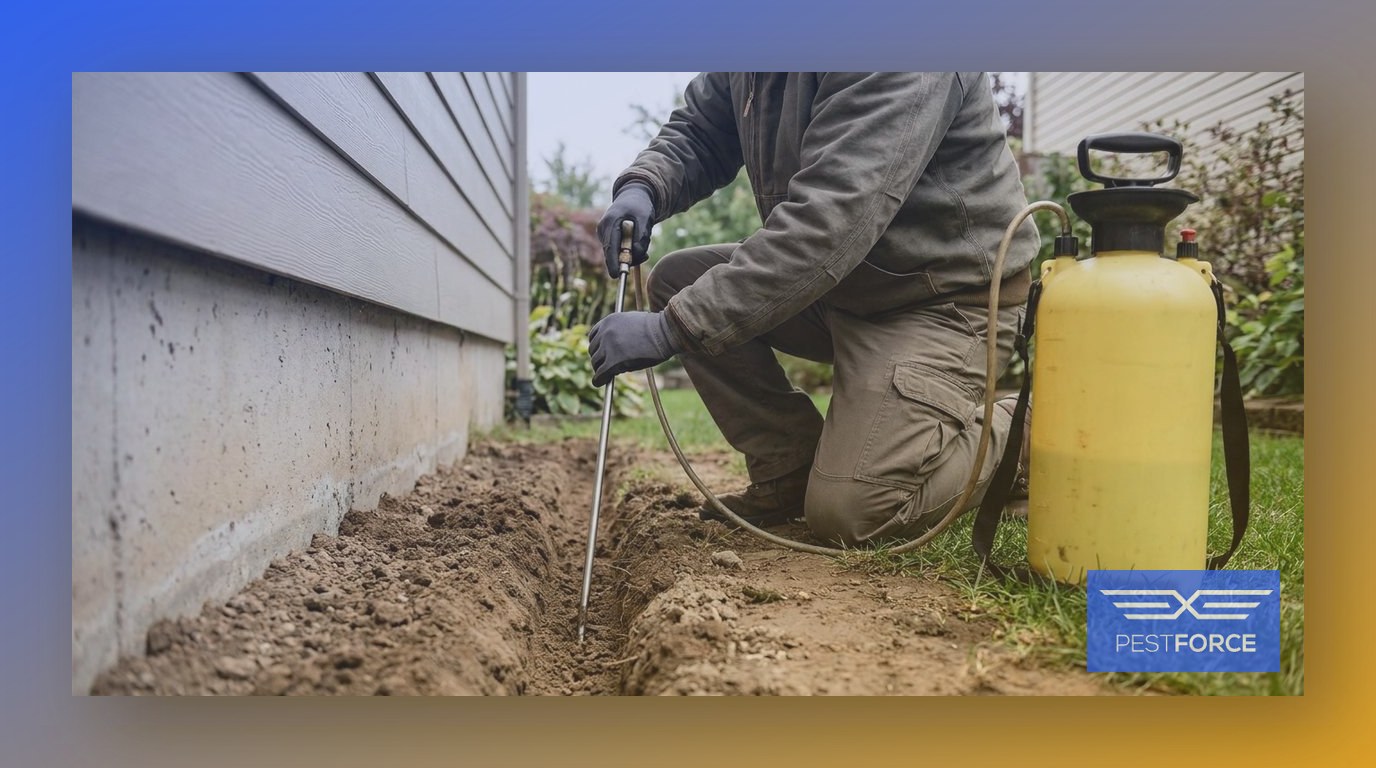
Pest Force uses the Termidor liquid barrier as the primary treatment for active subterranean termite infestations in Georgia homes. Application is a full-structure treatment, not a spot treatment. Technicians dig a narrow trench in the soil along the entire foundation perimeter, inject Termidor by rodding into the soil beneath the footing and around piers to reach the zones termites travel, and drill through slabs where concrete abuts the structure, such as garages and porches, to inject Termidor underneath. Termidor saturates the trench and the drilled slab points, and technicians restore the soil, leaving a continuous barrier across every entry point termites use to reach wood.
Termidor fipronil has a transfer effect that spreads the active ingredient through the colony via grooming and feeding contact. LegalExaminer reported in 2026 that fipronil kills insects by disrupting the central nervous system through blocking GABA-gated chloride channels, and that its non-repellent nature lets exposed termites carry it back to the colony. A repellent product like permethrin does the opposite: termites detect the repellent, detour around the treated zone, and the colony survives.
Termidor is the most widely used professional liquid termiticide in the U.S., with a strong track record of long-term residual effectiveness in Georgia soil conditions. Because subterranean termites nest in the ground, Pest Force applies Georgia underground termite treatment to the soil itself rather than the wood above the soil.
When does Pest Force recommend bait stations instead of a liquid barrier?
Pest Force recommends termite bait stations when liquid soil injection would disrupt established landscaping, hardscape, or utility lines around the foundation. Termite bait stations serve Pest Force as a long-term monitoring and elimination system installed around the structure perimeter, while liquid Termidor suits confirmed active infestations.
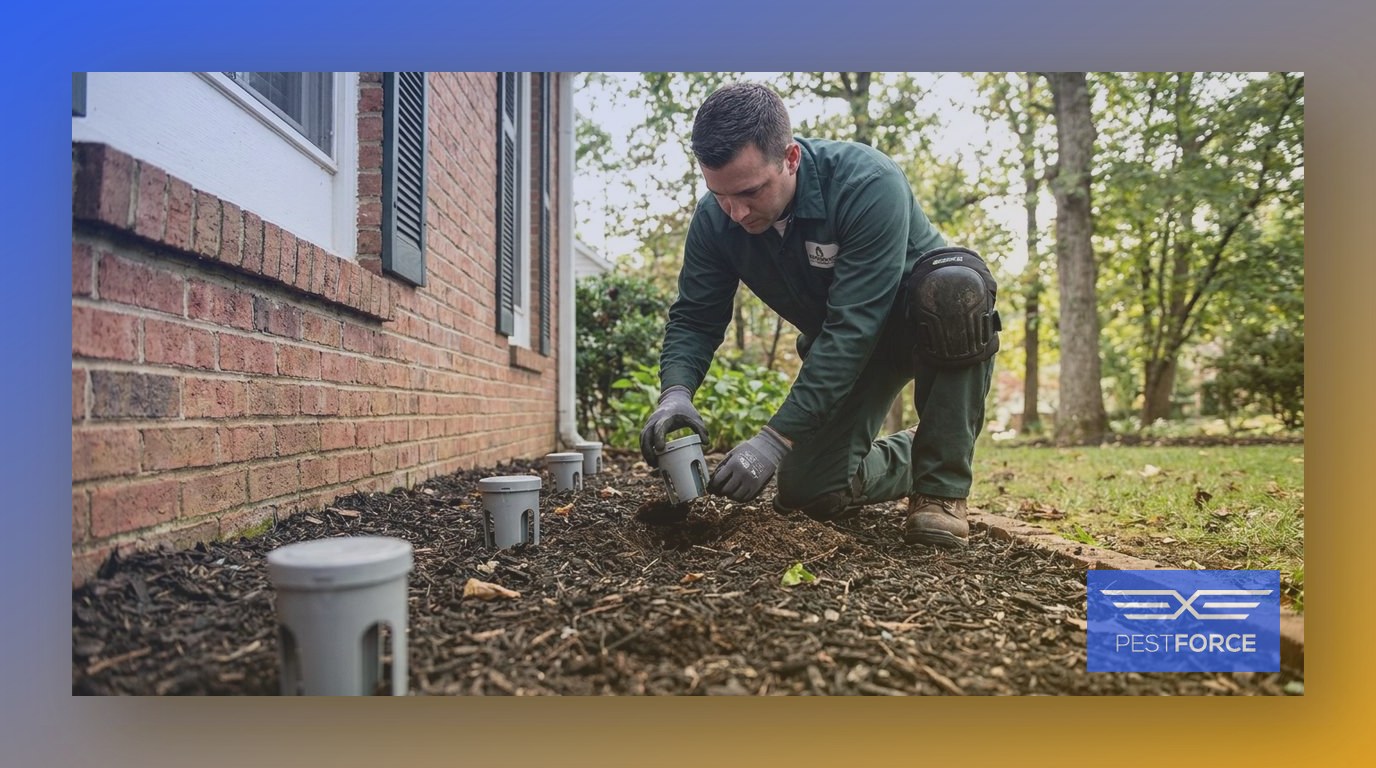
Technicians install bait stations in the soil around the structure perimeter at regular intervals. Termites foraging through the area find and feed on a slow-acting toxicant inside the station, then carry the toxicant back to the colony, causing colony-wide elimination. Pest Force monitors bait stations on a scheduled cycle, replacing the bait matrix as termites consume it and checking each station for new termite activity.
Bait stations and liquid barriers are not interchangeable defaults. Liquid Termidor acts faster and fits active infestations or construction with minimal soil access, while bait stations perform better as a long-term monitoring and prevention system once active infestation risk is controlled. Pest Force selects the treatment method through a site-specific assessment of each Georgia property, not a one-size default, and the available termite treatment methods comparison explains how each option matches different property conditions.
Foam termiticide application covers void spaces, wall cavities, and areas where liquid trenching or bait station placement is not physically accessible. Foam application works as a supplemental method, not a standalone treatment.
What does Pest Force’s termite protection warranty cover?
Pest Force’s termite protection warranty covers re-treatment at no additional cost if termite activity is detected during the warranty period, and the warranty includes a scheduled annual inspection of the treated zone. The annual termite warranty applies to Georgia homeowners and commercial property owners who complete a Pest Force termite treatment.
Each warranty year includes one scheduled annual inspection visit. A Pest Force technician confirms the treated zone remains intact and verifies that no new termite activity has developed around the structure.
The warranty renews annually, providing continuous, documented protection for as long as the property owner keeps the plan active. These records matter. Homeowners who need proof of ongoing termite management for resale or insurance purposes receive dated inspection documentation at every renewal visit.
Pest Force termite control carries the 100% Happy or You Don’t Pay guarantee, which covers all termite treatment and protection services.
The Pest Force termite protection team handles warranty enrollment, inspection scheduling, and annual renewals for treated homes and businesses. The combined termite and household pest defense documents how termite warranty coverage coordinates with routine household pest service plans for properties facing broader pest pressures.
Sources
- Massey Services, “Termite Damage Cost” (2025)
- Arete Pest Control, “Subterranean Termite Risk in Dacula, GA | Warning Signs” (2026)
- Smart Solutions Pest Control, “Termites in Georgia: Identification, Treatment & Prevention” (2026)
- PURCOR Pest Solutions, “Termites 101” (2023)
- Breda Pest Management, “Understanding Termite Behavior: Homes at Risk in Georgia”
- Healthy Home Pest Control GA, “Types of Termites in Georgia: Subterranean vs Other Species” (2026)
- LegalExaminer, “What Should Consumers Know About Termidor (a.k.a. fipronil) – 2026 Update” (2026)