
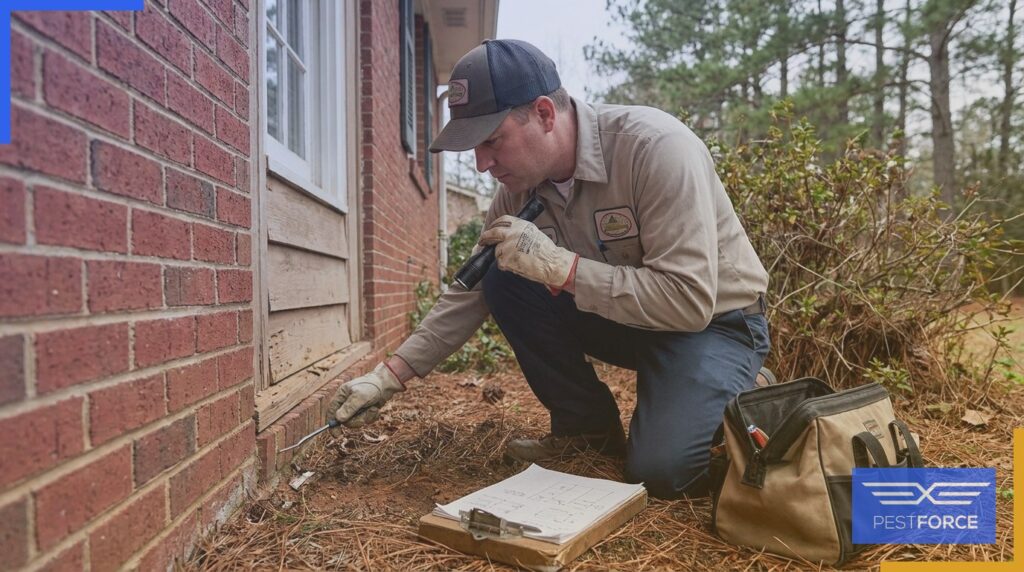
Pest Force performs licensed termite inspections for residential and commercial properties across Georgia. Pest Force inspectors issue WDO reports that satisfy real estate closing requirements and detect active Eastern subterranean termite activity before colonies cause structural damage. Annual monitoring visits from Pest Force keep Georgia properties protected between transactions.
What does a professional termite inspection from Pest Force cover?
A Pest Force termite inspection covers the crawl space, attic, foundation perimeter, garage, interior wood framing, and moisture-prone zones of a Georgia property. A licensed Pest Force inspector examines every accessible area for live termites, structural damage, and the conditions that attract them, then documents the findings in a written report.
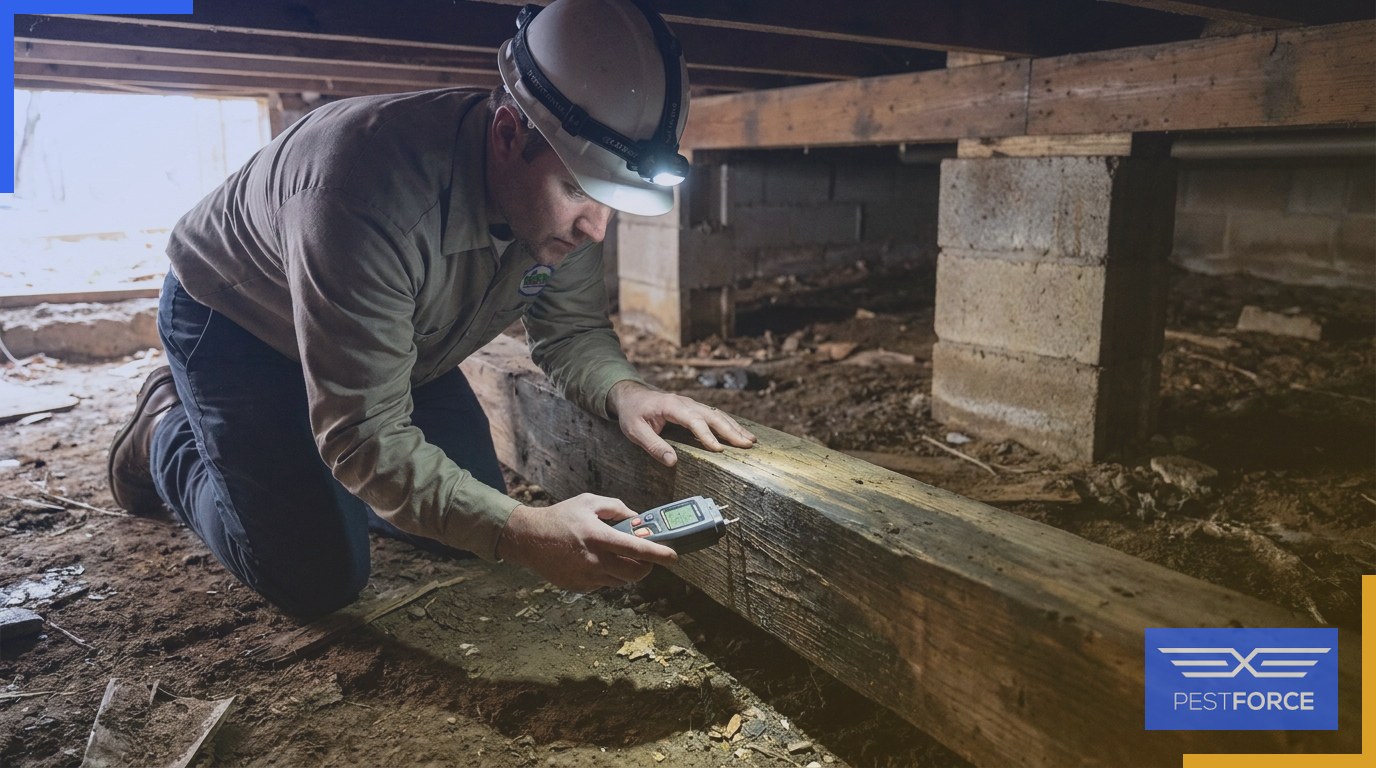
A Pest Force termite inspection contains examination of crawl spaces, attics, the foundation perimeter, moisture zones, and wood-to-soil contact points. The crawl space receives the closest attention because Eastern subterranean termites enter structures from the soil. The inspector walks the foundation perimeter for exterior entry routes, checks the garage slab for cracks and expansion joints, and examines interior wood framing for damage. Moisture-prone zones around plumbing penetrations, water heaters, and HVAC condensate lines get probed one by one.
During that examination, inspectors look for mud tubes, frass, swarm evidence, hollow-sounding wood, buckled paint, and damaged joists. According to the University of Georgia Cooperative Extension, subterranean termites build hollow mud tubes from moist soil and their own saliva to protect themselves from predators and desiccation. A tube running up a foundation wall is a working highway between colony and food source. Discarded wings near windowsills point to a recent swarm, and wood that sounds hollow under a tap has usually been eaten from the inside out.
Three tools do most of the diagnostic work: moisture meters, probing tools, and thermal imaging. Moisture meters flag the damp wood termites prefer. Probing tools test joists, sills, and studs for softness the eye misses. Thermal imaging comes into play where wall voids or slab construction hide suspected activity behind finished surfaces.
The written report documents every area examined, the evidence found in each one, moisture readings, damage locations, and conditions conducive to future infestation. The Pest Force inspector then reviews the report with the property owner in a post-inspection walkthrough, so findings arrive both verbally and in writing. The what inspectors examine and report explains how Pest Force documents and communicates each finding.
The Eastern subterranean termite is the primary target species in Georgia termite inspections, and the inspection protocol is built around its behavior: soil-level colonies, mud tube construction, and entry through ground contact. Georgia’s high humidity, warm winters, and expansive clay soils keep these termites active at the soil level all year, so timing matters less than thoroughness. A January inspection can still uncover active mud tubes and live colonies. Drywood termites are far less common in Georgia, though they appear in some coastal and older urban properties. Pest Force inspectors assess for both species, but the protocol is designed primarily around subterranean behavior and soil-entry points.
What is a WDO inspection and why does Georgia require it for real estate closings?
A WDO inspection is a wood-destroying organism inspection that produces a legally defined report for Georgia real estate transfers. Only a Georgia Department of Agriculture-licensed pest control operator can issue the report, and lenders and closing attorneys require the report before finalizing a mortgage.
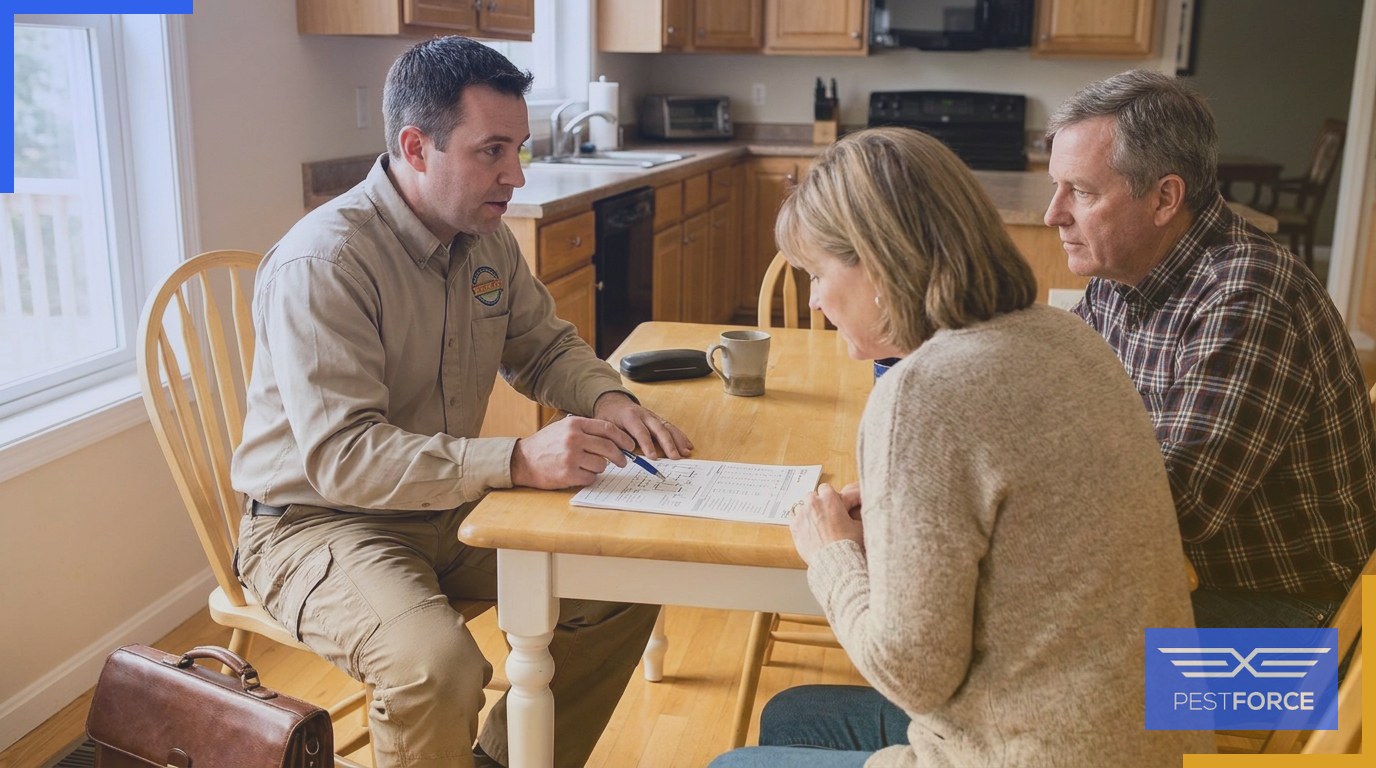
A termite inspection and a WDO inspection are not the same document. A generic termite inspection often covers termites alone and may lack WDO certification, so a lender or closing attorney can reject the generic inspection at closing even when the property shows no termite activity.
The official Georgia WDO report carries specific legal weight:
- Full organism coverage. The wood-destroying organism inspection scope extends beyond termites to wood-boring beetles, such as powderpost beetles, and wood-decay fungi that weaken structural framing.
- Licensed operator requirement. According to the Georgia Department of Agriculture’s Structural Pest Division, the official Georgia Wood Infestation Inspection Report is the basis for transferring real property in Georgia, and only a company licensed in the wood-destroying organisms category can issue the report. A home inspector cannot issue the report.
- Lender and attorney demand. A WDO inspection is a required document in most Georgia residential real estate transactions, and lenders and closing attorneys commonly require a clear or annotated report before releasing funds.
- Written contract. The Georgia Structural Pest Control Act requires every licensee to issue a written contract to the property owner or the owner’s agent for each WDO job.
Pest Force termite inspectors are Georgia-licensed pest control operators authorized to issue WDO reports. Each Pest Force WDO report documents inspected structures, visible infestation or prior damage, conducive conditions, and recommended treatment. The termite report details for home buyers cover the same findings that lenders review before funding. Pest Force schedules pre-closing inspections on short notice and issues completed reports promptly for time-sensitive closings.
Some Georgia real estate contracts set a maximum report age, often 30 days at closing. Buyers and sellers should confirm the timing requirement with the closing attorney before scheduling the WDO inspection.
What should I do to prepare my home for a termite inspection?
Clear the crawl space entry, attic hatch, garage, and basement so the inspector reaches every structural wood surface, and gather prior treatment records, warranties, and past inspection reports before the appointment. Complete access prevents re-inspection fees and scheduling delays.
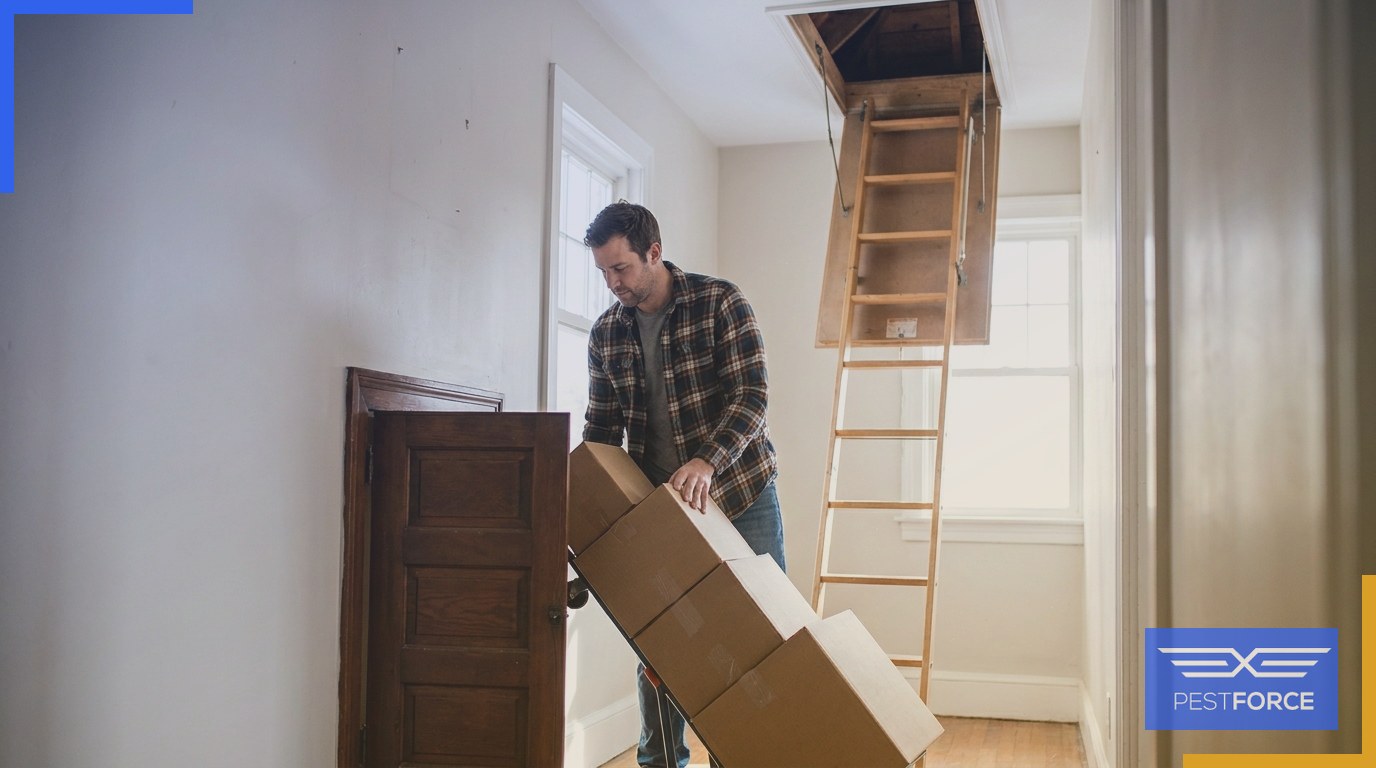
The steps to prepare your home for inspection focus on access: pull stored items away from the crawl space door, keep the pull-down attic ladder free of boxes, and clear a path along garage and basement walls. Full clearance lets the inspector probe sill plates, joists, and foundation walls without climbing over storage.
A blocked area costs money. An inspector who cannot enter the crawl space marks that section inaccessible on the report, which triggers a return visit, a second trip charge, and a stalled closing when the home sits under contract. One hour of moving boxes beats a week of rescheduling.
Paperwork matters as much as floor space. Round up prior treatment records, any active termite bond or warranty, and past inspection reports; these documents show the inspector where activity occurred and which treatment method was applied. Dated notes on spring swarm sightings help as well. The University of Georgia Cooperative Extension reports that the eastern subterranean termite swarms from February through April in Georgia, so a record of when and where swarmers appeared gives the inspector a starting point.
The next steps after termite inspection cover the report findings and any treatment decisions, and a home the inspector finished in one visit moves into that phase without a return trip.
How often should Georgia homeowners schedule termite inspections?
Georgia homeowners should schedule a professional termite inspection once every year. Annual inspection is the industry and warranty standard in Georgia because the Eastern subterranean termite stays active year-round, and an annual termite inspection precedes early detection that prevents structural repair costs averaging thousands of dollars.

The University of Georgia Cooperative Extension identifies the eastern subterranean termite as the most common termite in the eastern United States, with colonies that lay eggs year-round and remain active continuously. Georgia has no dormant season, so a one-time inspection goes stale within months.
A working schedule looks like this:
1. Every 12 months. Book a full inspection on a fixed annual date so the technician compares conditions visit over visit instead of guessing at what changed. 2. One to three years after treatment. Annual inspections deliver their highest value not when termites turn up, but during the post-treatment window. Subterranean colonies can re-establish pressure on a treated zone within 12 to 24 months, and annual monitoring catches re-infestation before a warranty void becomes a dispute. 3. Between scheduled visits. Georgia termite swarm warning signs, such as swarmers near windows or mud tubes along the foundation, tell a homeowner to move the next inspection up rather than wait for the annual date.
Cost settles the question for most homeowners. The University of Georgia Cooperative Extension reports that Georgia residents spend over $200 million to $300 million per year controlling existing infestations and repairing subterranean termite damage. Homeowners weighing whether annual termite inspections are worth it should set a modest yearly fee against that statewide repair bill. Inspection pricing varies by property type and size, so termite inspection costs in Georgia run differently for a standard single-family home than for a commercial or multi-unit property report.
Does Pest Force inspect commercial properties for termites?
Yes. Pest Force inspects commercial properties for termites across Georgia, including multi-unit residential buildings, retail spaces, and warehouses, and Pest Force issues WDO reports for commercial real estate transactions statewide.
Commercial scope differs from a house call. A commercial termite inspection applies to multi-unit residential, retail, and warehouse properties with distinct access and reporting requirements. These buildings demand a perimeter-wide assessment of the full structure rather than a single-unit check, and owners, lenders, and insurers expect written documentation for compliance.
Scheduling runs through the property manager. Pest Force books commercial inspections directly with managers or facility directors, coordinates entry around tenants and business hours, and builds in lead time for multi-building sites. Reporting matches the portfolio: Pest Force delivers multi-building reports for property groups and sets recurring inspection contracts for facilities that need scheduled monitoring. The professional termite treatment programs detail how Pest Force protects a commercial structure when an inspection confirms activity.