
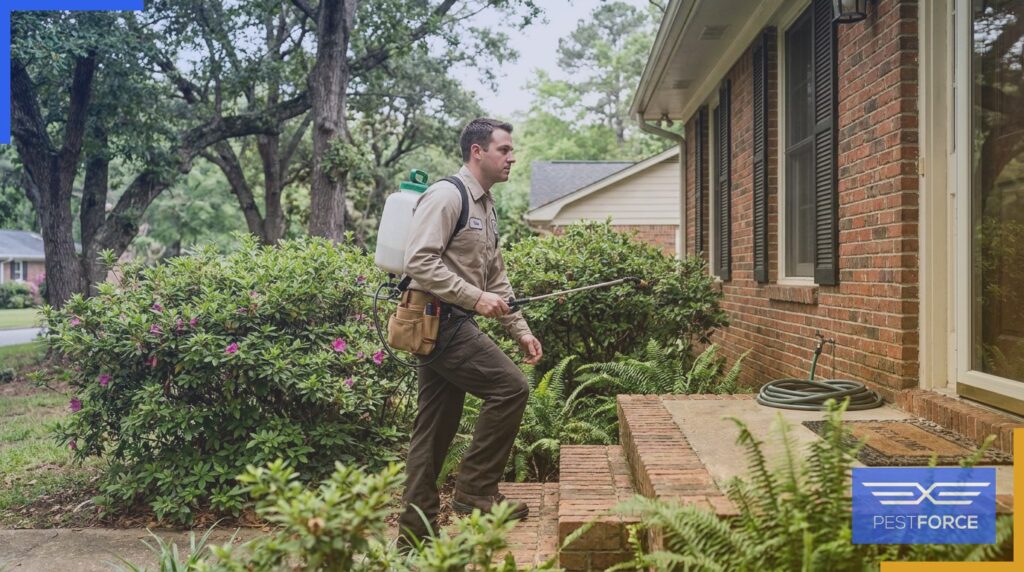
Pest Force provides general pest control services to homes and businesses in Monroe, Loganville, Winder, and surrounding Georgia communities. Pest Force targets the common pests that fall outside dedicated rodent, termite, and bed bug programs: spiders, wasps, silverfish, stink bugs, and seasonal invaders. Pest Force delivers these treatments through recurring programs, and every visit carries a 100% Happy or You Don’t Pay guarantee.
What does Pest Force’s general pest control service cover?
Pest Force general pest control covers spiders, wasps, yellow jackets, hornets, silverfish, stink bugs, centipedes, earwigs, and other common household pests not addressed by dedicated rodent, termite, or bed bug service pages. The program serves Georgia homes and businesses, and Pest Force handles rodents, termites, and bed bugs through separate specialty services.
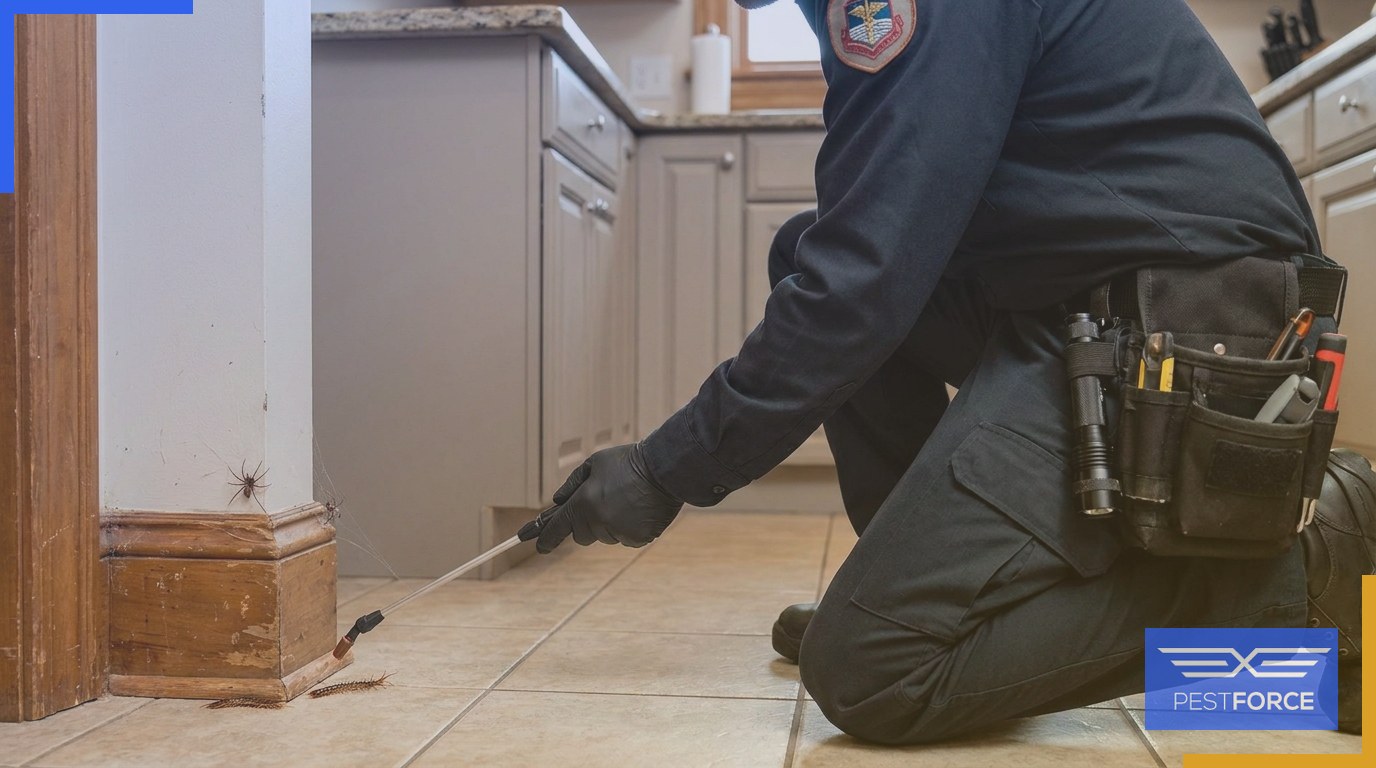
Pest Force offers recurring general pest control treatment programs for homes and businesses in Georgia. The program works as the catch-all plan for everyday pest pressure: if a pest crawls across the kitchen floor, webs up a porch corner, or nests under the eaves, the general plan almost certainly covers that pest. A standard visit pairs an exterior perimeter barrier with interior spot treatment and web removal. The same program serves residential pest control customers in single-family homes and commercial pest control accounts such as offices, restaurants, and warehouses across the Pest Force Georgia service area, making it the go-to family home pest management solution in the region.
The exclusions matter as much. General pest control and rodent, termite, and bed bug control are distinct service categories with different treatment chemistries, inspection protocols, and warranties. A homeowner purchasing a general pest plan from Pest Force should understand that the plan explicitly does not cover subterranean termites, rodent exclusion, or bed bugs, and each of those problems requires its own dedicated program. Crawl spaces do not respect service categories: according to the crawl space professionals at CGS Waterproofing, these spaces stay dark, damp, and undisturbed, which makes them prime habitat for roaches, spiders, termites, centipedes, and rodents at the same time. The general plan treats the spiders and centipedes in that crawl space. The termites and rodents need their own programs.
Pest Force general extermination services focus on structure-invading insects and stinging pests around the building. Turf and ornamental damage sits outside that scope, so properties with lawn pressure pair the general plan with grass and landscape pest control, which targets lawn-damaging insects that the general plan does not address.
Why do Georgia homes need recurring general pest control — not just a one-time treatment?
Georgia homes need recurring general pest control because the state’s humid subtropical climate sustains pest activity in every season, crawl-space construction provides permanent harborage, and exterior pest populations re-colonize treated homes between one-time services.
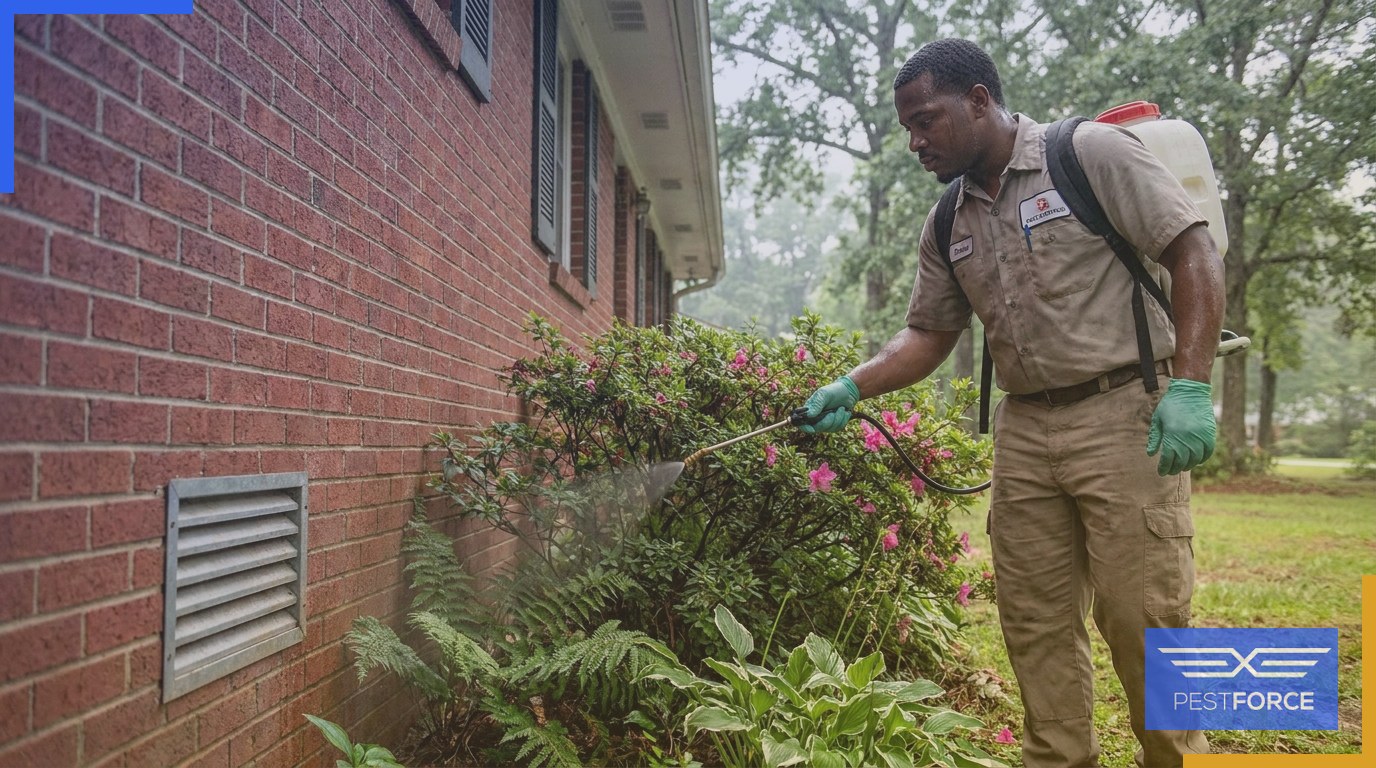
Georgia’s humid subtropical climate causes year-round pest pressure that makes one-time treatments insufficient for lasting control. Wikipedia classifies most of the state as humid subtropical, with short, mild winters and long, hot summers, and WeatherBlaze puts Georgia’s average annual temperature at 61.5°F with 76% average humidity. Mild winters with little snowfall never deliver the hard freeze that resets pest populations farther north. One treatment fades; the breeding does not.
The crawl-space construction common to Georgia homes creates persistent moisture and harborage conditions that attract silverfish, spiders, and centipedes in every month of the year. National Weather Service data shows North Georgia receives measurable rain on about 120 days per year, totaling 50 to 55 inches, and TCT Homes (2026) reports that older Georgia homes built over vented crawl spaces trap that humidity against the foundation.
That climate and construction mix decides which pests actually matter here. Cluster flies and boxelder bugs, the pests that enter homes seasonally in colder states, play a minor role in Georgia infestations. House spiders, paper wasps, and moisture-loving silverfish exploit Georgia’s humidity and crawl-space-heavy construction instead, so these species stay active year-round, not just seasonally.
Exterior pest pressure from neighboring vegetation and structures means pests re-colonize treated homes without scheduled perimeter maintenance. A one-time service kills what is inside that week; spiders and wasps move back from trees, shrubs, and adjoining structures within weeks. Pest Force’s recurring general pest control program re-treats the perimeter on a set schedule, following the statewide pest management strategies that treat Georgia’s climate, construction, and exterior pressure as one connected problem.
How does Pest Force’s general pest control program work?
Pest Force’s general pest control program begins with a full inspection that locates active harborage points, follows with targeted interior and perimeter treatment, and continues with recurring scheduled visits that keep a chemical barrier in place. A 100% Happy or You Don’t Pay guarantee backs every visit.
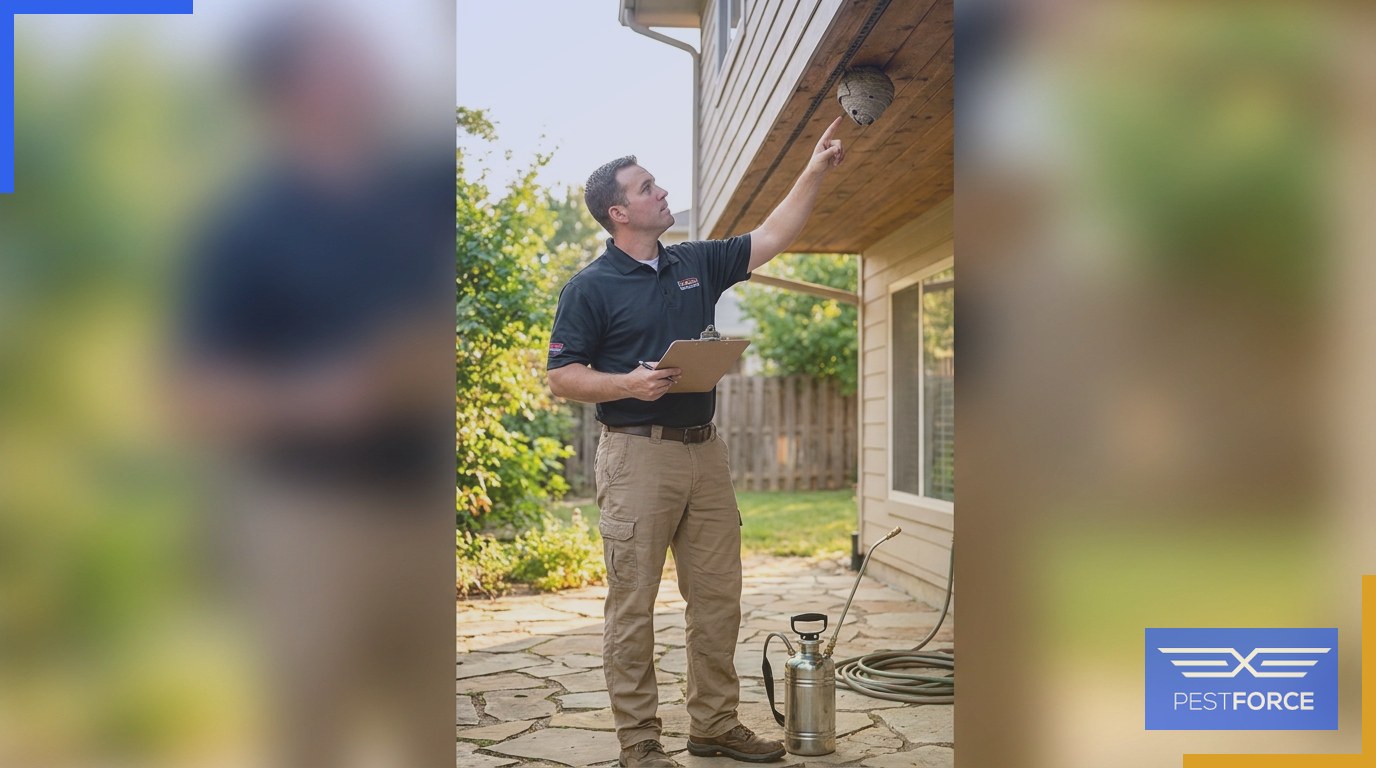
Pest Force general pest control services run on a fixed sequence. A Pest Force technician walks the property first and pinpoints active harborage points before any product goes down, because spraying blind wastes money and leaves nests untouched. The initial interior and perimeter treatment then hits the pests and entry points the inspection found. Recurring scheduled visits refresh perimeter and interior treatments, holding the chemical barrier against re-infestation. If pests show up between visits, Pest Force returns at no extra charge.
Pest Force’s recurring treatment program is backed by the 100% Happy or You Don’t Pay guarantee, so a flare-up between scheduled services costs the homeowner nothing. The family-owned Pest Force crew runs those visits and answers those callbacks directly.
A single pest control application will not hold. Spiders, wasps, and seasonal invaders re-colonize from surrounding vegetation and neighboring structures, and a single application wears off long before the pests stop coming. Recurring scheduled service, not a one-time visit, is the correct intervention model for Georgia homes.
Commercial properties face the same general pest pressures as homes. Offices, warehouses, and retail spaces across Georgia often require discreet, scheduled service that does not disrupt operations, and Pest Force builds commercial scheduling into the same program. Pest Force’s general pest control services apply to both residential homeowners and commercial properties across Monroe, Loganville, Winder, Athens, and the surrounding Georgia communities, all served by the same family-owned operation.
Which specific pests does Pest Force target under general pest control?
Pest Force targets spiders, wasps, yellow jackets, hornets, silverfish, stink bugs, centipedes, earwigs, boxelder bugs, and other common nuisance pests across Georgia homes and commercial spaces. Rodents, termites, and bed bugs require specialty protocols and fall under separate dedicated treatment programs.
Pest Force’s dedicated spider and stinging insect sub-pillar service page covers spider and stinging insect control in detail. Black widows favor garages and crawl spaces, brown recluses hide in storage clutter, and paper wasps, yellow jackets, and hornets nest under eaves and inside wall voids. That service page explains how Pest Force removes venomous spiders and nest-building wasps that pose real safety hazards to families, employees, and customers.
Pest Force’s dedicated occasional invaders and seasonal pests sub-pillar service page covers occasional invaders such as silverfish, stink bugs, centipedes, and earwigs. Silverfish chew paper and fabric in humid bathrooms, closets, and storage boxes. Stink bugs and boxelder bugs slip through exterior gaps each fall to overwinter inside walls and attics, and that page details the entry and overwintering behavior behind those seasonal invasions.
Stink bugs surge in Georgia each fall: they do not sting and they do not damage structures, but mass entry through gaps in siding makes late-summer exclusion more effective than reactive interior treatment. DIY exclusion fails because homeowners seal the obvious window and door gaps while missing roofline joints, soffit vents, and utility penetrations, so stink bugs already inside the walls keep emerging all winter.
General pest control also covers nuisance pests that need no specialty protocol, including house ants in kitchens, crickets in basements, millipedes after heavy rain, and pantry moths in commercial break rooms. Pest Force handles these pests through recurring treatment programs that keep populations down on a scheduled basis.
Sources
- WeatherBlaze, “Georgia, United States Weather History | Climate Data Since 1981”
- Wikipedia, “Climate of Georgia (U.S. state)”
- CGS Waterproofing, “Why Are Bugs Coming From My Crawl Space? Georgia Homeowners Need to Know” (2026)
- TCT Homes, “Crawl Space Problems: Metro Atlanta Home Inspection Guide 2026” (2026)