
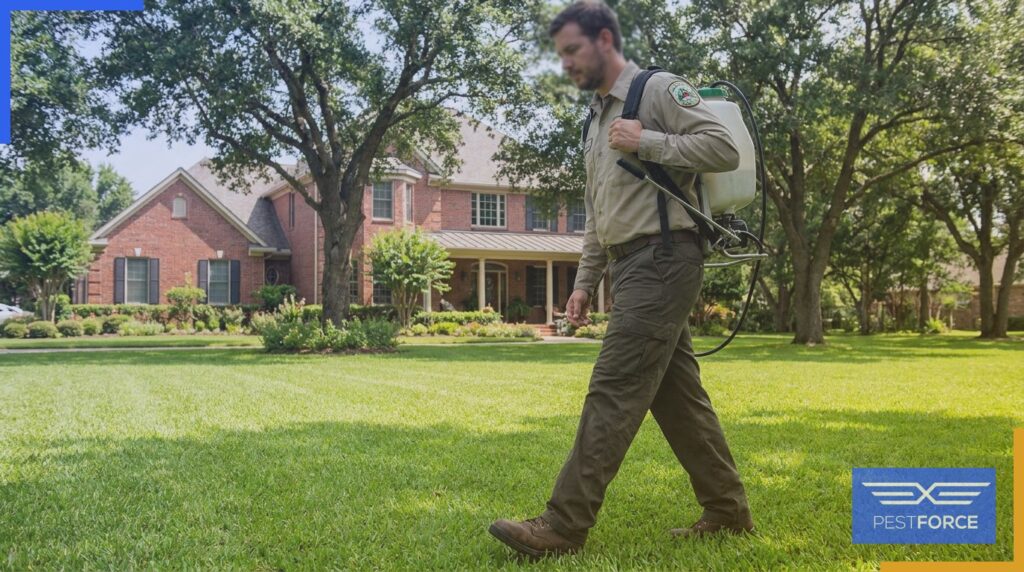
Pest Force’s turf care and yard pest control eliminates Georgia’s year-round outdoor pest pressure at its source. Georgia’s warm, humid climate builds that pressure in lawns and overgrown vegetation, and untreated yards push mosquitoes, fleas, and ticks toward the home. Pest Force’s outdoor programs treat the lawn, vegetation borders, and home perimeter as one connected system rather than isolated problems.
What does Pest Force’s turf care and yard pest control service cover?
Pest Force’s turf care and yard pest control service covers four integrated components: turf care, vegetation overgrowth management, mosquito control, and yard-wide pest programs targeting ticks, fleas, and perimeter pests. Pest Force delivers these components as one connected outdoor system that protects Georgia yards and the home’s perimeter.
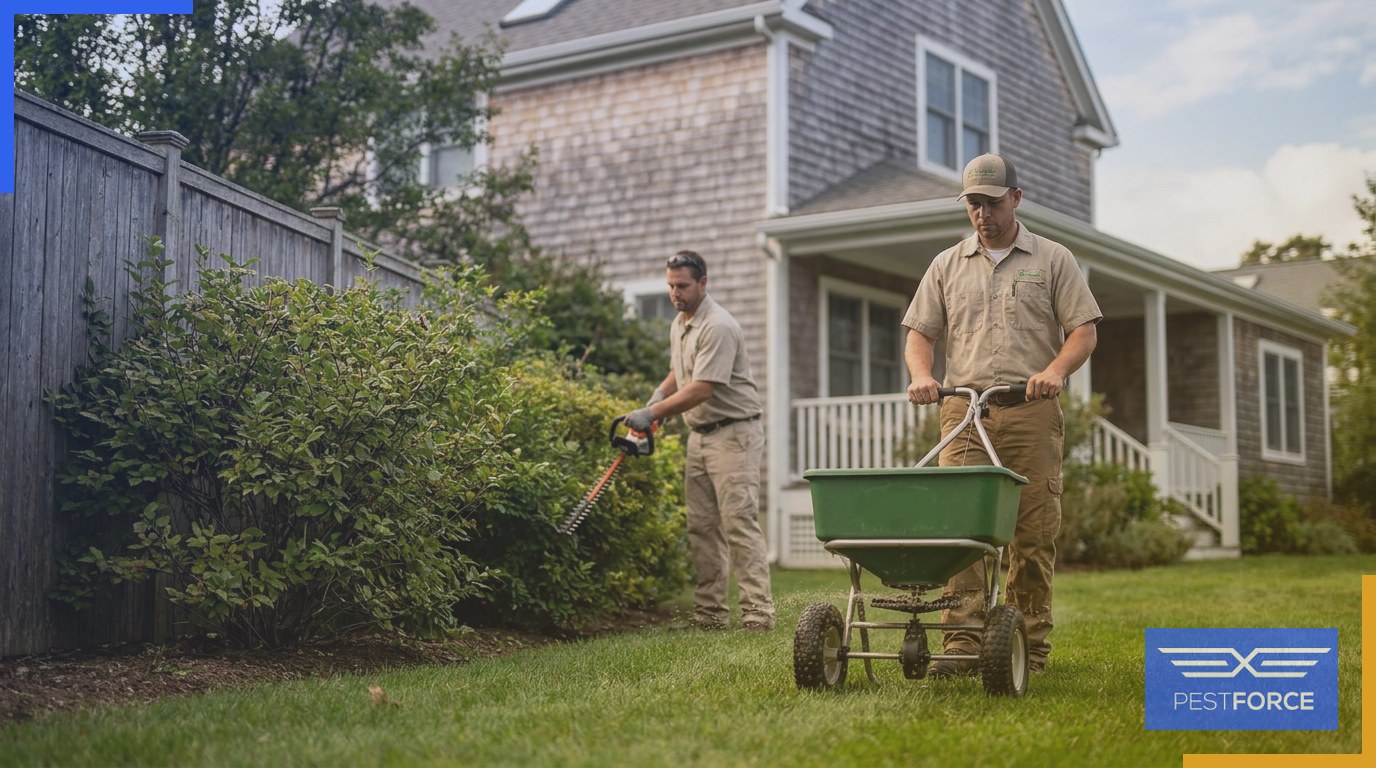
The turf care and vegetation management component keeps grass dense and healthy while cutting back the overgrown beds, ivy, and brush lines where pests harbor. The mosquito control services pair breeding-site reduction with recurring barrier treatments around the structure. The yard pest control programs target ticks, fleas, and perimeter pests pressing toward the house from the lawn.
These four components work as a system, not standalone treatments. Cut turf and trimmed vegetation strip the shelter that ticks and mosquitoes need, so each application holds longer. Perimeter treatments then intercept what survives before pests reach the slab. A yard treated on only one front usually re-infests from the untreated ones.
Specific Georgia yard conditions trigger each component. Standing water in low spots, clogged gutters, and containers calls for mosquito control. Wooded borders and overgrown beds raise tick and flea pressure, and wildlife corridors make it worse: Texas A&M AgriLife Extension Service reports that buildings sometimes become infested with fleas even when no pets are present, because bats, roof rats, squirrels, raccoons, and wild cats nest in structures and seed the infestation. The same wildlife moving through a Georgia yard drops ticks and fleas along the way.
Turf care, mosquito control, and yard pest programs run on recurring scheduled visits through the growing season, because grass regrowth, mosquito breeding cycles, and tick pressure all renew themselves. Pest Force also performs one-time treatments for acute problems, such as a sudden flea outbreak or a mosquito knockdown before an outdoor event. The Pest Force yard and turf specialists walk the property first and match the visit schedule to its actual conditions.
Fire ants sit outside the usual tick and flea grouping, yet they rank among Georgia’s most serious yard pests. Pest Force coordinates turf treatments with fire ant mound treatment, a pairing that matters most for families whose children and pets use the yard daily.
Why does vegetation overgrowth make yard pest problems worse in Georgia?
Overgrown vegetation and tall grass create harborage for ticks, fleas, mosquitoes, and rodents that then pressure the home’s perimeter. Dense growth traps ground-level moisture, shades the soil, and shields pests from sunlight and spray, turning an unmanaged Georgia yard into a self-sustaining pest reservoir.
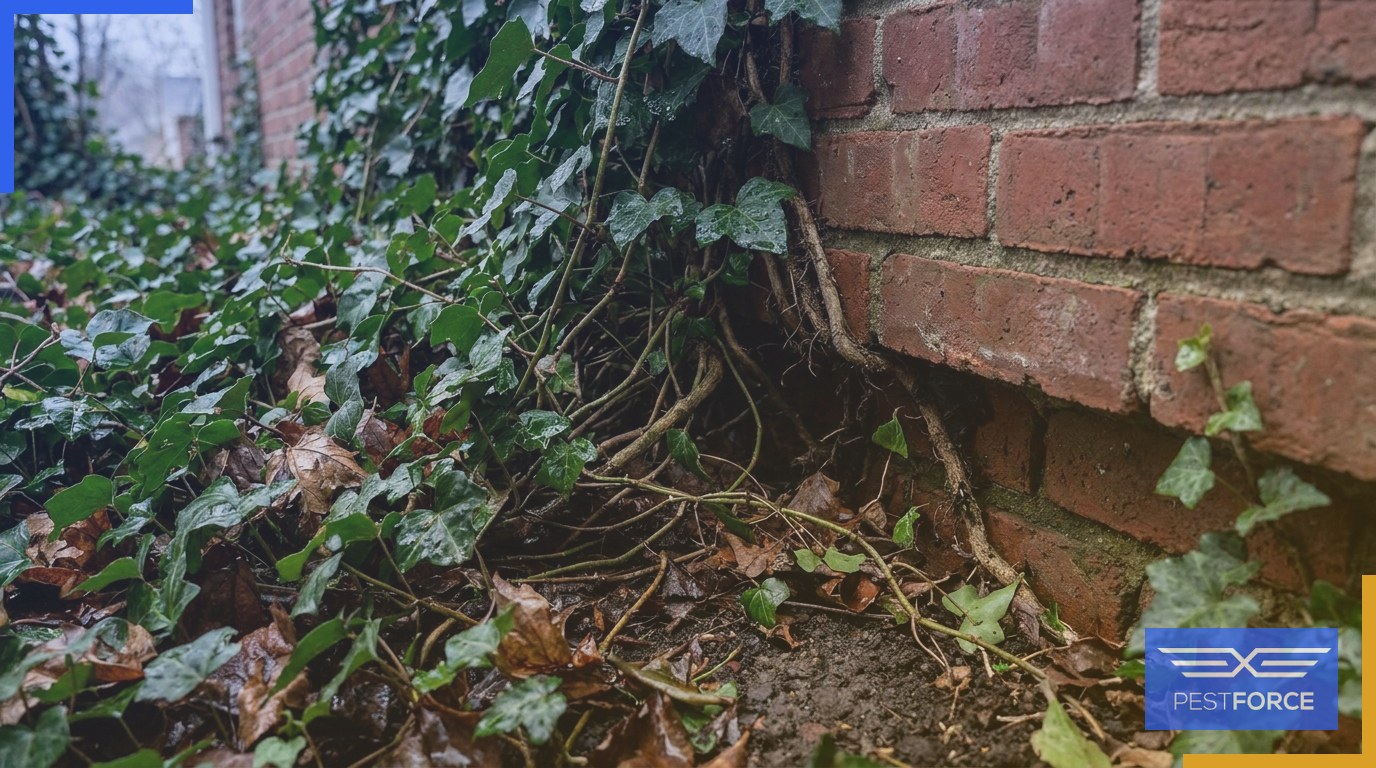
The worst zones sit where mowing stops. Unmowed borders, leaf litter beds, ivy ground cover, and overgrown shrubs within 18 inches of the foundation hold the humidity pests need. The Journal of Integrated Pest Management notes that frequent mowing and vegetation removal lower ground-level humidity, which reduces tick survival. The National Collaborating Centre for Environmental Health reports that ticks concentrate within about 10 feet of the yard perimeter, especially in lots bordering woods, stone walls, or dense ground cover, while short sunny lawns hold few.
Each zone feeds a different pest. Ticks stage on tall grass blades; an Emory University researcher told the Atlanta Journal-Constitution, “As soon as you touch that vegetation, they’re going to latch and grab onto your clothes and then climb onto your body.” Shaded organic debris shelters fleas, and dense growth retains the moisture mosquitoes need to breed.
Spraying around intact overgrowth is a documented re-treatment trap. Canopy and thatch intercept droplets before they reach the soil, and shaded, humid refuges accelerate the breakdown of residual barriers, so surviving pests recolonize within weeks. Turf care and vegetation management reduces pest harborage zones at the yard perimeter, making chemical treatments more effective and longer-lasting. Vegetation work is a force multiplier, not a cosmetic add-on. The yard overgrowth and pest pressure documents how harborage structure drives repeat infestations.
The lawn and brush management for pest reduction defines the split. Pest Force technicians cut back foundation shrubs, ivy, and border grass inside the treatment zone. The homeowner handles mowing, raking leaf litter, and clearing debris before the visit, so the product lands on open ground instead of a hedge.
How does Pest Force treat fleas and ticks in Georgia yards?
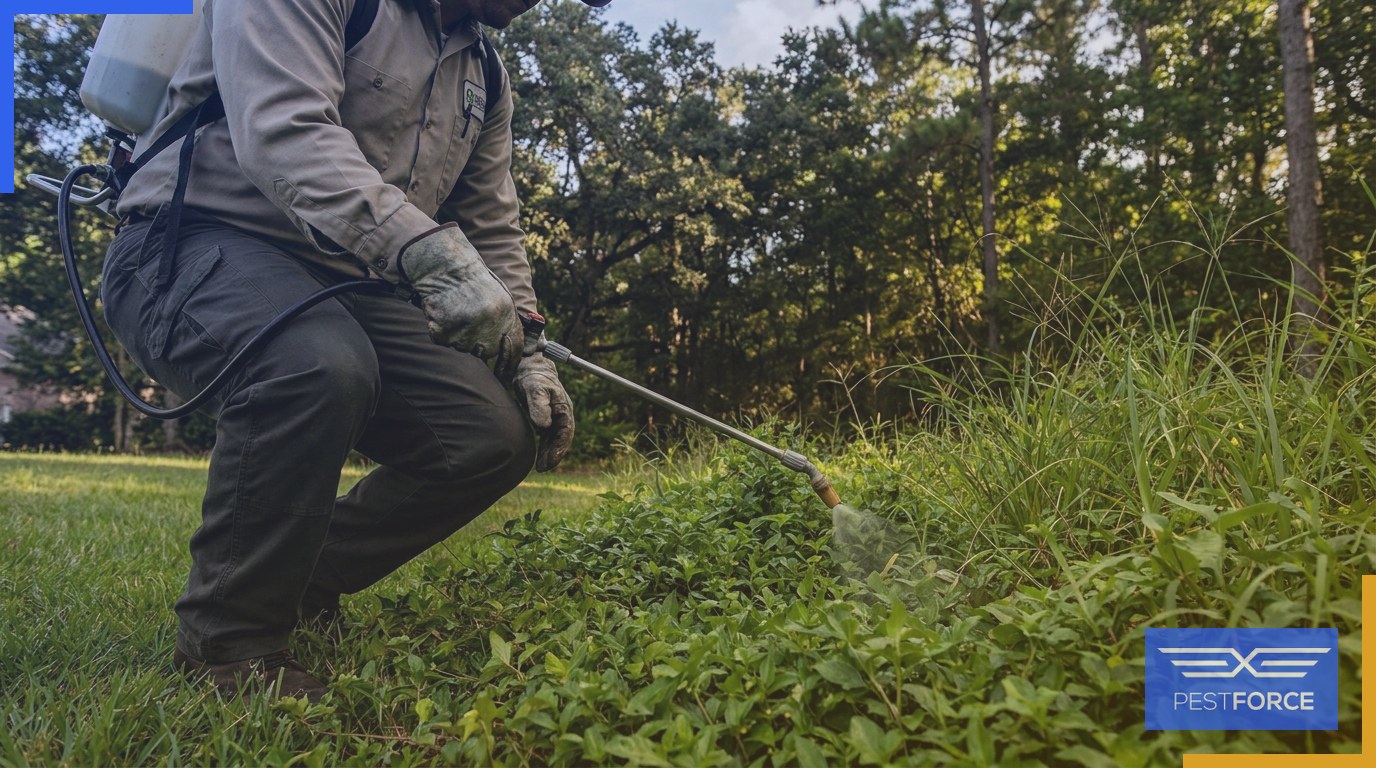
Pest Force treats fleas and ticks in Georgia yards with granular and liquid applications across turf, ground-level vegetation, and shaded wildlife travel zones, paired with habitat disruption that removes the harborage ticks require and breaks the wildlife-to-yard-to-pet flea transmission cycle.
The University of Georgia Cooperative Extension identified three tick species most commonly associated with humans in Georgia in 2025: the Lone Star tick, the American dog tick, and the black-legged tick. Emory University researchers called the Lone Star tick the most common tick found on humans in Georgia in 2024, and a 2024 Parasites and Vectors study describes the Lone Star tick as an aggressive questing species that harbors several pathogens dangerous to humans. The Lone Star actively pursues hosts rather than waiting on vegetation like the deer tick of the Northeast, so Pest Force pairs chemical application with active habitat disruption instead of relying on chemicals alone. The CDC reports the American dog tick transmits tularemia and Rocky Mountain spotted fever, with the highest bite risk during spring and summer. The black-legged tick transmits Lyme disease.
Flea infestations follow a wildlife-driven cycle. Wildlife hosts cause yard-origin flea infestations: deer, raccoons, and opossums deposit fleas while crossing a yard, the fleas transfer to pets, and the pets carry the fleas into the home. When indoor flea problems keep returning after indoor treatment, the yard is the reservoir, and yard treatment becomes essential. Yard flea and tick treatment pairs with indoor residential pest control when fleas have already entered the home.
Georgia homeowners often conflate yard pest control with a perimeter spray, but a perimeter spray alone does not break the transmission cycle. Tick harborage concentrates in tall grass, leaf litter, and shaded ground-level vegetation. Flea larvae develop in shaded, undisturbed areas where wildlife rests. Chemicals alone fall short, so Pest Force follows a targeted sequence:
1. Habitat disruption: crews remove leaf litter and cut tall grass and ground-level vegetation in shaded zones, eliminating the harborage fleas and ticks require. 2. Granular applications: technicians apply granular product across turf where pets and people move. 3. Liquid applications: technicians treat ground-level vegetation, shaded wildlife travel zones, the property perimeter, and trails; the National Collaborating Centre for Environmental Health reported in 2023 that tick applications succeed most when focused on exactly these shady habitats.
Pest Force’s yard pest program combines perimeter barrier treatment, tick and flea control, and mosquito reduction into one coordinated outdoor program. Pest Force’s tick prevention strategies for Georgia yards shift treatment timing across seasons, and season length matters: Georgia’s mild winters never fully stop tick activity, and Lone Star ticks have been documented active on warm winter days. Properties adjacent to wooded areas benefit from year-round or extended-season yard pest control programs.
How does Pest Force’s mosquito control work for Georgia homeowners?
Pest Force mosquito control combines source reduction, recurring barrier spray treatments, and optional misting systems to suppress mosquito populations around Georgia homes from April through October. Technicians treat adult resting sites, eliminate breeding water, and reapply on a schedule matched to Georgia’s long season.
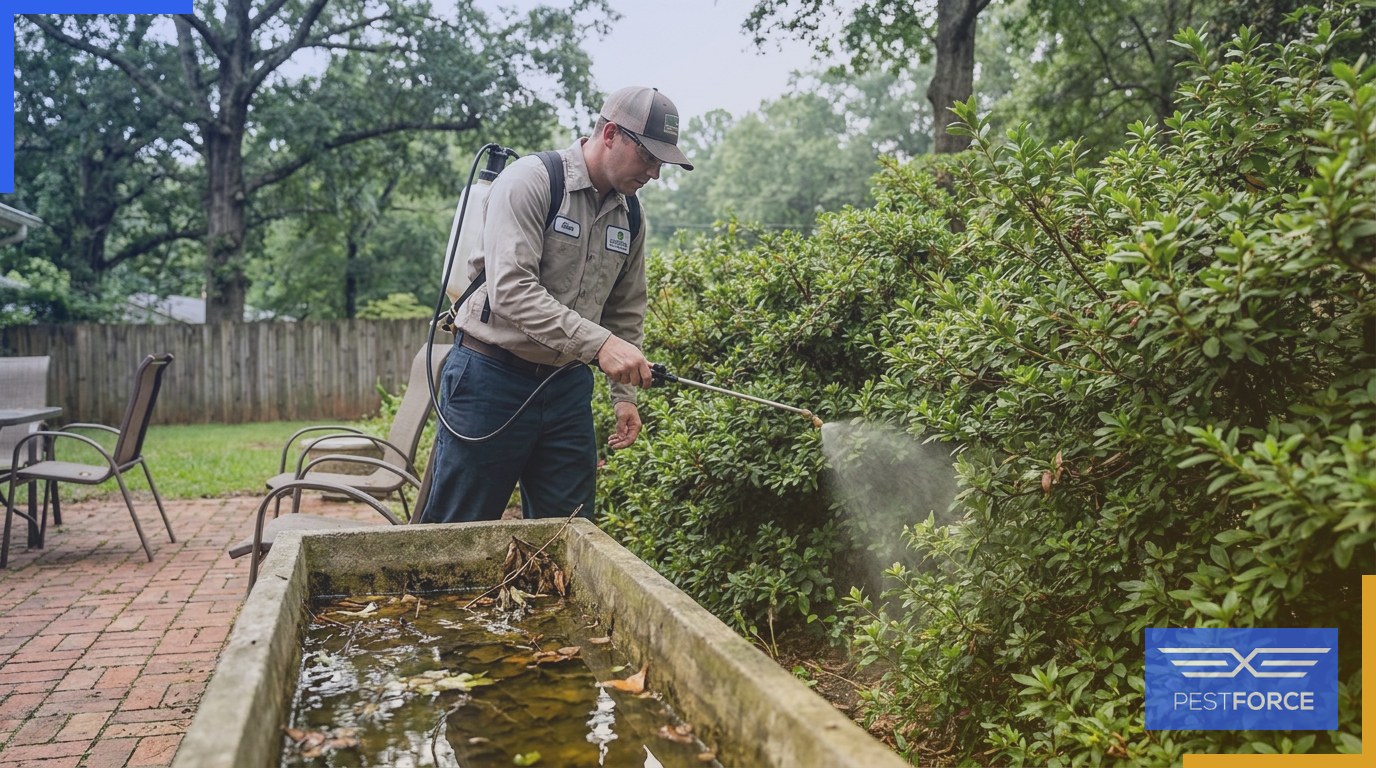
Mosquitoes in Georgia transmit West Nile virus and Eastern Equine Encephalitis, so cutting their numbers around a home protects family health, not just comfort. Georgia’s humid subtropical climate extends mosquito and tick active seasons well beyond what homeowners in cooler states experience, which is why the treatment window runs seven months.
1. Source reduction comes first. Technicians eliminate standing water from containers, clogged gutters, low spots, and ornamental water features before any product goes down. Birdbaths, fountain pots, and low-lying decorative planters rank among the most overlooked breeding sites in Georgia yards, and homeowners should drain them or treat them with larvicide between service visits.
2. Barrier spray treatments target resting sites. Technicians apply a residual insecticide to foliage, shaded areas, and dense vegetation where adult mosquitoes rest during daylight. The treatment bonds to leaf surfaces and keeps working until the next visit. Pest Force applies mosquito barrier treatments on a recurring schedule timed to Georgia’s mosquito season, typically April through October.
3. Misting systems handle heavy-pressure properties. An installed misting system releases timed insecticide bursts from nozzles placed around the yard. Misting makes sense for large lots, poolside areas, and zones where mosquito pressure stays heavy despite barrier treatments.
The yard-based mosquito elimination programs Pest Force runs fold these three elements into one recurring service, so homeowners get breeding-site control, residual sprays, and mechanical backup under a single schedule.
Why choose Pest Force for outdoor pest control in Georgia?
Georgia homeowners choose family-owned Pest Force because the 100% Happy or You Don’t Pay guarantee backs every outdoor program, technicians time treatments to regional turf and Georgia’s seasonal pest cycles, and crews serve Monroe, Loganville, Winder, and nearby communities.
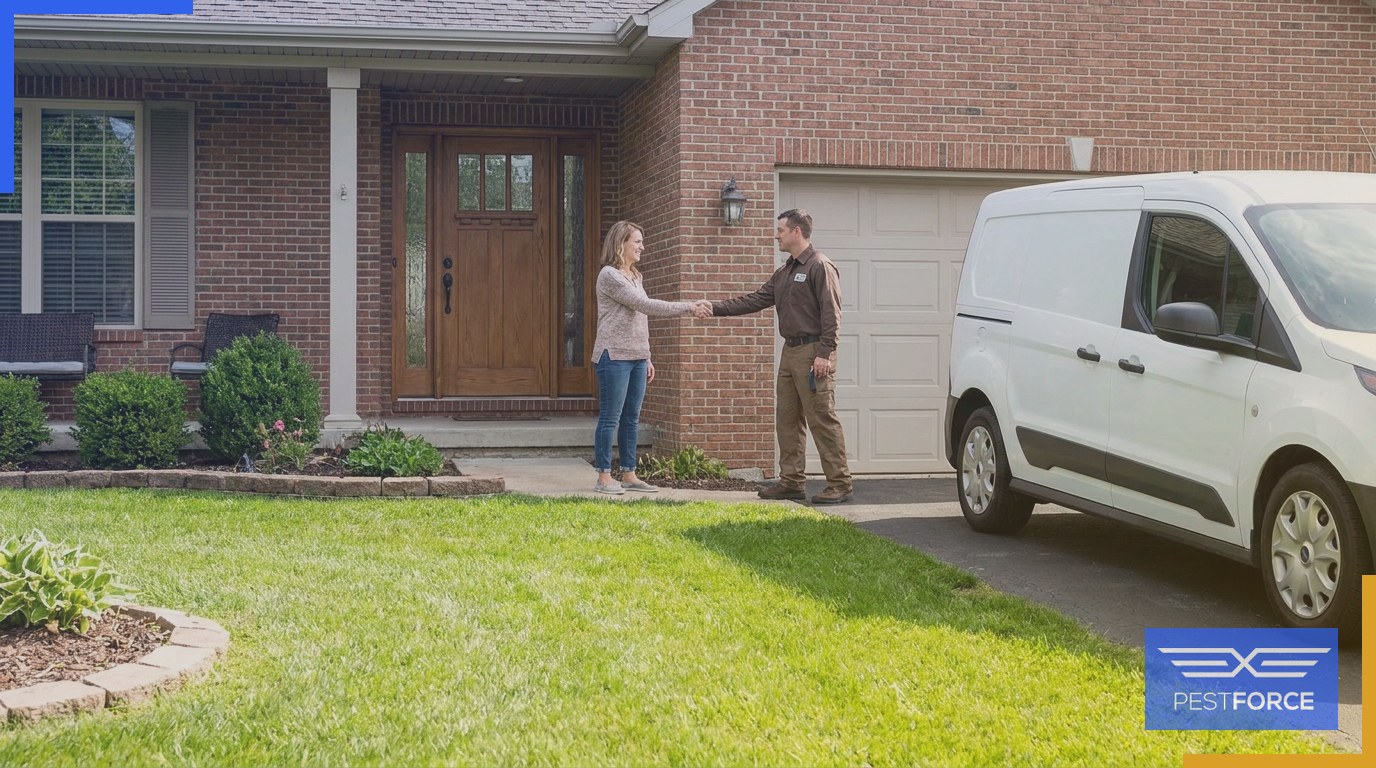
The guarantee works exactly as it reads. If a turf treatment, mosquito application, or perimeter service leaves a customer unsatisfied, Pest Force does not charge for that visit. Pest Force plays no fine print games.
Pest Force technicians know Georgia’s dominant lawn grasses firsthand: Bermuda, Zoysia, and Fescue. Each grass carries its own growth pattern and pest pressure, so Pest Force technicians time scheduled yard pest treatments to Georgia’s seasonal pest cycles instead of a generic national schedule. Applications land when the target pests are actually active.
Between visits, Pest Force shares advice on keeping your yard pest-resistant year-round, covering the mowing, watering, and drainage habits that cut pest pressure on local lawns.
Turf care and yard pest control sit within Pest Force’s full residential and commercial lineup, and property owners across Georgia reach the lineup through Pest Force Georgia’s family-owned pest control experts.