
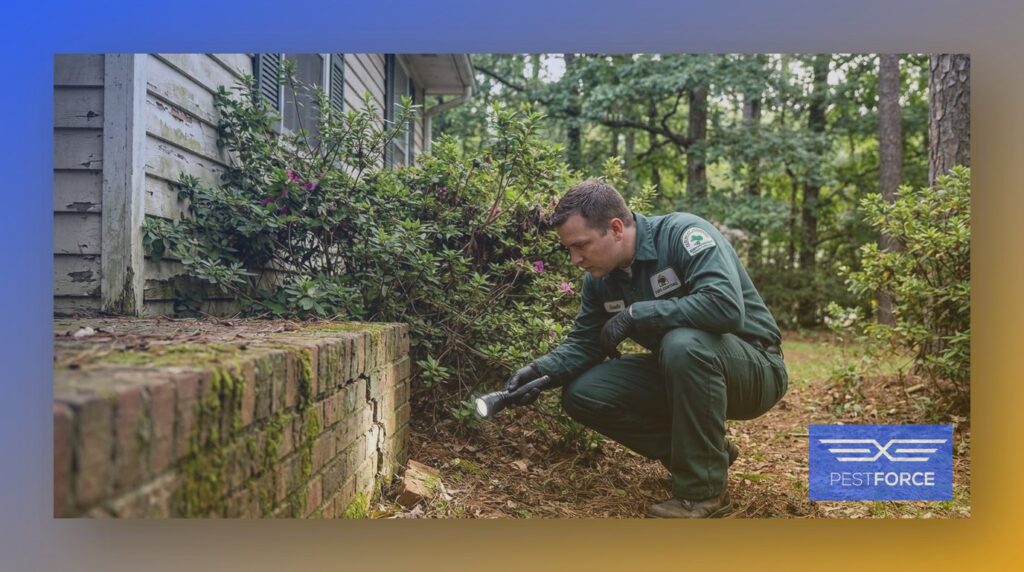
Mice, rats, and squirrels rank as the most structurally destructive and disease-capable pests Georgia homeowners and businesses face. Georgia’s humid climate, aging housing stock, and dense woodland edges put year-round rodent pressure on residential and commercial structures, turning infestation into a question of when rather than if. Proactive exclusion and professional rodent control break that cycle before rodents compromise wiring, insulation, and occupant health.
Why are Georgia homes especially vulnerable to rodent infestations?
Rodent infestation in Georgia homes is caused by the state’s woodland-edge development patterns, aging housing stock, and mild winters that eliminate population die-off. Three rodent species drive most intrusions across the state: the house mouse, the Norway rat, and the Eastern gray squirrel.
The house mouse is small and gray-brown, nests inside wall voids and storage areas, and stays active indoors year-round. The Norway rat, also called the brown rat, is heavier-bodied, burrows along foundations and under outbuildings, and enters structures at ground level. The Eastern gray squirrel is arboreal, travels tree canopies and utility lines, and gnaws through roofline gaps into attics, where the squirrel damages wood and wiring. The nesting habits, entry preferences, and breeding cycles that define Georgia rat and mouse biology determine which entry points a homeowner must seal first. Roof rats, or black rats, are less common than Norway rats statewide but occur in coastal and warmer southern counties; roof rats enter through rooflines rather than ground burrows, so South Georgia homeowners should inspect soffits and overhanging limbs as carefully as foundations.
Development pressure places rodent habitat directly against housing. Georgia’s suburbs expanded into pine and hardwood forest, and wooded suburban lots give rodents cover, food, and nesting sites within yards of rooflines and crawl space vents. Rodent populations colonize the woodland edge and treat the nearest attic or crawl space as an extension of established territory.
Northern winters cut rodent numbers through sustained hard freezes; Georgia winters rarely deliver that pressure. Colonies active in autumn remain active in spring, so infestations compound instead of resolving seasonally. Georgia homeowners cannot rely on seasonal die-off. Exclusion in Georgia is a year-round, permanent structural task rather than a seasonal response, because the population pressing against a structure in February bred at the woodland edge in October.
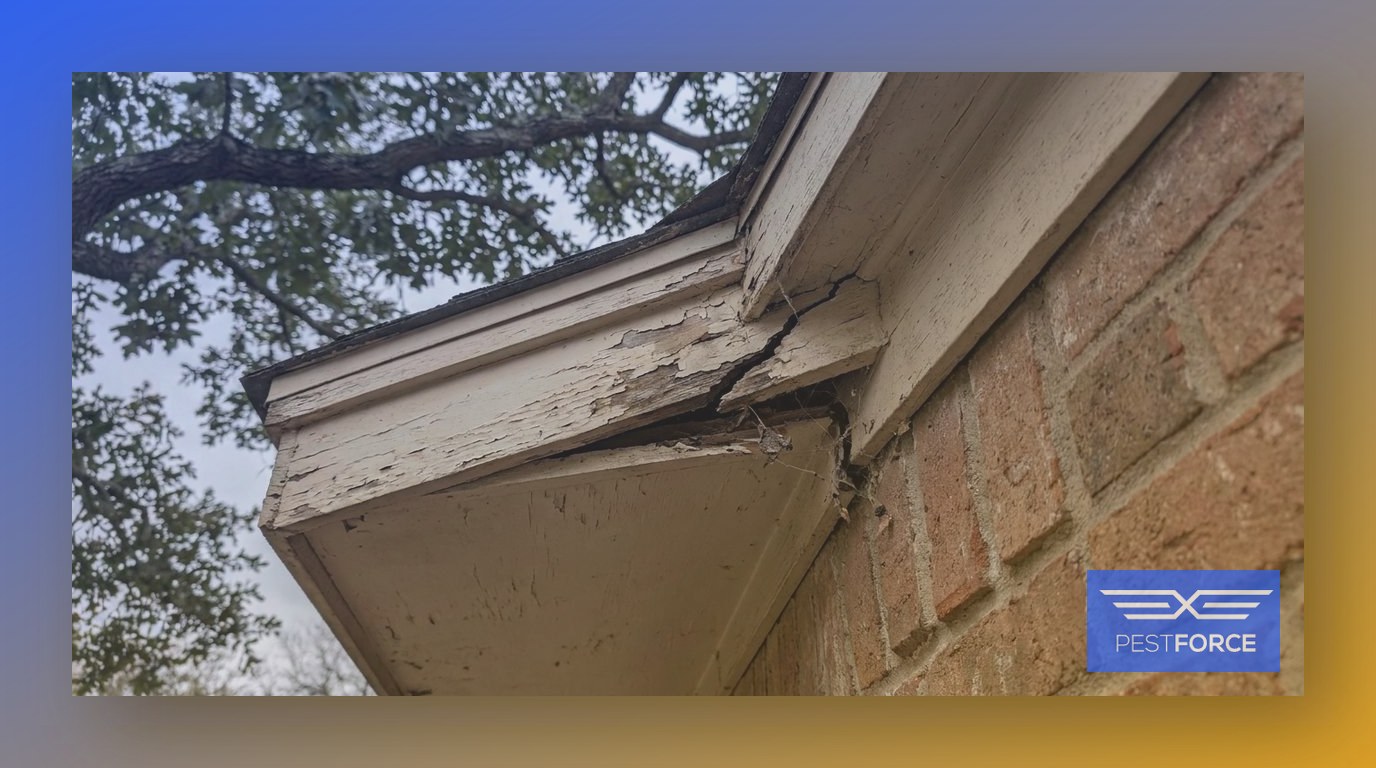
Georgia’s older housing stock supplies the gaps. Many homes rest on pier-and-beam foundations with vented crawl spaces, and aging soffits, warped fascia, and settled thresholds open seams that rodents exploit. Norway rats occupy crawl spaces and burrow under pier footings, while squirrels and roof rats slip through rooflines that have pulled away from fascia boards.
Speed compounds the risk. According to JohnnyBPestControl.com (2026), mice reach sexual maturity in just 4 to 6 weeks, carry pregnancies for only 19 to 21 days, and deliver 6 to 8 pups per litter. Because first-litter daughters begin breeding within weeks, a single pair of mice can produce over 60 offspring within three months. SenesTech.com (2025) reports that a female can deliver one litter per month, amounting to 25 to 120 pups per female in a year. A mouse problem ignored for one season becomes a structural population by the next.
Rodent pressure in Georgia also combines with the state’s other household infestations, and the combined pest scenarios that result appear throughout the full-spectrum Georgia pest guide.
How do rodents get into Georgia homes?
Rodents enter Georgia homes through gaps as small as a dime, exploiting gable vents, soffit gaps, pipe penetrations, garage door sweeps, and crawl space vents. Mice, rats, and squirrels each use different entry points based on body size and climbing behavior.
1. Species determine the gap size that matters. A house mouse can enter through gaps as small as a dime, roughly 6mm, because mice compress their bodies to pass tight openings. A brown rat can enter through gaps as small as a quarter, roughly 19mm, and burrows under slabs to reach crawl spaces from below. Squirrels use overhanging tree branches and roofline gaps as primary attic entry vectors in Georgia.
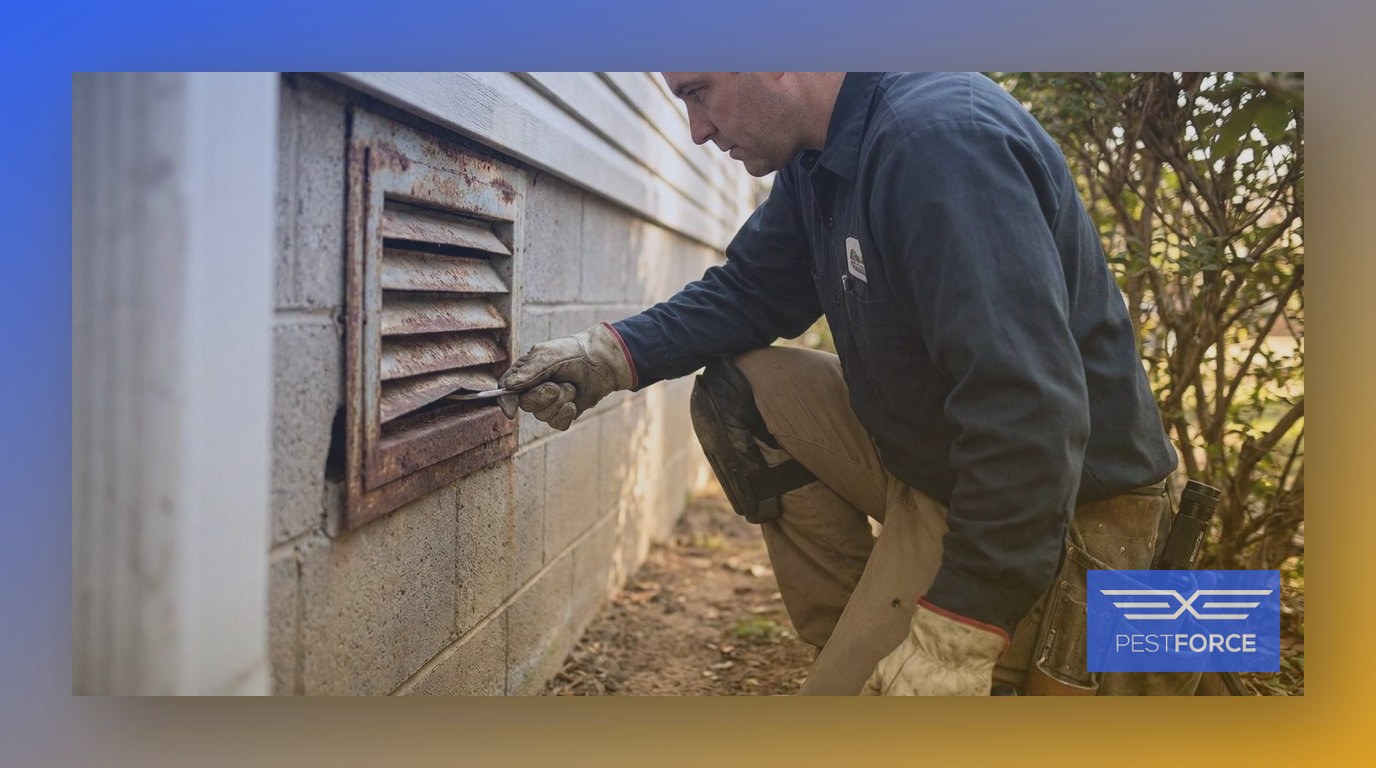
2. Structural openings top the entry list. The most commonly exploited entry points in Georgia homes include gable vents, ridge vents, soffit gaps, pipe penetrations, worn garage door sweeps, and crawl space vents. The comprehensive home rodent barrier guide explains how professionals seal each of these openings with rodent-proof materials.
3. Utility lines create hidden pathways. HVAC conduit, plumbing chases, and dryer vents give rats and mice protected routes into wall voids, and homeowners rarely inspect these penetrations because the openings sit behind appliances and above normal sightlines.
4. Behavior drives the timing of entry. Food odors draw rodents toward kitchens and garages year-round. Cooling autumn temperatures push rats and mice indoors for warmth, and spring nesting material searches pull them into attics, garages, and storage boxes.
What damage and health risks do rodents cause in Georgia homes?
Rodents damage Georgia homes by gnawing electrical wiring, nesting in insulation and wall cavities, and contaminating surfaces with urine and droppings. Rodent urine and droppings transmit Hantavirus, Leptospirosis, and Salmonella, and these pathogens persist in contaminated insulation and ductwork long after rodents are removed.
Rodent gnawing on wiring is a leading cause of house fires attributed to unknown ignition sources. The National Pest Management Association estimates that rodents cause 20% to 25% of all fires of unknown cause because rodents chew electrical wiring and gas lines. When a rodent chews through wire insulation to the conductor, the bare metal can arc against a grounded surface and ignite nearby combustible material, according to PestWhisperer.com (2026).
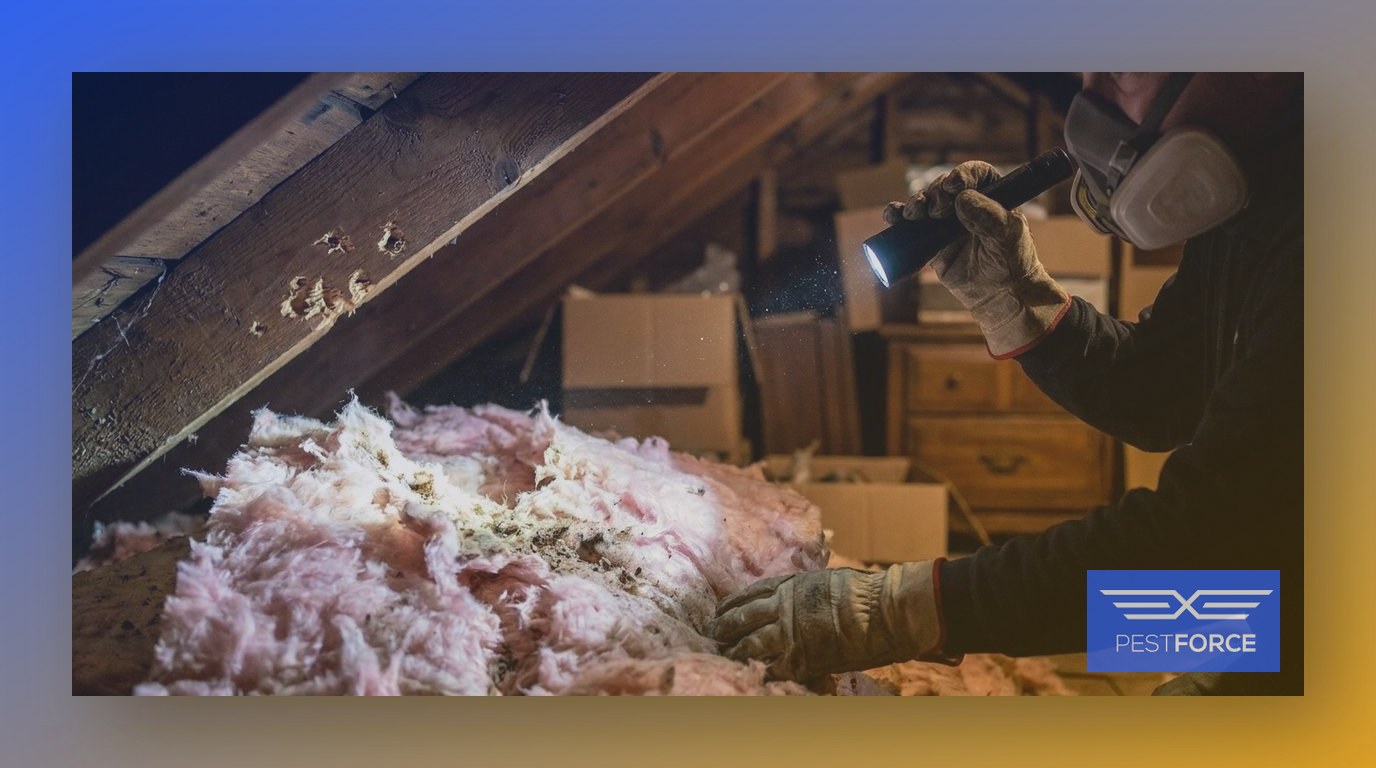
The property damage caused by rodents includes shredded attic insulation, fouled ductwork, and gnawed wall cavities. Rodent nesting compresses insulation and voids its R-value, which raises heating and cooling costs for Georgia homeowners even before health risks enter the picture.
Each disease follows a distinct transmission route. Sweeping or dusting stirs hantaviruses from old rodent droppings and urine into the air, where inhalation causes infection, according to Interior Health; Townhustle.com (2026) reports 890 U.S. cases since 1993 with a 35% fatality rate. Leptospirosis spreads through water and surfaces contaminated with infected rodent urine and causes roughly 1 million cases and 60,000 deaths globally each year, per Townhustle.com (2026). Salmonella spreads when rodents contaminate food and food-preparation surfaces with droppings, and ingestion of the contaminated food infects the household.
Extermination alone does not remove these hazards. BioRecovery.com (2026) warns that dried rodent contamination still becomes airborne when disturbed, and UbieHealth.com (2026) reports that disturbed particles can remain airborne for hours and travel through ventilation systems. Remediation, not extermination alone, resolves the rodent damage and health risks that linger in a contaminated attic: License-to-Kill.com (2026) recommends replacing nested insulation entirely rather than spot-cleaning it.
How can Georgia homeowners prevent rodent infestations before they start?
Georgia homeowners prevent rodent infestations by closing structural entry points before rodents find them. Effective prevention combines four actions: a professional roofline inspection, disciplined yard management, strict food source elimination, and the right exclusion materials sealing foundation and roofline gaps.
1. Schedule a professional roofline inspection. The highest-return prevention action is an inspection of roofline soffits, ridge vents, and gable vents, not interior traps. Squirrel and rat entry is almost always structural and almost always located above the living space, where homeowners rarely look. The licensed rodent pest specialists examine these elevated gaps for chew marks and construction openings that a ground-level walkthrough misses.
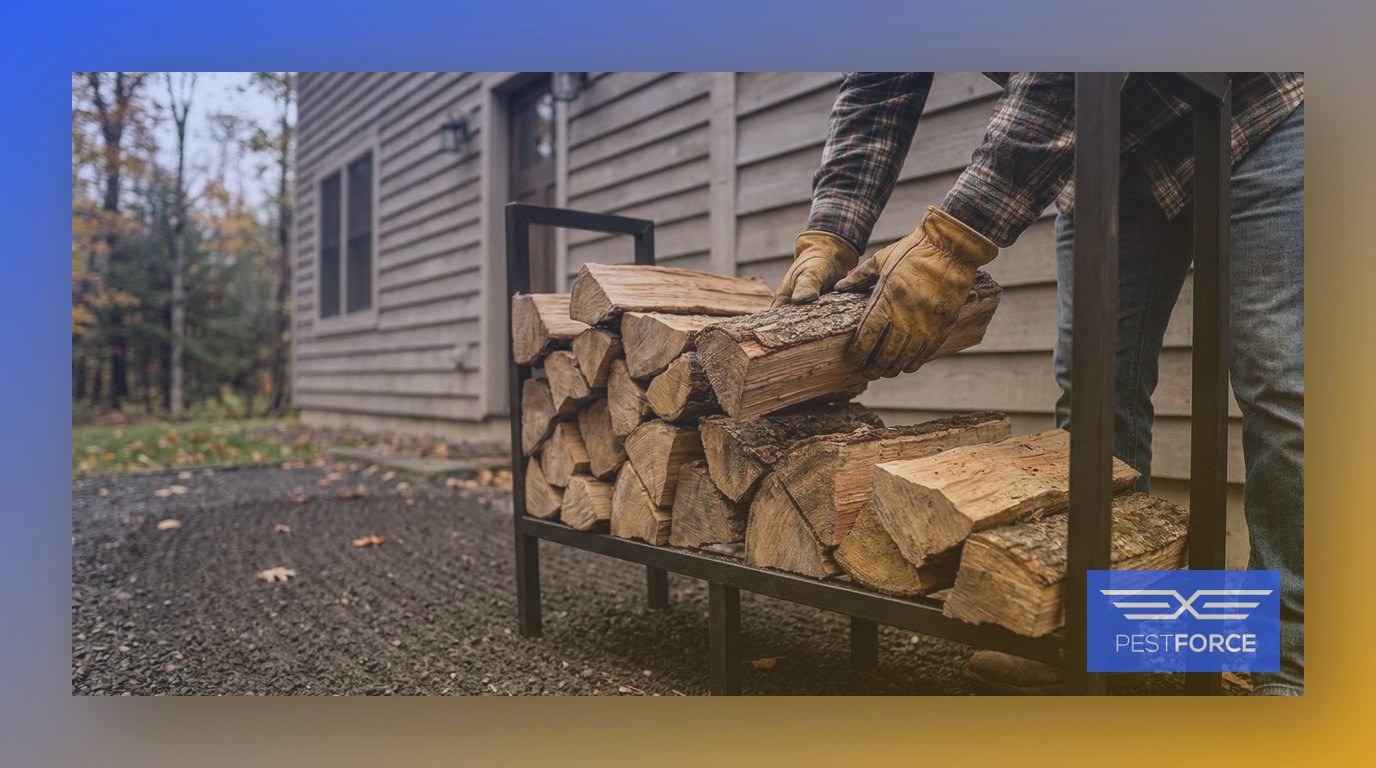
2. Manage landscaping and yard debris. Tree limbs act as bridges to the roof, so trim every branch at least 6 feet back from the roofline. Remove ivy and dense ground cover growing against the foundation, stack firewood off the ground and away from exterior walls, and clear brush piles where rodents nest.
3. Eliminate food sources. Rodents stay where they eat. Store garbage in cans with tight-fitting lids, keep pet food in sealed hard-sided bins instead of bags, and rake up spilled birdseed beneath feeders or remove the feeders during periods of active rodent pressure.
4. Seal gaps with the correct exclusion materials. Rodent exclusion fails when the wrong material meets the wrong gap, so homeowners match each material to the opening:
- Hardware cloth covers attic vents, crawl space openings, and larger foundation gaps.
- Steel wool packs into small holes around plumbing and utility lines and resists chewing.
- Metal flashing shields roofline joints, fascia boards, and chimney gaps.
- Caulk seals hairline cracks and seams along siding, windows, and door frames.
What is rodent exclusion, and why does professional exclusion outperform DIY trapping?
Rodent exclusion is the systematic sealing of all current and potential entry points with rodent-proof materials. Trapping and baiting only reduce the existing population, while exclusion blocks new rodents from entering. Professional exclusion outperforms DIY trapping because professionals seal and remove rodents in the correct order.
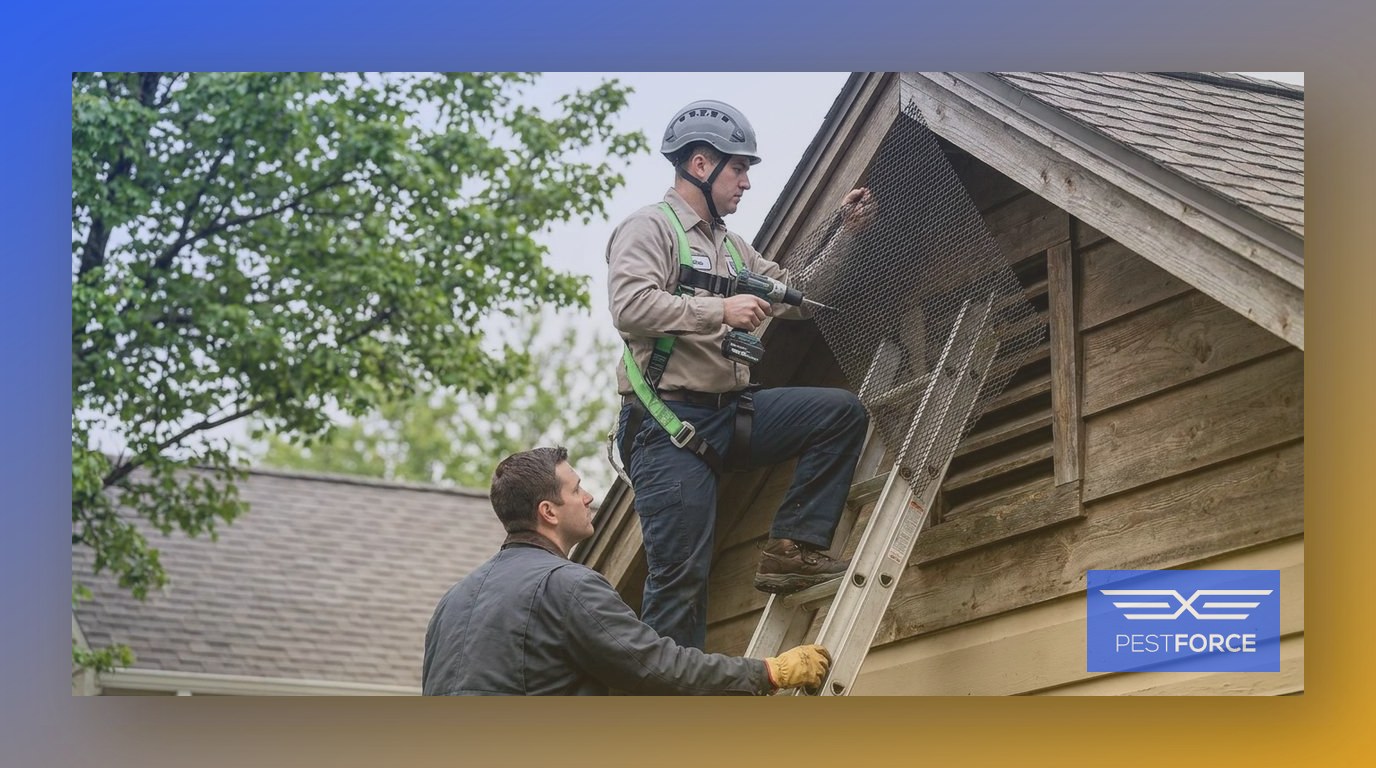
Rodent exclusion precedes trapping and baiting in a sound control sequence, because sealing entry points before population reduction prevents reinfestation from outside. DIY rodent control fails when entry points remain open: traps reduce the population but do not stop new individuals from entering, so catches taper off, the homeowner assumes success, and the cycle repeats.
Professional exclusion adds what DIY work misses. A full structural audit examines the structure from foundation to roofline and identifies non-obvious entry points such as utility penetrations, roof returns, and crawlspace vents. Proper material selection pairs gnaw-resistant barriers with each gap type, and sustainable rodent exclusion methods match hardware cloth, copper mesh, and metal flashing to the specific opening. Sequenced population reduction runs trapping alongside sealing rather than after catches decline. This sequence anchors rodent prevention and long-term control strategies.
Integrated pest management (IPM) is the professional framework that governs rodent control programs. IPM combines inspection, sanitation, exclusion, and targeted removal into a single plan, and IPM designates rodent exclusion as the permanent control measure rather than an optional add-on.
Squirrels are legally protected wildlife in Georgia and cannot be killed with certain prohibited trap types and poison products; professional removal must comply with Georgia Department of Natural Resources regulations, and these requirements make squirrel exclusion procedurally different from mouse and rat control. For mice and rats, snap traps remain the most effective, fastest-acting lethal method when placed directly against walls in travel paths rather than open floor space, and snap traps outperform glue boards and most ultrasonic deterrent devices.
When should a Georgia homeowner call a professional rodent control company?
A Georgia homeowner should call a professional rodent control company when DIY efforts fail to stop recurring activity, when rodents occupy hidden spaces such as walls, attics, or ductwork, or when contamination requires remediation that extermination alone cannot deliver.
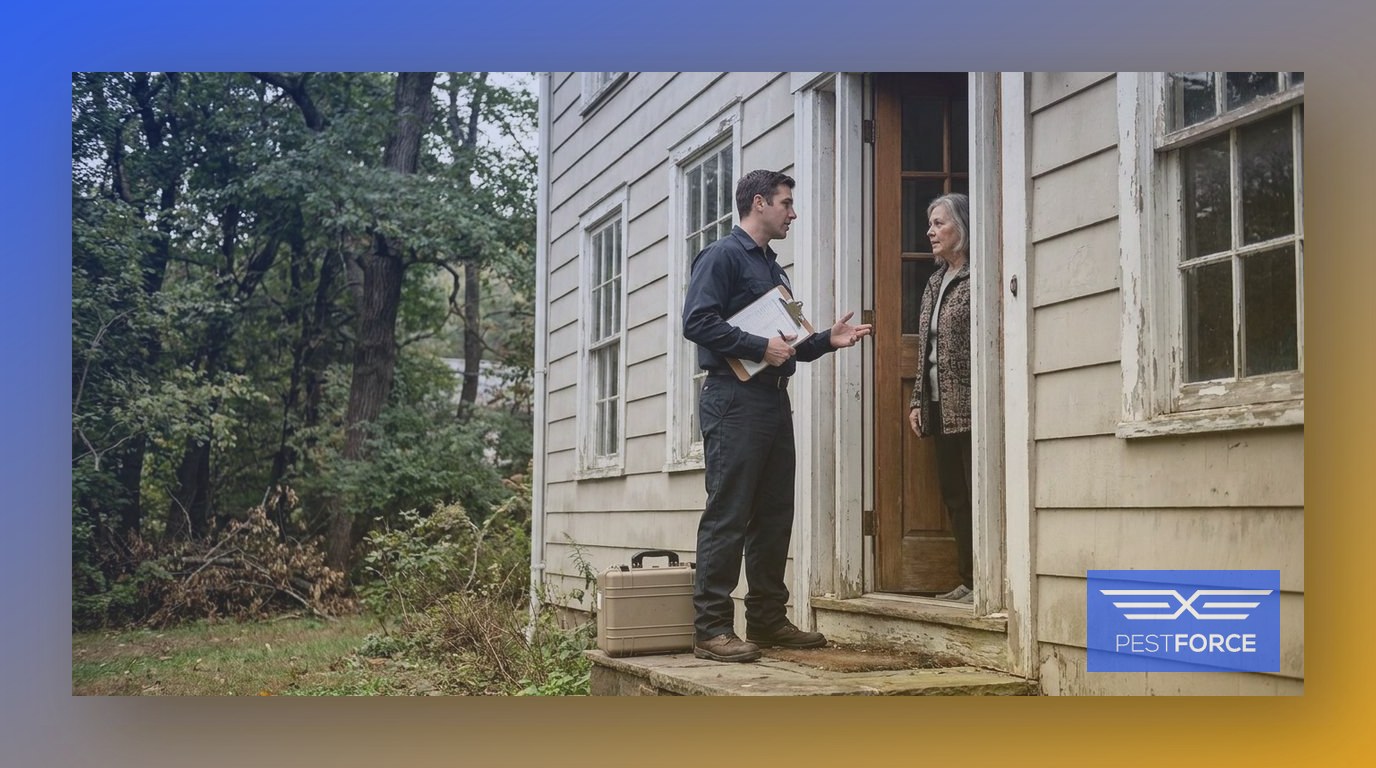
The failure signals are concrete: recurring rodent sightings after trapping, scratching or scurrying sounds inside walls or the attic, gnaw marks on electrical wiring or structural wood, and droppings near HVAC equipment. Each sign indicates an established infestation. Store-bought traps will not eliminate one.
Some situations demand remediation rather than extermination alone. Attic insulation contaminated by urine or droppings needs removal and replacement, rodent infiltration of ductwork spreads contamination through circulated air, and squirrel damage to structural members requires repair alongside exclusion work.
The Pest Force rodent control specialists open every engagement with a full property inspection that identifies the species, entry points, and activity zones before treatment begins. Georgia rodent programs then pair targeted trapping and removal with structural exclusion that seals the routes rodents used, addressing the infestation’s cause rather than its symptoms.
Homeowners unsure whether professional service is warranted can start without risk. Every Pest Force rodent control program includes a 100% Happy or You Don’t Pay guarantee, under which a homeowner who is not satisfied with the result does not pay for the service.
Georgia renters face an added constraint, because tenants cannot execute structural exclusion without landlord cooperation. A professional inspection produces a documented findings report that supports a landlord habitability request under Georgia tenant law.
Sources
- PestWhisperer.com, “Rodents and Fire Hazards from Chewed Wiring” (2026)
- Interior Health, “Cleaning a shed, attic, cabin or barn? Protect against hantavirus”
- Townhustle.com, “Rodent Infestation Statistics (2026): Rats & Mice in US Homes” (2026)
- BioRecovery.com, “Clean Rodent Droppings And Avoid Hantavirus” (2026)
- UbieHealth.com, “Hantavirus Indoors: How Contaminated Dust Can Spread Infection” (2026)
- License-to-Kill.com, “How to Clean Up Rodent Droppings to Avoid Hantavirus in 2026?” (2026)
- JohnnyBPestControl.com, “Mouse Population Explosion: The Breeding Numbers Explained” (2026)
- SenesTech.com, “How Many Babies Can A Mouse Have?” (2025)