
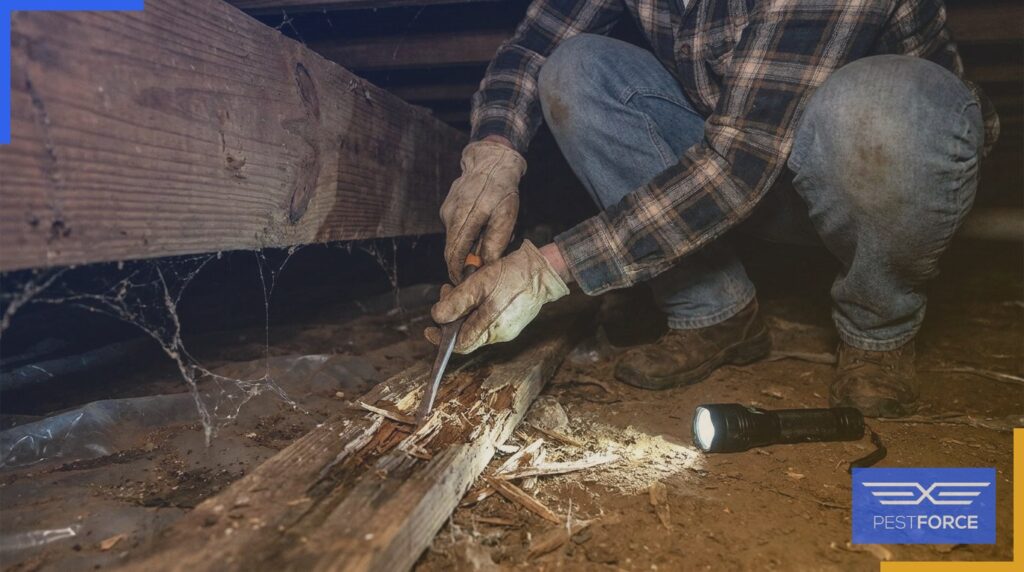
Termite damage is the costliest wood-destroying pest problem Georgia homeowners face. Georgia’s warm, humid climate keeps subterranean termite colonies active year-round, and a colony feeds on structural lumber around the clock without pausing for winter. Most Georgia homeowners discover termite damage only after repair bills have climbed well past what early detection would have cost. Early detection, honest repair numbers, and knowing where insurance stands decide how expensive a termite problem actually gets.
How do termites actually damage the structure of a home?
Termites damage a home’s structure by consuming cellulose along the wood grain from the inside out, hollowing load-bearing lumber while the outer surface stays visually intact until the damage is advanced. The process is slow, hidden, and compounding rather than a single destructive event.
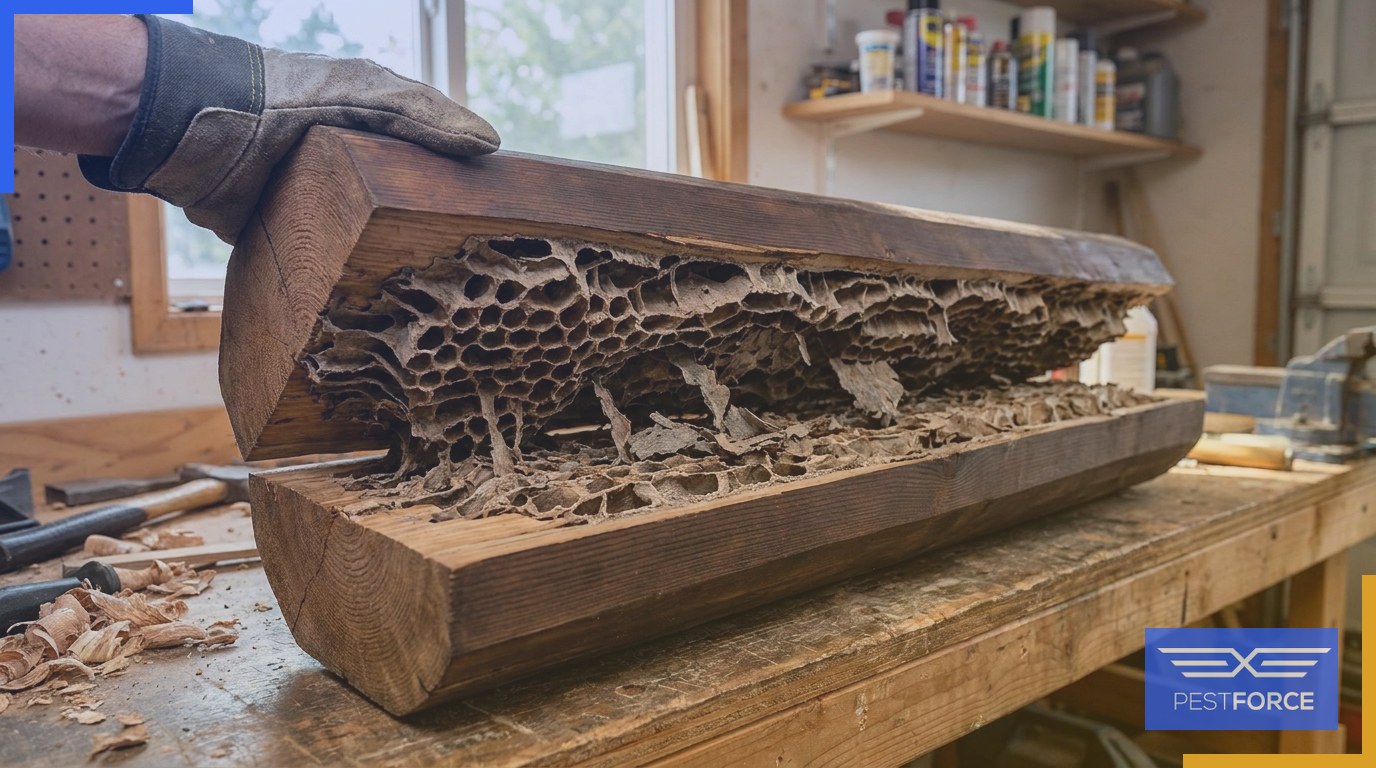
Termite damage is caused by cellulose consumption along the wood grain from the inside out, leaving a honeycomb interior while the outer surface appears intact. That thin outer shell is usually the last part of a board to fail. A floor joist can look perfectly sound and still be a papery skin over nothing, which is why the visible surface of a beam tells a homeowner almost nothing about the severity behind it.
The damage follows a repeatable sequence:
1. Entry through mud tubes. Subterranean termites build mud tubes up from the soil to reach structural wood, targeting floor joists, sill plates, wall studs, and roof supports. The eastern subterranean termite is the dominant termite species causing structural damage in Georgia homes, and the Formosan subterranean termite is established across coastal and southern Georgia.
2. Feeding along the grain. Worker termites eat the softer wood first and leave the harder grain and thin exterior shell, producing the hollowed honeycomb pattern.
3. Colony growth compounds consumption. The Formosan subterranean termite has a colony size and feeding rate that can destroy structural wood significantly faster than eastern subterranean termites. According to the National Pest Management Association, a mature Formosan colony eats about 31 grams, just over an ounce, of wood per day, enough to consume one foot of a 2×4 in 25 days, and Formosan queens produce more than 1,000 eggs per day. The association estimates a Formosan colony can cause extensive structural damage in less than six months under ideal conditions.
4. Georgia’s climate removes the off-season. Warm, humid conditions sustain colony activity year-round with no winter dormancy, so cumulative damage builds faster here than in northern states where cold weather forces colonies to slow down.
5. Time undetected sets the severity. Damage severity is a function of colony size, wood moisture content, and how long the infestation goes unnoticed. Termites are patient; the repair bill is not.
Subterranean species account for nearly all of this destruction. The California Structural Pest Control Board attributes approximately 90% of termite damage and control costs to subterranean termites, primarily Reticulitermes species and Coptotermes formosanus.
Drywood termites, though less common in Georgia than subterranean species, leave a distinct damage pattern: frass, small fecal pellets, piled near exit holes rather than mud tubes. Inspectors occasionally find drywood termites in attic framing in coastal Georgia counties.
Because moisture-softened wood and termite galleries look similar at a glance, the termite vs. water damage identification covers the specific visual cues, including mud tubes, gallery patterns, and frass, that separate insect damage from rot.
What are the signs of termite damage in a Georgia home?
The signs of termite damage in a Georgia home include blistered or bubbling paint, discolored drywall, sagging floors or ceilings, soft or spongy flooring underfoot, doors and windows that no longer fit their frames, hollow-sounding wood, and mud tubes along the foundation. Termite damage detection requires probing hollow-sounding wood, identifying mud tubes, and recognizing blistered or bubbled paint as surface signals of sub-surface activity.
- Visible surface signals. Paint blisters or bubbles where termites tunnel just behind drywall paper, drywall yellows or darkens, floors and ceilings begin to sag, and doors or windows stop fitting their frames as damaged wood swells and shifts.
- Tactile and auditory signals. Suspect wood sounds hollow under a tap from a screwdriver handle, and infested flooring feels soft or spongy underfoot.
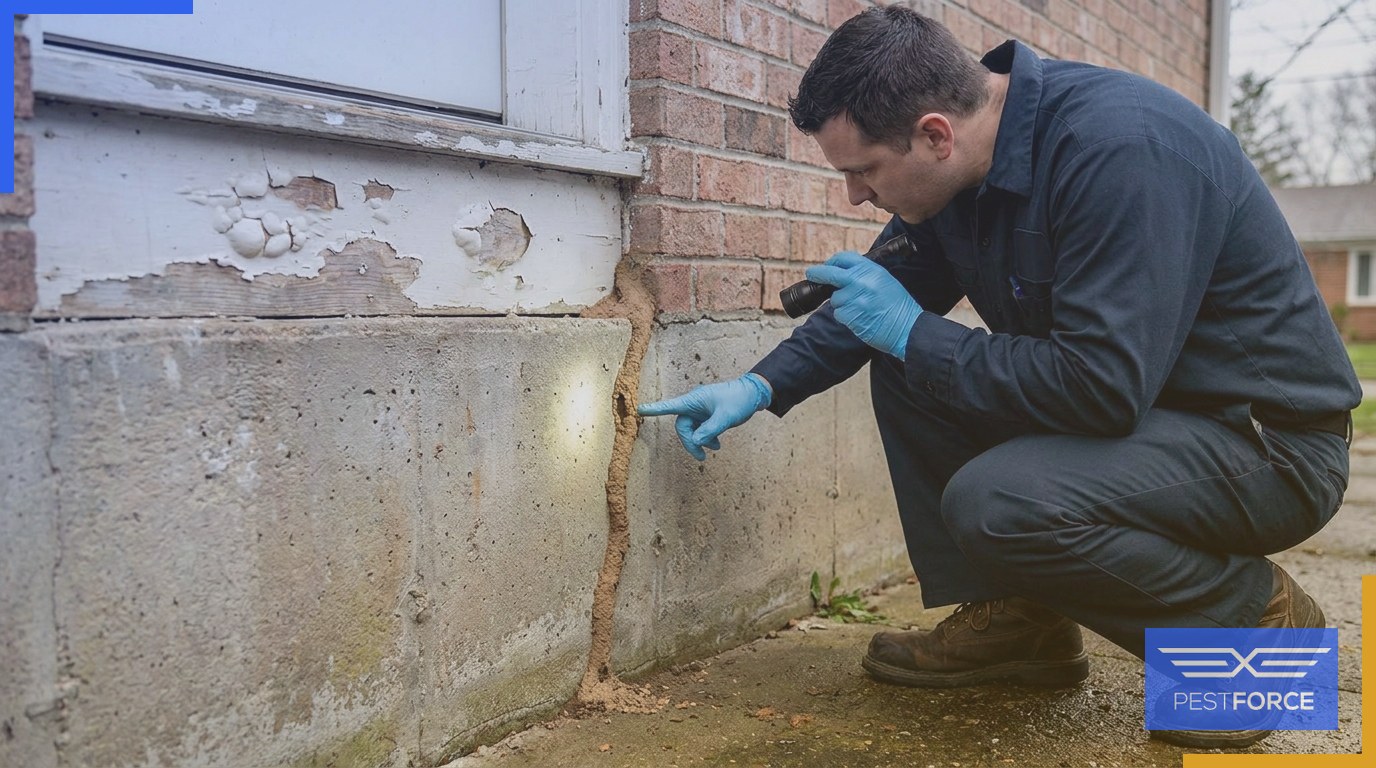
- Structural signals. Mud tubes on foundation walls, crawl space piers, or exterior concrete mark the primary highway termites build between soil and wood.
Termite damage differs from water damage in three concrete ways. Termite galleries follow the wood grain in hollowed channels, while water damage expands uniformly across the entire board width. Mud tubes appear only with termites, and water damage never produces mud tubes. Termite damage appears with no moisture source nearby, while water damage always traces back to a leak, condensation, or ground moisture.
Hollow-sounding wood and buckled floors are late-stage indicators, the product of months or years of feeding. The absence of these signs does not mean the structure is undamaged. Termite colonies stay concealed behind finished walls long before surfaces fail. Professionals locating termite damage behind walls expose that hidden activity with moisture meters and boroscopes. Once an inspection confirms damage, homeowners detecting and repairing termite damage face a repair scope that runs from joist replacement to cosmetic patching.
How much does it cost to repair termite damage in Georgia?
Repairing termite damage in Georgia costs the average homeowner $3,000 to $8,000, and severe structural damage exceeds $25,000, according to Insuranceopedia (2026). Termite damage repair cost is determined by the type of structural element affected, the extent of infestation, and whether load-bearing members require replacement.
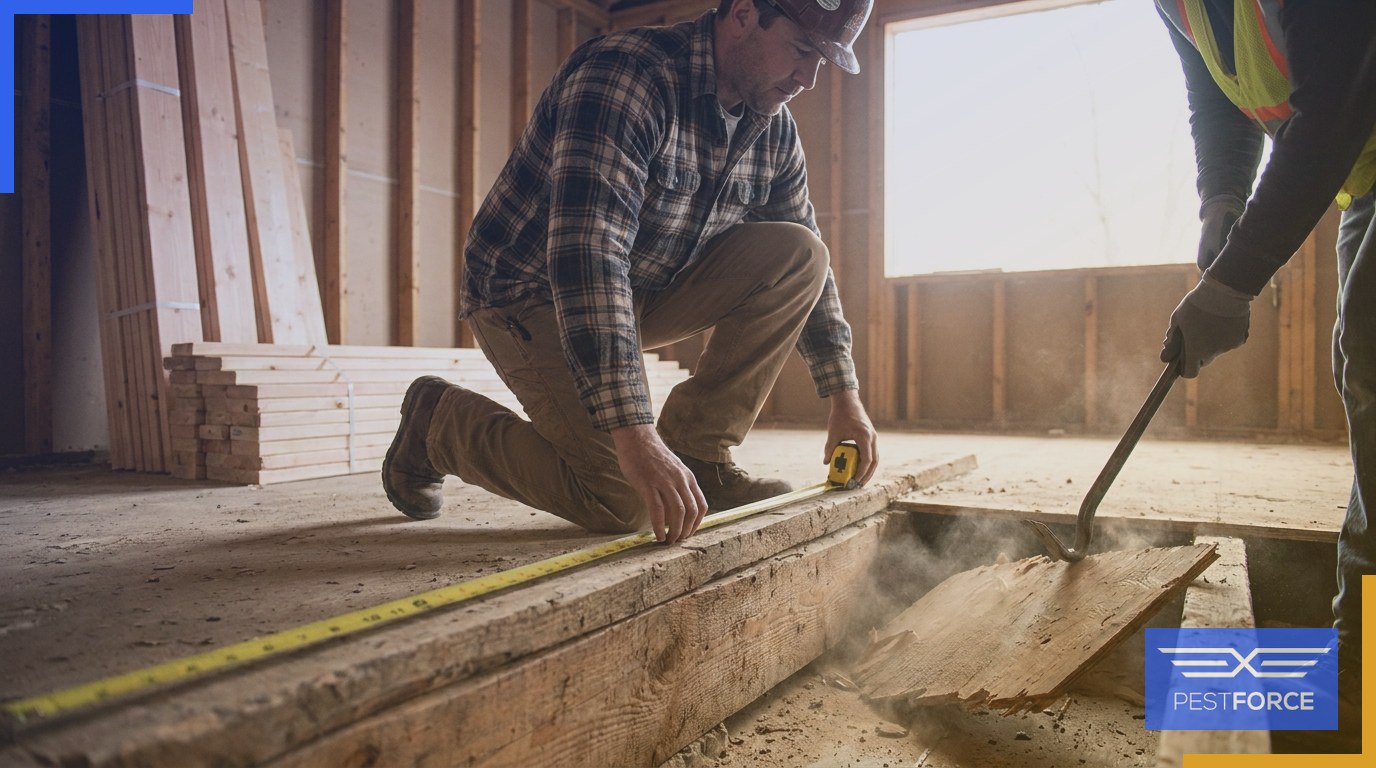
Statewide, what homeowners pay for termite repairs sorts into three cost tiers:
1. Cosmetic repairs. Damaged drywall, baseboards, trim, and flooring surfaces are the least expensive category, typically running a few hundred dollars once the colony is eliminated. 2. Structural repairs. Floor joists, sill plates, and wall studs form the most common and costliest routine category, often reaching into the thousands because a contractor must open floors or walls to sister or replace the members. 3. Load-bearing replacement. Full beam or post replacement, and cases with widespread subfloor damage, sit at the top of the scale. Georgia jobs at this level may require a structural engineering assessment before reconstruction begins, and Insuranceopedia’s severe-damage figure above $25,000 applies here.
Repair bills and treatment bills are separate. A pest control company charges to kill the colony, while a contractor charges to rebuild what the colony ate, so homeowners should treat budgeting for Georgia termite treatment as its own line item next to the repair estimate. The USDA Forest Service put the combined national cost of termite control and damage repair at $2 billion annually (2002), and reconstruction claims a meaningful share of that total.
Does homeowners insurance cover termite damage in Georgia?
Homeowners insurance does not cover termite damage in Georgia. Standard Georgia homeowner policies explicitly exclude termite damage as a preventable maintenance issue rather than a sudden or accidental loss, and homeowners insurance applies to termite damage only in rare policy structures.

Georgia insurers build the exclusion into the policy form itself. According to Termite Control Authority (2026), the ISO HO-3 homeowners form is designed to cover sudden and accidental losses, not gradual deterioration such as termite damage, and MoneyGeek (2026) reports that most HO-3 policies list “insects, rodents, or vermin” as an explicit exclusion under Section I property coverage. Insurers classify termite infestation as a maintenance failure. Georgia insurers apply the maintenance-failure classification to deny mold claims and rot claims, and the financial burden falls entirely on the homeowner regardless of how sudden the discovery felt.
No standard endorsement or rider exists in the Georgia market that adds termite damage coverage to a homeowners policy.
Termite bonds fill the gap. A termite bond is an annual service agreement with a pest control company, and termite bonds are the primary financial protection mechanism available to Georgia homeowners. For Georgia homeowners, a termite bond provides the closest available form of insurance coverage for termite damage. Termite bond repair provisions vary significantly by contract. Some Georgia termite bond contracts include a repair provision with a per-occurrence cap, commonly $250,000, but the provision pays only when the pest control company was actively treating the property when the damage occurred, not after a new discovery at an untreated home.
What is the repair process after a termite infestation is treated?
Termite damage repair begins only after the pest control provider confirms the colony is eliminated. A licensed contractor or structural engineer then assesses load-bearing damage, sets the repair scope, and completes the work. Rebuilding over active termites traps them inside.

Timing is the first rule: structural repairs after termite infestation follow confirmed elimination of the termite colony, never run concurrent with active treatment. Fresh lumber installed over live termites seals them inside wall voids, and finished repairs force technicians to treat around new work.
The repair sequence runs in five stages:
1. Treatment completion. The pest control provider finishes the treatment plan and confirms colony elimination. 2. Inspection and clearance. A follow-up inspection verifies no live activity remains in the structure. 3. Damage assessment. A licensed contractor or structural engineer examines sill plates, floor joists, and beams before any repair work begins, which matters most in the crawl space construction common under Georgia homes. 4. Repair scope determination. The contractor separates cosmetic fixes from structural work and prices each repair. 5. Contractor work. Crews sister, reinforce, or replace damaged members and close up the affected areas.
The remediation options following termite damage depend on whether the damaged wood carries structural load. Sistering a joist is one job; replacing a sill plate under a load-bearing wall is a different one.
Can You Sell a Home in Georgia That Has Had Termite Damage?
Yes, Georgia homeowners can legally sell a house with a history of termite damage in Georgia. Georgia law permits the sale of previously damaged homes, and a history of termites does not block a transaction. Disclosure, documentation, and repair quality determine how smoothly the sale goes.
Georgia law requires sellers to disclose known termite damage and prior treatment history on the standard seller’s property disclosure statement. Georgia law mandates disclosing termite damage to buyers as a legal duty rather than a courtesy, and a seller who conceals a known infestation faces fraud claims after closing. Honest paperwork protects both parties.
Documented treatment and completed repairs generally preserve saleability. Buyers and lenders focus on two things: active infestation and unrepaired structural damage. A home with a treatment record, a repair invoice, and no live activity sells every day in Georgia.
Mortgage lenders in Georgia typically require a current wood-destroying organism inspection report before financing, especially in transactions involving older homes. A clear WDO report settles the lender’s concern, and a licensed operator’s letter carries real weight at the closing table.
Sources
- California Structural Pest Control Board, “Wood Consumption Study of Reticulitermes spp. and Coptotermes formosanus in Residential Settings” (1999)
- Insuranceopedia, “Does Homeowners Insurance Cover Termite Damage?” (2026)
- Termite Control Authority, “Homeowners Insurance and Termite Damage” (2026)
- MoneyGeek, “Does Home Insurance Cover Termites?” (2026)