
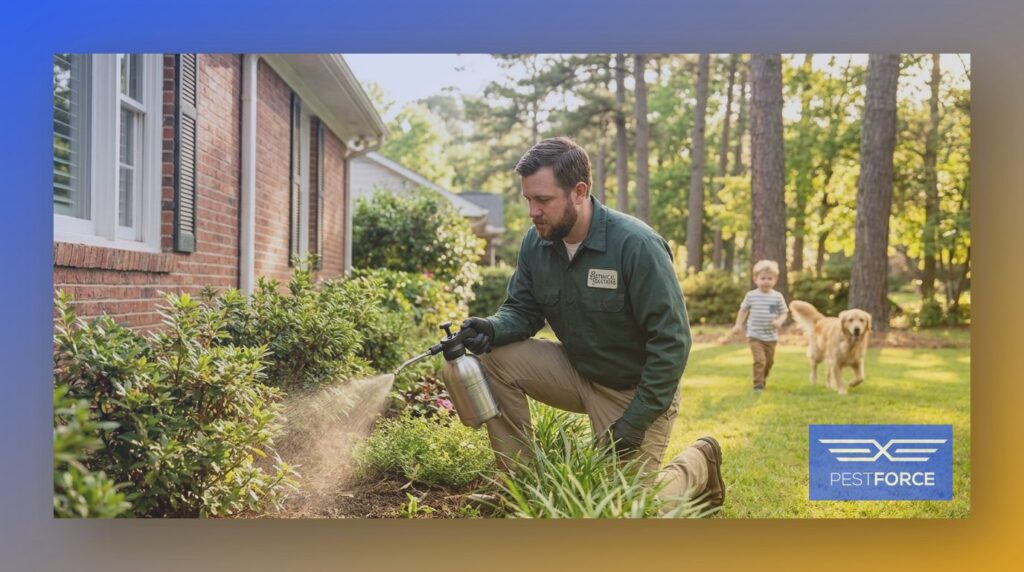
Green pest control combines integrated pest management, botanical treatments, and organic products to eliminate pests while minimizing synthetic chemical exposure. Green pest control methods protect Georgia families, pets, and local ecosystems from the residues that conventional extermination leaves behind. Georgia homeowners can rely on green pest control for year-round protection against ants, termites, roaches, and rodents without sacrificing results.
What is green pest control, and how is it different from conventional extermination?
Green pest control is a spectrum of low-toxicity, environmentally responsible methods, ranging from non-chemical prevention and exclusion to botanical and mineral-based products. Conventional extermination applies synthetic chemical treatments reactively, while green pest control emphasizes prevention, monitoring, and targeted low-risk applications.

The spectrum begins with purely mechanical methods: sanitation, habitat modification, door sweeps, and exclusion sealing. The spectrum extends through bait stations and insect growth regulators into low-toxicity botanicals, such as pyrethrin and essential-oil formulations, and mineral products, such as diatomaceous earth and boric acid. A single Georgia treatment plan can combine methods from several points on the spectrum, so green pest control is a category of degree rather than a binary label.
A method qualifies as eco-friendly when the method meets four criteria:
- Reduced mammalian toxicity. The active ingredient poses low acute risk to humans and pets at labeled application rates.
- Faster environmental breakdown. The product degrades in days or weeks rather than persisting in soil and water.
- Lower bioaccumulation risk. The active ingredient does not concentrate in the tissue of organisms up the food chain.
- Non-target species safety. The application method spares pollinators, birds, and aquatic life.
Eco-friendly pest control grows from consumer demand for reduced chemical exposure indoors, particularly in households with children, pets, and allergy-sensitive occupants. Green pest control applies to Georgia homeowners facing year-round pest pressure from humidity-driven species, including cockroaches, ants, mosquitoes, and termites.
“Green,” “organic,” and “natural” are unregulated marketing terms in pest control, not EPA certification categories. The label is not the standard. A product marketed as eco-friendly can still carry higher acute toxicity than some synthetic alternatives, so the correct evaluation criterion is the product’s toxicity profile and application method, not the label language. The EPA’s Safer Choice program certifies specific pesticide products as lower-risk, and Safer Choice is the closest regulated standard to an eco-friendly label; consumers can use the Safer Choice mark as a reliable criterion when comparing products.
Green pest control performs best as preventive pressure and against low-to-moderate infestations, where exclusion, sanitation, and targeted baits suppress populations before establishment. Active structural infestations, such as an established termite colony inside wall voids, exceed the practical limits of botanical and mineral products and require conventional intervention before a green maintenance program resumes.
The Pest Force eco-conscious pest experts serve Georgia homes and businesses with integrated pest management, botanical and mineral product options, and a retreatment guarantee, so households with children and pets can choose low-toxicity pest control in Georgia without giving up coverage.
What is integrated pest management (IPM), and why is it the foundation of eco-friendly pest control?
Integrated pest management is a structured framework for green pest control that prioritizes prevention, monitoring, and targeted treatment before chemical intervention. IPM forms the foundation of eco-friendly extermination because IPM cuts total pesticide volume while still eliminating infestations.
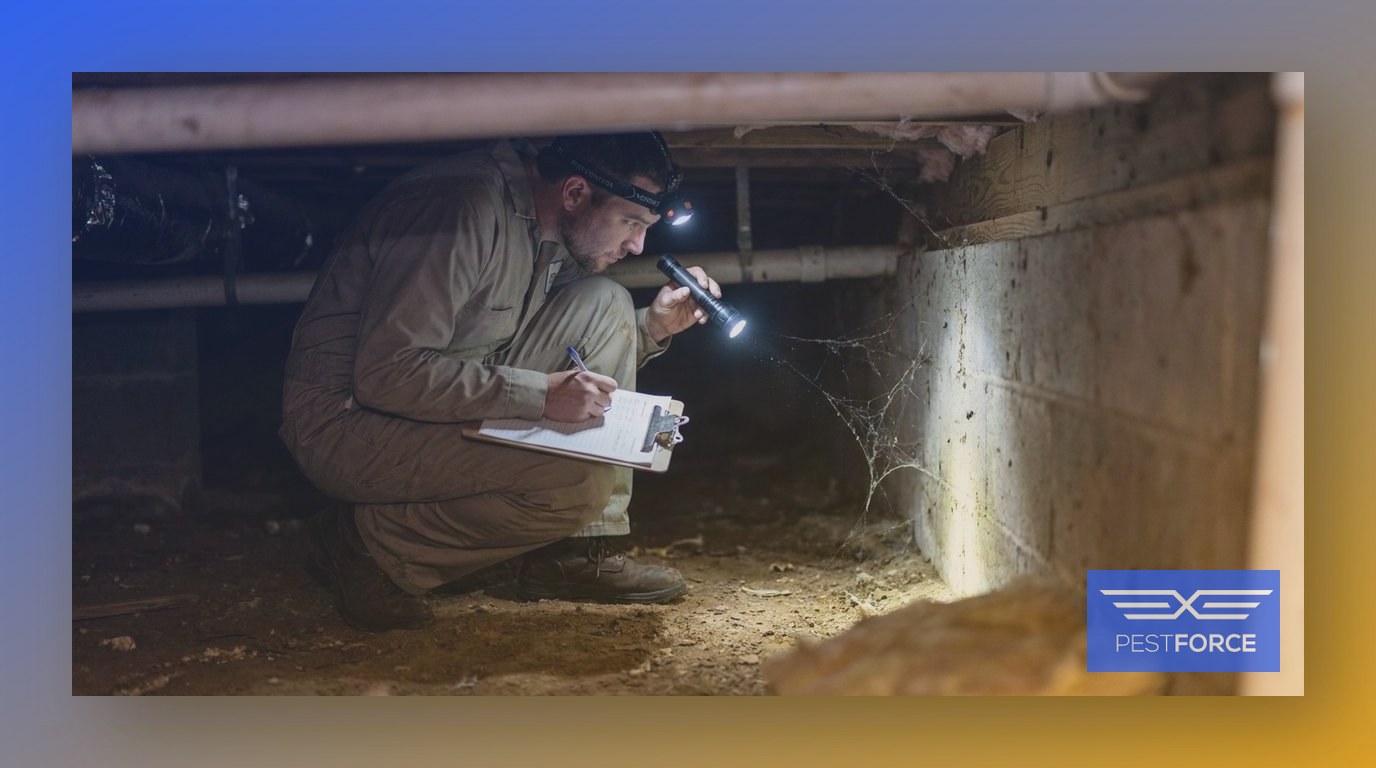
The IPM framework follows four steps:
1. Identify the pest so treatment targets the correct species. 2. Set action thresholds that define the pest population level requiring intervention. 3. Implement prevention and non-chemical controls first, including sanitation, exclusion, and habitat modification. 4. Evaluate results and apply targeted treatment only when thresholds are exceeded.
IPM is a decision protocol, not a product category. A company that sprays organic products on a fixed calendar schedule without monitoring is not practicing IPM, while a company that applies one targeted synthetic spot treatment after non-chemical methods fail may be. IPM precedes any chemical application, whether synthetic or botanical, by requiring pest identification, threshold assessment, and non-chemical control attempts first. Pest Force applies IPM methodology across the Pest Force Georgia service area, which lets Pest Force technicians deliver green product options backed by a retreatment safety guarantee for households with children and pets. The science behind integrated pest management documents how monitoring data drives each of these decisions.
This threshold discipline shrinks pesticide volume even when synthetic products remain the last resort. IPM strategies can reduce pesticide use by up to 50%, according to U.S. Environmental Protection Agency data reported by Verified Market Reports in 2025.
Georgia homes put IPM into practice through specific applications:
- Moisture management for cockroaches in humid crawl spaces, kitchens, and bathrooms.
- Exclusion work for rodents, sealing entry points as the core method of keeping pests out without pesticides.
- Sanitation thresholds for ant colonies, removing food and water sources before any bait application.
How effective is green pest control in Georgia’s climate?
Green pest control performs reliably in Georgia’s climate against ants, crawling insects, and mosquito larvae, matching synthetic performance, but green-only methods prove insufficient against subterranean termites, large German cockroach infestations, and established rodent colonies without professional escalation. Georgia’s humid subtropical climate keeps pest populations active 10 to 12 months of the year, according to the Georgia Pest Authority.
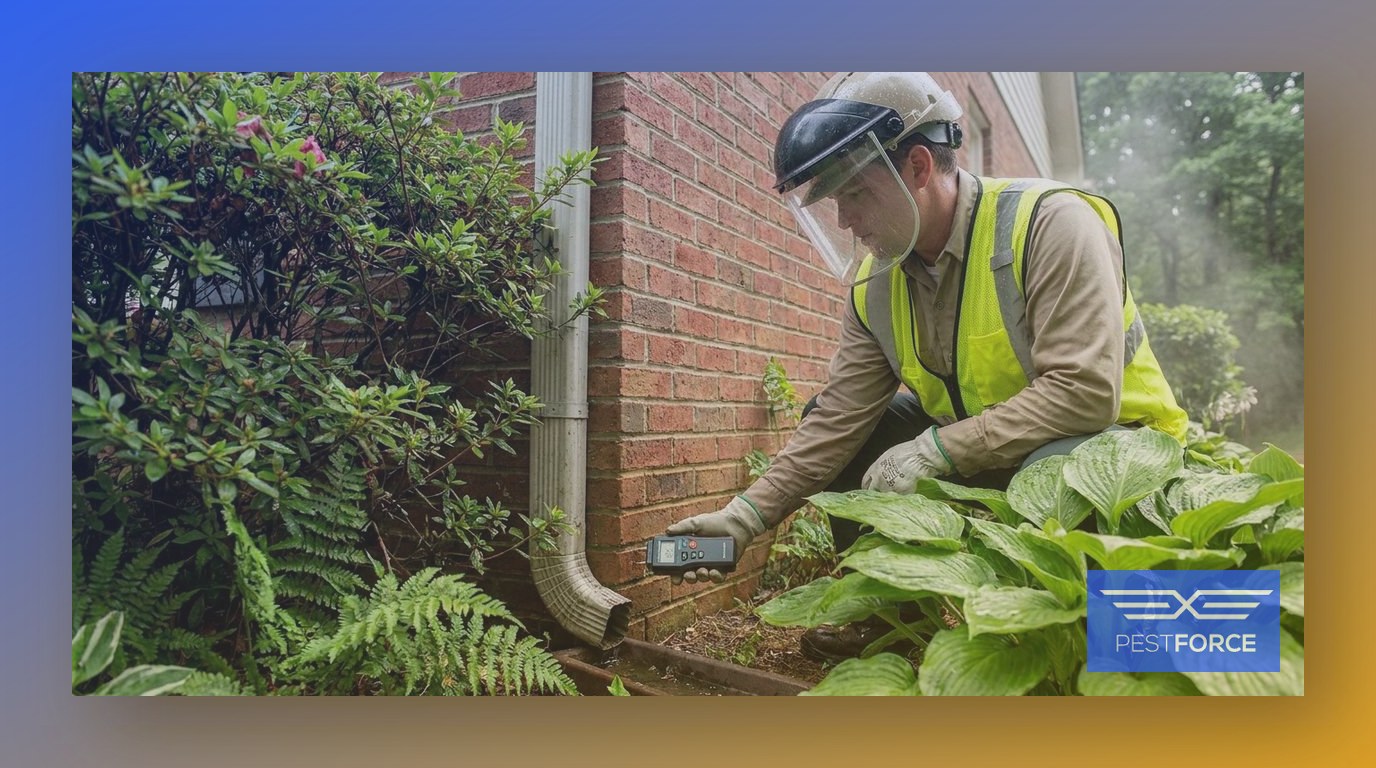
Georgia’s heat and humidity accelerate the breakdown of botanical insecticides and shorten their effective window compared to temperate-climate label instructions. Pyrethrin and essential-oil-based insecticides degrade faster outdoors in Georgia summers than manufacturer labels suggest, because manufacturers often write label instructions for temperate climates. Michigan State University Extension reported in 2012 that high environmental temperatures accelerate insecticide breakdown. The mismatch between label guidance and Georgia conditions forces more frequent reapplication than homeowners expect.
Green methods match synthetic performance for three pest groups. Boric acid baits eliminate ant colonies, diatomaceous earth controls crawling insects such as silverfish and earwigs, and Bacillus thuringiensis israelensis kills mosquito larvae in standing water. PestNation reports that higher Georgia temperatures shorten the life cycle of ants and cockroaches, producing multiple generations within a single season, so baits must remain active continuously.
Green-only approaches fail against entrenched infestations. Subterranean termites, large German cockroach infestations, and established rodent colonies exceed the reach of botanicals and consumer baits. The Georgia Pest Authority notes that a single Formosan subterranean termite colony can contain more than 1 million workers, and PestNation reports that excess rainfall can increase colony expansion in Georgia’s damp soils. A professional inspection identifies which sustainable pest methods underperform against a property’s specific pest pressure, and targeted termite control and protection addresses colonies beyond the reach of botanicals.
What are the main green pest control products and how do they work?
The main green pest control products include pyrethrin, neem oil, diatomaceous earth, boric acid, and essential oils. Each product kills, repels, or disrupts pests through a distinct low-toxicity mechanism that limits chemical exposure for Georgia families and pets.
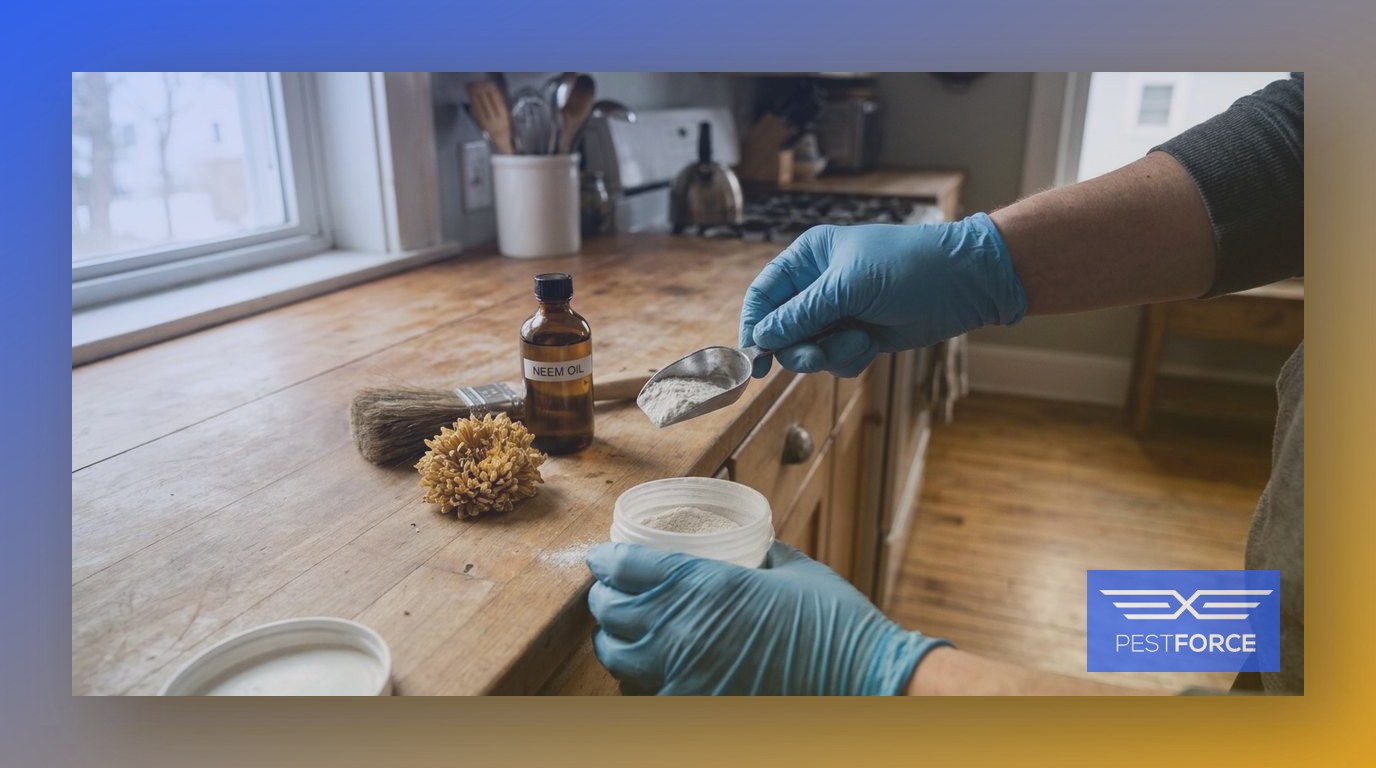
Pyrethrin is a botanical insecticide derived from chrysanthemum flowers, distinct from synthetic pyrethroid pesticides. Pyrethrin attacks insect nerves on contact and degrades rapidly; according to the Agency for Toxic Substances and Disease Registry (ATSDR), pyrethrins in air last only 1 to 2 days, while some pyrethroids persist for months. Consumers frequently conflate pyrethrin with pyrethroids, but the ATSDR reports that pyrethroids are more toxic to insects and mammals, last longer in the environment, and are extremely toxic to fish, with bioconcentration factors of roughly 100 to 1,200 across tested species. The plant-derived pest control overview documents additional botanical active ingredients.
- Neem oil (azadirachtin): Neem oil disrupts insect hormone cycles, halting feeding, growth, and molting in soft-bodied pests and larvae. Neem oil delivers limited contact-kill efficacy against adult insects.
- Diatomaceous earth: Homeowners use diatomaceous earth as a mechanical, non-neurotoxic control for crawling insects including ants, cockroaches, and silverfish. The abrasive particles damage exoskeletons and dehydrate the insect. Food-grade material is the only grade appropriate for indoor use, and humid or wet conditions render diatomaceous earth ineffective.
- Boric acid: Boric acid acts as a stomach poison when cockroaches and ants ingest the powder during grooming. Boric acid has low mammalian toxicity relative to most synthetic insecticides, but boric acid requires correct placement away from food surfaces and out of reach of children and pets.
- Essential oils: Peppermint, cedarwood, and clove oils function as repellents only. Essential oils do not eliminate an infestation, and their residual life is short.
Bacillus thuringiensis (Bt) is a naturally occurring soil bacterium used as a biological control agent; the israelensis strain targets mosquito larvae, and Georgia mosquito abatement programs apply it widely. Many Bacillus thuringiensis applications are exempt from standard pesticide registration requirements.
Spinosad, derived from a soil actinomycete bacterium, is OMRI-listed for organic use and controls thrips, fire ants, and certain caterpillars. Spinosad occupies a middle ground between purely botanical and synthetic products, and green pest control discussions often overlook it.
When should Georgia homeowners choose green pest control versus conventional treatment?
Georgia homeowners should choose green pest control for preventive programs, low pest pressure, chemically sensitive households, and perimeters near gardens or water, and conventional or hybrid treatment when infestations exceed action thresholds, termites threaten structures, or green-only treatment fails twice.

| Situation | Recommended approach |
|---|---|
| Year-round preventive program | Green |
| Low-density pest pressure | Green |
| Documented chemical sensitivities in the home | Green |
| Outdoor or perimeter treatment near water features or gardens | Green |
| Infestation past action thresholds | Conventional or hybrid |
| Structural damage risk from termites | Conventional or hybrid |
| Green-only treatment failed after two application cycles | Conventional or hybrid |
Green pest control methods have an efficacy ceiling. Active termite colonies and large rodent populations require synthetic treatment even under an IPM framework, because botanical and mineral products cannot deliver the knockdown speed or colony-level kill that high-pressure infestations demand.
Documented chemical sensitivities make low-risk pest control for households a health priority rather than a preference, and household chemical safety for families with young children or pets demands the lowest-toxicity product that still achieves control.
A hybrid IPM approach uses green products as the first line and applies targeted synthetics only where monitoring shows a need. The hybrid IPM approach represents the professional standard in Georgia and delivers better outcomes than either green-only or conventional-only programs alone.
Sources
- Verified Market Reports, “Integrated Pest Management (IPM) Market Size, Share, Competitive Insights & Forecast 2033” (2025)
- Georgia Pest Authority, “Georgia Pest Control Services: Frequently Asked Questions”
- PestNation, “Climate and Pest Activity in Georgia & the Carolinas”
- Georgia Pest Authority, “Seasonal Pest Activity Patterns in Georgia”
- Michigan State University Extension, “Counteracting Adverse Weather Effects on Deposition and Degradation of Insecticides Used in Berries” (2012)