
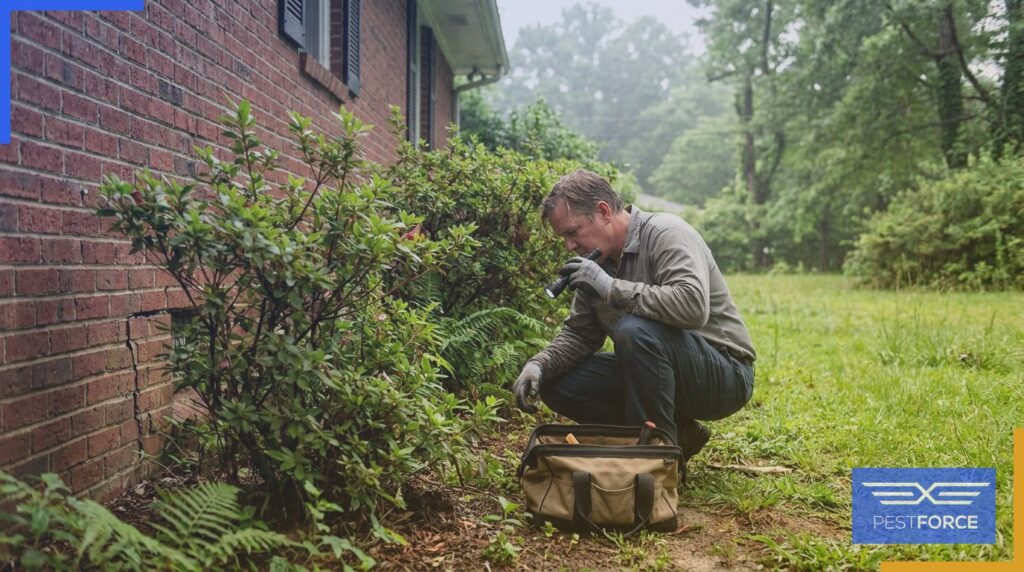
Non-toxic pest prevention removes the food, water, shelter, and entry points pests need to survive, stopping infestations before they take hold. Georgia’s humid climate keeps roaches, ants, mosquitoes, and rodents active all year, so pest prevention is a twelve-month job rather than a seasonal one. Homes and businesses that combine structural exclusion, sanitation discipline, and biological controls rarely need chemical pest control at all.
What is non-toxic pest prevention and how does it fit into Integrated Pest Management?
Non-toxic pest prevention removes or modifies the conditions that allow pests to survive and reproduce: food, water, shelter, and entry points. Integrated Pest Management places prevention above all other interventions in the pest control hierarchy, ahead of monitoring, mechanical controls, and pesticide use.
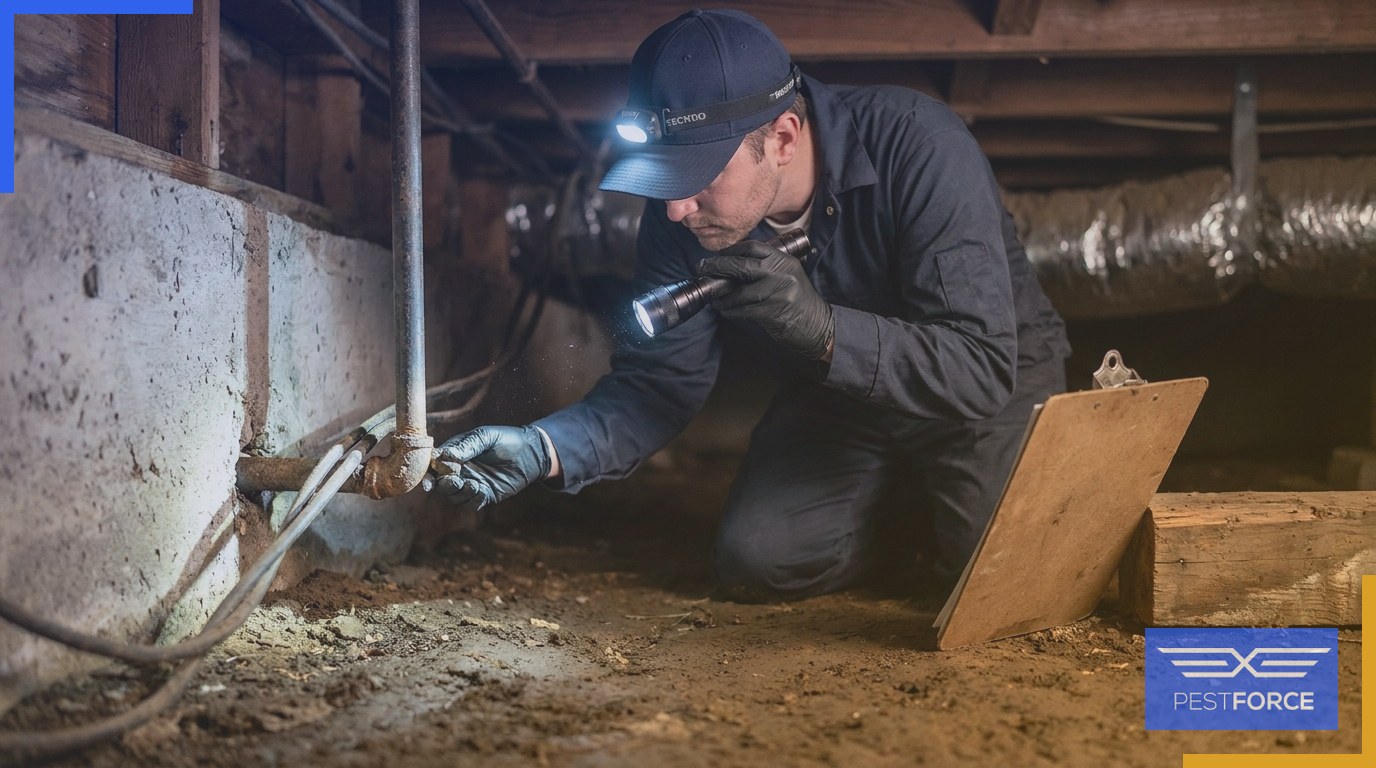
Prevention targets each survival requirement directly. Exclusion seals foundation gaps, screens vents, and closes utility penetrations. Sanitation removes food residue, grease, and harborage. Moisture control dries crawl spaces and repairs leaks. Habitat modification clears debris and trims vegetation away from structures. Every tactic eliminates a condition pests need rather than attacking the pests themselves.
According to the U.S. Environmental Protection Agency, IPM is not a single pest control method but a series of pest management evaluations, decisions, and controls, and IPM applies to non-agricultural settings such as the home, garden, and workplace. The EPA describes a fixed order of operations:
1. Prevention. Structural, sanitation, and behavioral tactics stop pests from establishing. 2. Monitoring. Inspections and traps measure pest pressure against a set action threshold. 3. Non-chemical intervention. Mechanical removal, exclusion repairs, and biological controls act on confirmed activity. 4. Targeted chemical use. Limited application follows only after earlier tiers fall short, and the EPA lists broadcast spraying of non-specific pesticides as the last resort.
NC State Extension calls prevention the first tool in pest management because prevention is the most effective, least expensive, and most environmentally friendly solution. Prevention-first does not mean prevention-only. A 2024 ACS Omega article confirms that IPM uses economic thresholds and pest monitoring to hold populations below damaging levels while minimizing chemical reliance, and ScienceDirect states plainly that IPM does not eliminate the need for pesticides when thresholds are breached and non-chemical methods prove insufficient. Framing non-toxic prevention as a complete replacement for all pest control misleads Georgia homeowners facing established infestations; a German cockroach colony inside a wall void rarely responds to sanitation alone.
Georgia’s humid subtropical climate raises the stakes on the prevention tier. High rainfall and summer humidity keep crawl spaces, mulch beds, and foundations damp, and moisture attracts roaches, termites, ants, and mosquitoes. Mild winters rarely deliver a hard freeze, so pest populations carry through the year instead of dying back. Mosquitoes do not take January off in Georgia. Prevention here runs twelve months, not one season.
The parent green pest control pillar treats chemical-free pest prevention approaches as one family of methods and applied organic products as another. Exclusion, sanitation, biological controls, and habitat modification form the first family and supply the prevention tier at the top of the IPM hierarchy, and the pillar frames IPM as a chemical-reduction strategy that leans on that tier before any product is applied. One scope boundary matters: diatomaceous earth and essential-oil-based repellents occupy a middle ground. Both materials are non-synthetic, yet both function as applied interventions rather than pure prevention, so the sibling Organic and Botanical Pest Control Methods page covers them.
How does structural exclusion prevent pests without chemicals?
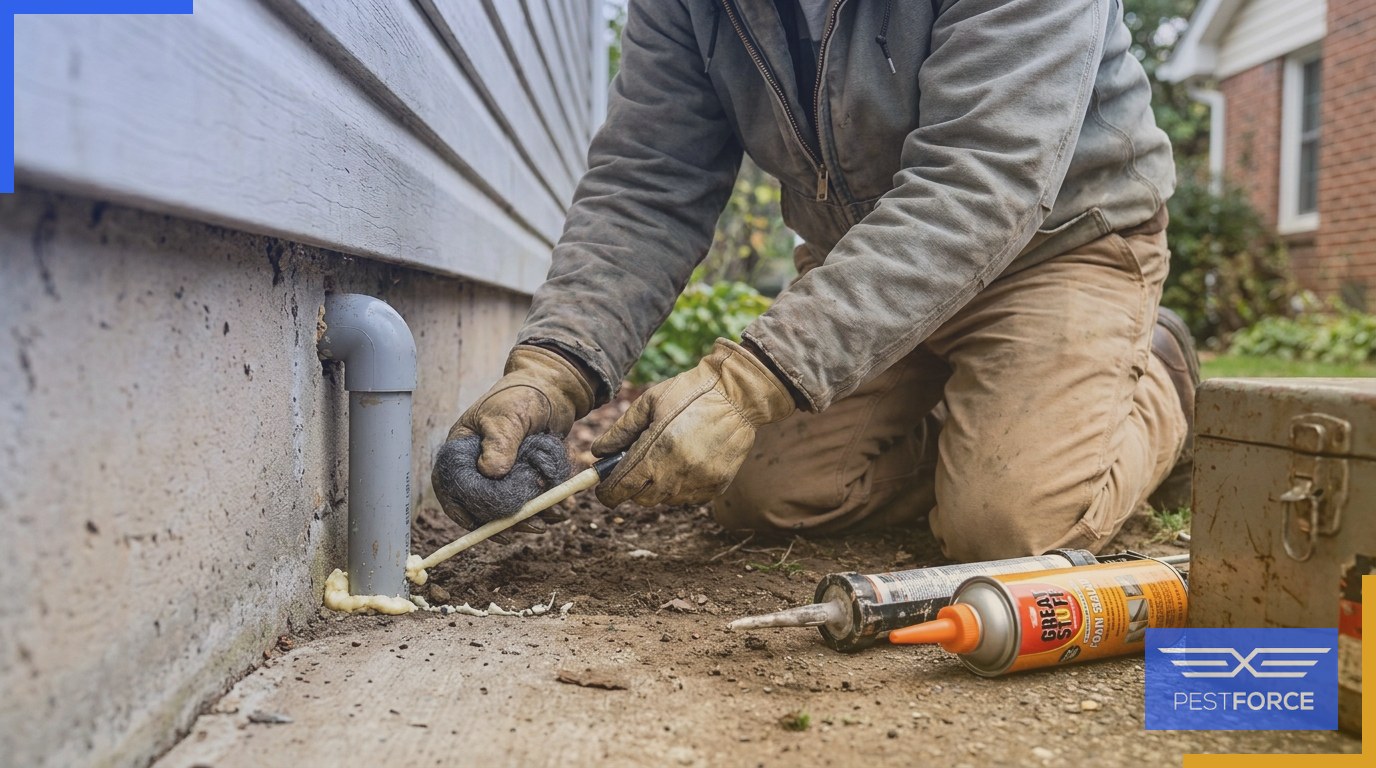
Structural exclusion prevents pests without chemicals by sealing the physical openings that pests use to enter a building, including gaps around pipes, utility penetrations, foundation cracks, roof soffits, and vents. Blocking access removes the need for any pesticide.
Structural exclusion is the single most durable non-toxic pest prevention method because it physically denies entry rather than deterring or killing. Sprays wear off. A sealed gap never does.
1. Inspect the shell for entry points. The U.S. Department of Energy’s Building America Solution Center identifies under-door gaps and utility pipe and wire penetrations as primary rodent and insect entry points. 2. Match the material to the gap size. Building America recommends foam, spackle, or caulking for small gaps and reinforcement for larger ones; silicone caulk, door sweeps, and weatherstripping handle most residential sealing jobs. 3. Use gnaw-proof metal where rodents pressure the building. Stuff copper mesh into pipe penetrations and cover larger openings with hardware cloth. Giridharpai & Associates (2025) specifies hardware cloth with 0.25-inch squares to exclude mice and 0.5-inch squares for rats, with caulk paired to 0.25-inch metal mesh forming a durable barrier. A 2019 Wildlife Damage Management Extension guide warns that even a small unprotected opening can invite rodents.
In Georgia, exclusion hits hardest against four groups: American and smokybrown cockroaches wandering in from outdoors, house mice and roof rats, ants trailing through hairline foundation cracks, and wildlife such as squirrels and raccoons working at roof soffits and attic vents. The physical deterrents for household pests covers how mesh, screens, and sweeps stop these species at the threshold.
Exclusion has one hard limit: sealing cannot remove an already-established interior population. German cockroaches breeding in a kitchen or mice nesting in wall voids must be trapped and cleaned out first, or new seals simply lock the problem indoors. The chemical-free exclusion for lasting pest control explains how trapping and sanitation pair with sealing. For anyone determined to pest-proof a home without using any chemicals, exclusion is where the work starts.
What sanitation and habitat-modification practices deter pests most effectively?
Sanitation and habitat reduction eliminates the food, water, and shelter resources that sustain pest populations indoors. The most effective practices are airtight food storage, lidded waste bins, moisture elimination, clutter removal, and warm-spectrum perimeter lighting.
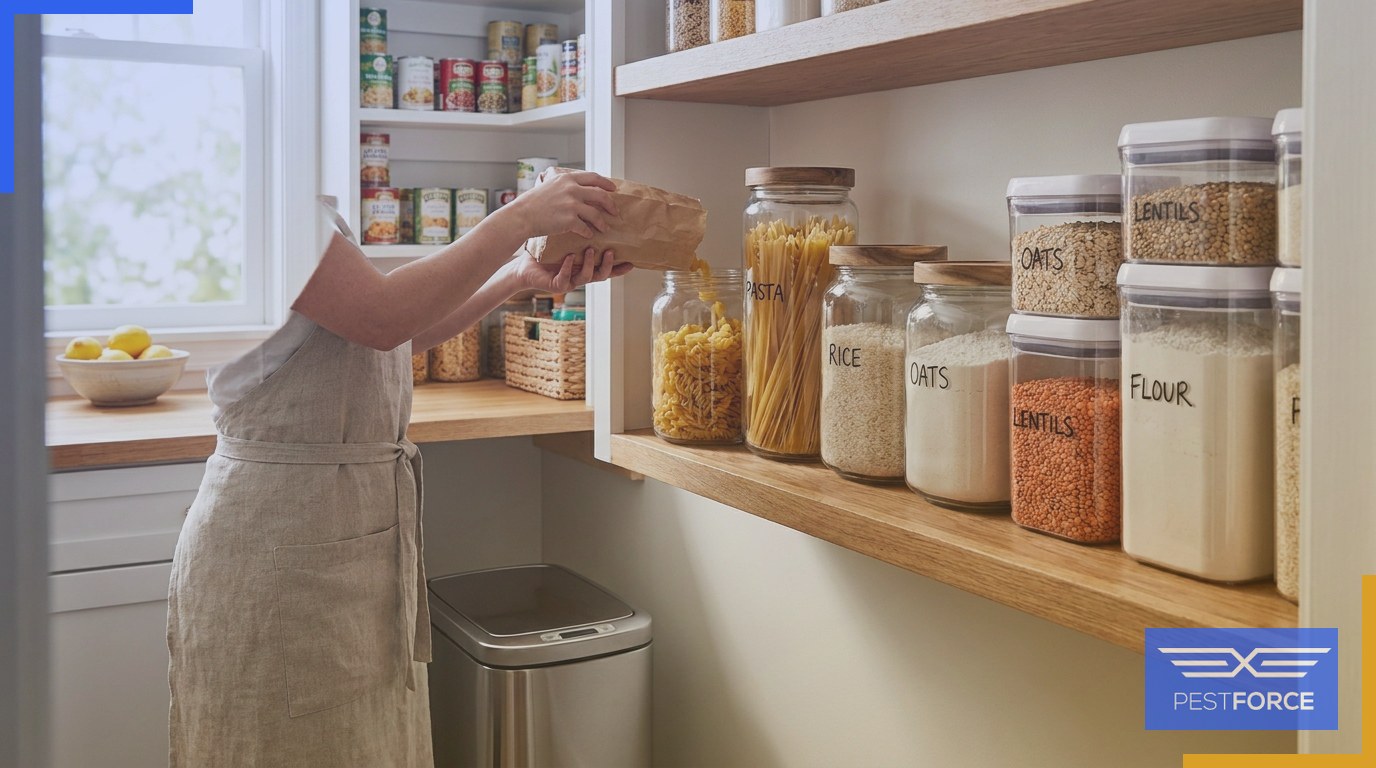
Food storage does the heavy lifting. Airtight containers protect pantry goods, pet food bowls stay empty overnight, and same-day cleanup removes crumbs and spills. Keeping a Clean Home to Prevent Pest Infestations: The Full Guide details how these habits strip foraging pests of every calorie source. Waste management finishes the job: lidded bins, routine trash removal, and compost piles sited away from the structure. The U.S. Environmental Protection Agency (2025) lists removing trash, maintaining clean food storage areas, reducing clutter, and removing standing water as core non-toxic preventive actions.
Moisture management prevents cockroach, silverfish, and termite activity by removing the humidity conditions those species require. Georgia homeowners cut humidity by repairing leaks promptly, dehumidifying basements and crawl spaces, and ventilating bathrooms. Moisture Control to Prevent Pest Infestations: Room-by-Room Guide covers each of these fixes in detail. Crawl spaces are a disproportionate moisture and harborage source in Georgia homes. Encapsulation with a vapor barrier addresses moisture, subterranean termite, and rodent conditions simultaneously, which makes crawl space encapsulation one of the highest-return single investments in structural pest prevention.
Clutter reduction removes the shelter piece of the triangle. Cardboard boxes in garages, leaf litter piled against the foundation, and woodpiles stacked against exterior walls all place harborage within reach of entry points. Roaches treat corrugated cardboard like a furnished apartment; recycling boxes instead of storing them and stacking firewood off the ground away from the structure removes that shelter.
Outdoor lighting Outdoor lighting shapes nighttime insect pressure, and lighting choices that affect insect activity are among the most overlooked prevention tools available. Warm-spectrum LEDs draw fewer flying insects than cool-white or UV-emitting bulbs. Lighting Choices That Attract (or Deter) Insects Around Your Home explains the spectrum and fixture differences.
Do plants and beneficial insects actually work as non-toxic pest deterrents?
Plants and beneficial insects do work as non-toxic pest deterrents, within limits. Pest-repelling plants release their active compounds mainly when foliage is crushed, and beneficial insects deliver dependable control outdoors in gardens, not as standalone indoor prevention.
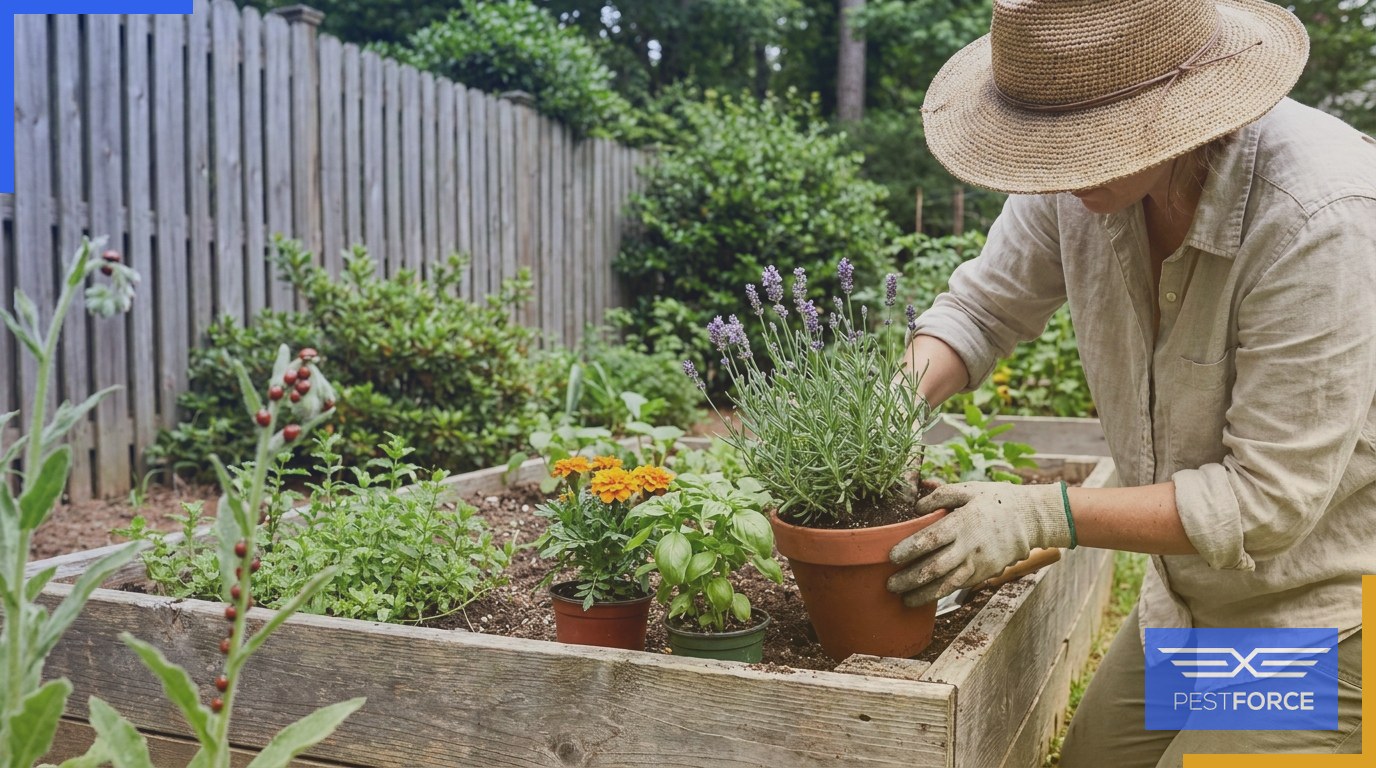
Citronella, lavender, basil, and marigolds all produce volatile compounds that repel insects, but those compounds do meaningful work only when leaves are physically disturbed. A pot of basil by the back door looks the part and does little else, because the measurable repellent effect comes from direct skin application of extracted oils rather than passive planting. Even the mosquito and ant-repelling garden plants with the strongest track records depend on bruised or crushed foliage to perform. Marigolds are the one exception worth planting anyway: their roots release compounds that suppress soil nematodes, so they earn garden space without any disturbance at all.
Beneficial insects are the stronger half of the equation in Georgia gardens. Ladybugs and lacewings eat aphids and whiteflies, and parasitic wasps lay eggs inside caterpillars, killing the host before it matures. Recruiting them takes three habits: skip broad-spectrum pesticides that kill predators along with pests, plant nectar sources such as dill, fennel, and sweet alyssum, and keep habitat diversity with mixed plantings and undisturbed ground cover. The best starting move for attracting beneficial insects to your garden is simply stopping the spray, since most predator populations recover on their own once the pressure lifts.
Scale decides where biological control earns its keep. Biological controls are most effective in outdoor and garden contexts, not as standalone indoor pest prevention. Inside a home or commercial building, exclusion, sanitation, and moisture control carry the load. A ladybug release in a kitchen fixes nothing.
How do you combine non-toxic strategies into a prevention plan that actually works?
Non-toxic pest prevention strategies require layering multiple methods simultaneously: exclusion, sanitation, monitoring, and biological controls. A working plan seals the structure, removes indoor food and moisture, tracks pest activity with traps, and follows a seasonal inspection schedule matched to Georgia’s pest cycles.
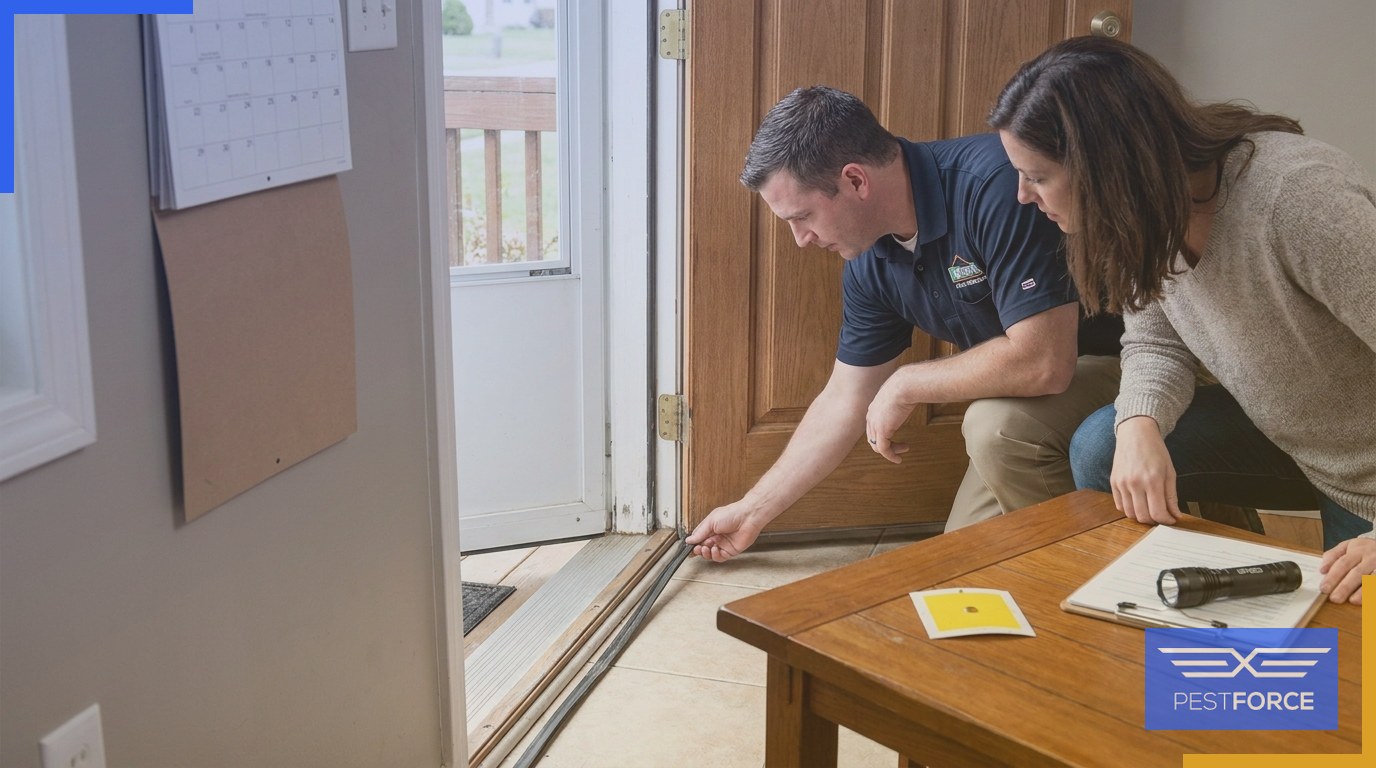
No single method holds on its own, because every barrier leaves a gap the others cover. Sealed walls do nothing about an open food supply, and a spotless kitchen does nothing about the gap under the door.
1. Seal the structure first. According to a 2025 Giridharpai & Associates (GPA) guide, exclusion is most effective when paired with a broader 4D approach: Deny Entry, Deny Food, Deny Water, and Deny Shelter.
2. Run sanitation at the same time. Exclusion loses most of its value without an interior sanitation program running concurrently: a sealed home that still offers food and moisture gets breached repeatedly because outdoor pest pressure stays high. The two strategies multiply each other; one never substitutes for the other.
3. Add biological controls outdoors. Beneficial predators suppress outdoor pest populations without adding chemicals to the property.
4. Use traps as detection, not control. Glue traps and sticky monitors are early-warning devices. Rising catch counts signal that pest pressure is approaching a threshold before an infestation takes hold.
5. Inspect on Georgia’s seasonal clock. Schedule inspections before spring, when ants and termites swarm, and again before fall, when rodents and cockroaches move indoors. According to Encyclopaedia Britannica, Atlanta averages 42°F in January and 79°F in August, and areas further south run about 10°F warmer in January, so inspections in south Georgia should start earlier.
Call a professional when prevention has failed: droppings that return after cleaning, traps that fill between inspections, pests active in daylight, or mud tubes and gnaw marks signal an established infestation beyond what non-toxic methods reverse. Fire ants sit in the same category. Exclusion and repellent plants have very limited efficacy against fire ant colonies, and granular baits or professional treatment remain the practical standard for Georgia yards.