
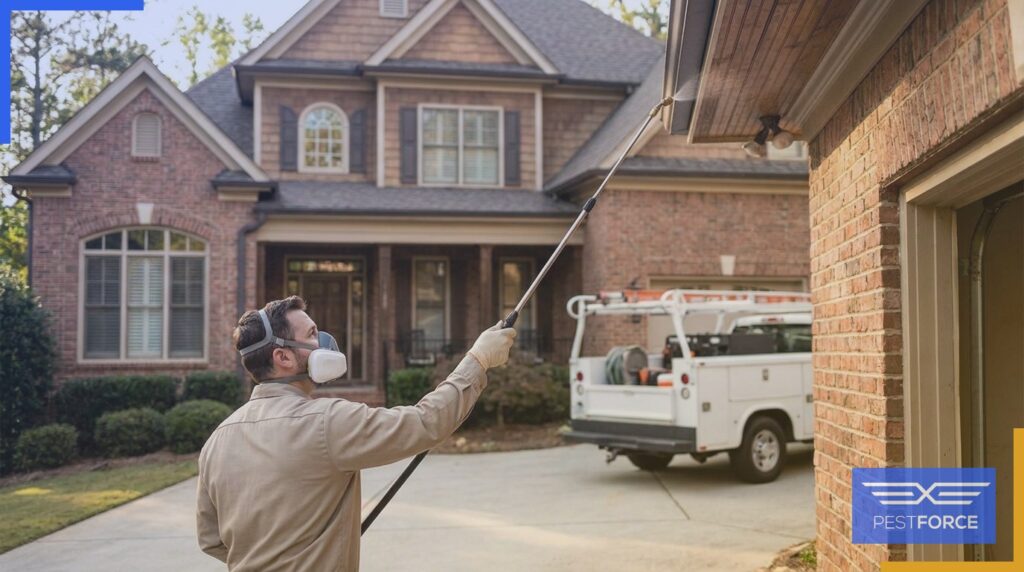
Pest Force spider and stinging insect control eliminates the most fear-inducing and physically dangerous pests Georgia homeowners face: spiders, wasps, yellow jackets, and hornets. Pest Force technicians remove active nests, eliminate harborage around the structure, and protect families from bites and stings that can trigger anaphylaxis. Pest Force treatment outperforms DIY sprays because trained applicators destroy colonies and webs at the source, while a can of store-bought spray mostly scatters the survivors.
What spiders and stinging insects are most common and dangerous in Georgia?
Georgia has two medically significant spiders, the black widow and the brown recluse, and three primary stinging insect threats: paper wasps, yellow jackets, and bald-faced hornets. Yellow jackets cause the most injuries because they nest underground, sting repeatedly, and swarm when disturbed.
According to the Cleveland Clinic (2026), the black widow and the brown recluse are the only two spiders in Georgia that pose a real medical risk to humans. Black widow venom causes severe muscle pain, abdominal cramping, and systemic reactions that can include difficulty breathing. Black widows hide in woodpiles, crawl spaces, and garages, while brown recluse spiders prefer undisturbed dry clutter indoors, including cardboard boxes, stored clothing, attics, and closets. Spider Identifications (2020) reports Georgia’s highest brown recluse numbers in the northwest and Piedmont regions, and First Response CPR (2023) notes that most bites result from unintentional contact, such as putting on footwear or clothing left undisturbed for a long time. Accurate black widow and brown recluse identification matters because the two species hide in different places and demand different inspection habits.
The Joro spider is the invasive newcomer that stops Georgia homeowners in their tracks, a palm-sized yellow and blue spider sitting in a large golden web. The species was first found in northeast Georgia in 2014, and a 2025 MDPI Insects study found Atlanta-area populations doubling each year, with census counts rising from 444 spiders in 2022 to 859 in 2023 to 1,713 in 2024. Joro spiders are not aggressive, and FOX 5 Atlanta (2024) reports their fangs are generally not large enough to pierce human skin. University of Georgia research covered by ScienceDaily (2024) found Joro spiders tolerate urban vibration and noise. Metro Atlanta suits them fine. The webs are worse than the spiders.
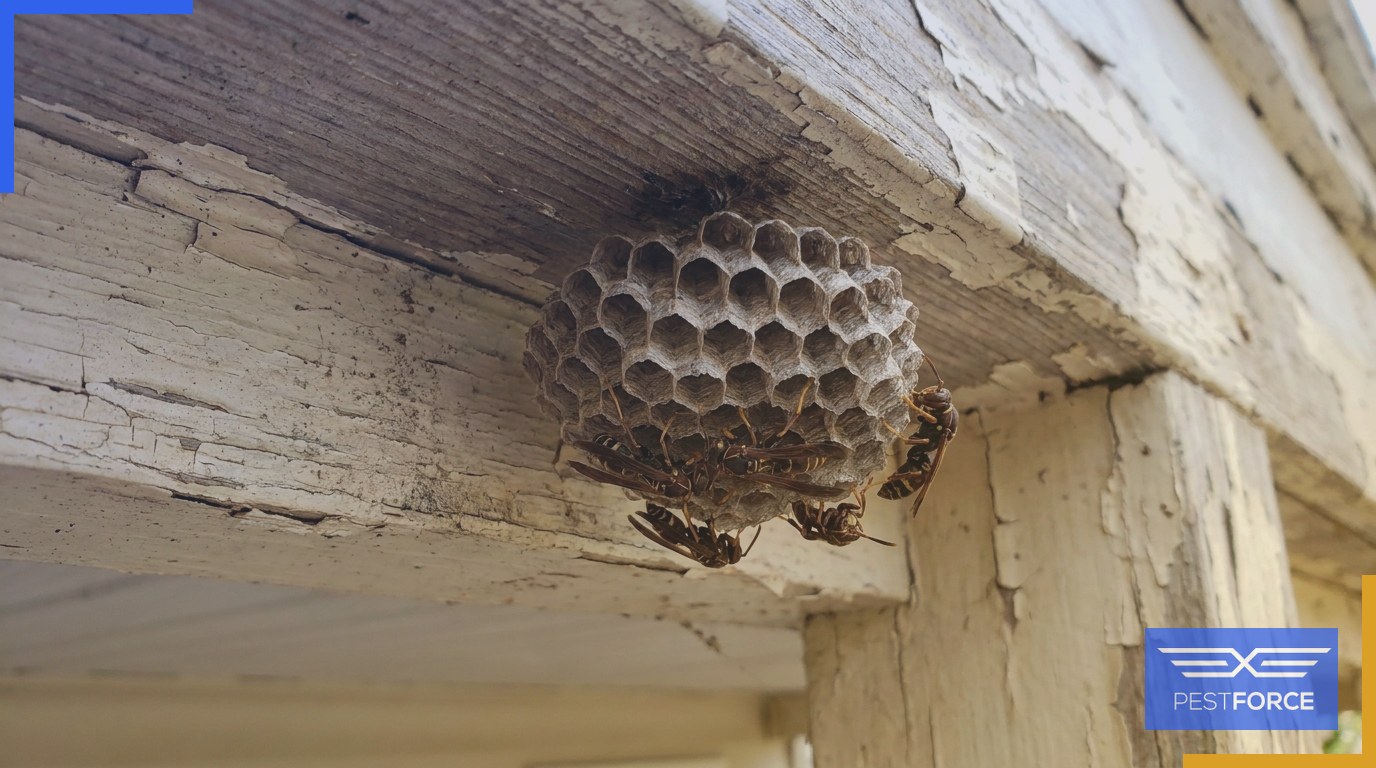
Among stinging insects, paper wasps, yellow jackets, and bald-faced hornets differ sharply in nesting habits and aggression. Paper wasps build open, umbrella-shaped combs under eaves and railings and usually sting only when the nest is threatened. Yellow jackets nest underground in abandoned rodent burrows, where a lawnmower or a footstep counts as an attack. The University of Maine Cooperative Extension (2026) reports yellow jackets are more aggressive than other wasps, defend the colony vigorously, and can sting repeatedly. Colony size compounds the risk: Oklahoma State University Extension (2016) puts mature yellow jacket colonies at 1,000 to 5,000 adults, compared with 200 to 700 adults for bald-faced hornets. Cornell University’s Integrated Pest Management Program adds that yellow jacket colonies can exceed 5,000 workers by late summer, and a crushed worker releases alarm pheromone that summons the rest of the colony. Bald-faced hornets build large, papery aerial nests in trees and under eaves; they are less common than yellow jackets but significantly more aggressive when the nest is disturbed, and they pursue perceived threats farther than other stinging insects.
Orb weaver spiders cover Georgia gardens and porches with large, highly visible webs in late summer. Orb weavers are harmless, but the webs generate frequent service calls, and a perimeter treatment reduces their presence without requiring interior service.
Georgia’s warm climate keeps stinging insects active into October and spider populations hunting nearly year-round. Ripe fruit, sweet drinks, and cookout scraps are the food and scents that draw wasps to Georgia patios through the fall. When temperatures finally drop, spiders and wasps rank among the pests most likely to invade Georgia homes in search of shelter.
How does Pest Force treat spiders in and around Georgia homes?
Pest Force spider treatment targets active webs, harborage zones, and exterior entry points using residual perimeter applications. Technicians add interior void and crack treatments for brown recluse and black widow harborage, plus web removal that eliminates egg sacs. Spider control also sits within broader residential pest treatments for Georgia homes.
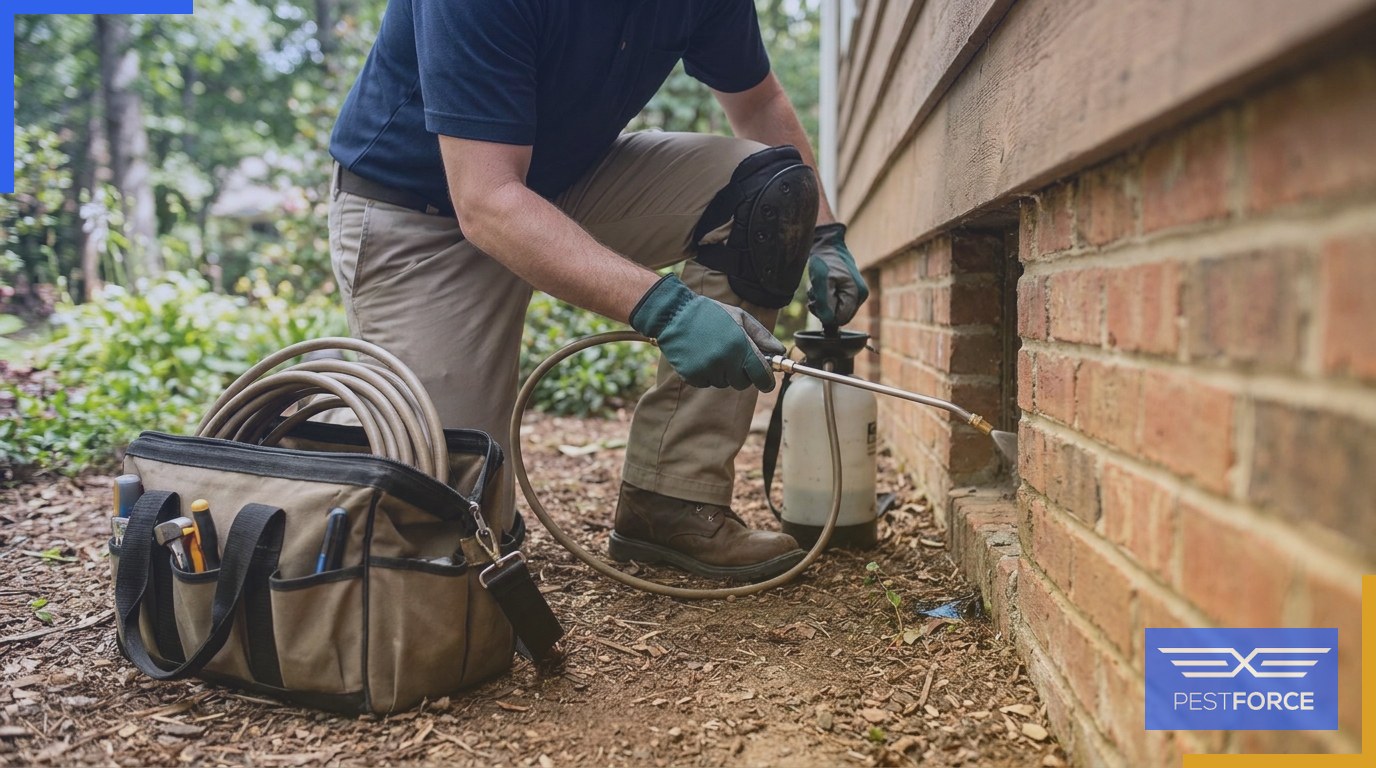
1. Residual perimeter spray. Technicians apply a residual insecticide along foundation lines, eaves, window frames, and garage interiors, the harborage zones where spiders rest, hunt, and enter. 2. Interior void and crack treatment. Brown recluse and black widow spiders shelter in wall voids, crawl spaces, and undisturbed storage, so technicians treat those cracks and voids directly. 3. Web removal. Technicians knock down accessible webs because active webs signal active spiders, and removal also destroys egg sacs before they hatch. 4. Species-matched scope. Medically significant spiders receive targeted interior treatment, while nuisance species receive an exterior perimeter focus.
Georgia spiders split into two treatment categories. Black widow and brown recluse spiders are present in Georgia homes, and both are medically significant species requiring professional treatment. The Joro spider is an invasive species established in Georgia, visually alarming but not medically dangerous, though large Joro webs still draw homeowner service calls. Big webs do not mean a dangerous spider. With nuisance species like the Joro and orb weavers, the danger is psychological rather than physical. Conflating the two categories leads homeowners to over-react to harmless species or under-react to dangerous ones.
Brown recluse bites are often painless at first, which delays medical attention. Homeowners who find webs in low-traffic interior spaces such as an attic, basement, or storage closet should treat the find as a confirmed harborage even without seeing a spider.
Lasting control pairs treatment with exclusion, and keeping spiders out of your home covers the sealing and screening work that limits re-entry.
How does Pest Force safely remove wasp, yellow jacket, and hornet nests in Georgia?
Pest Force removes wasp, yellow jacket, and hornet nests by identifying the nest type, treating it at night or early morning when workers are inside, destroying the nest, treating the surrounding harborage zone, and following up to prevent recolonization at the same site.
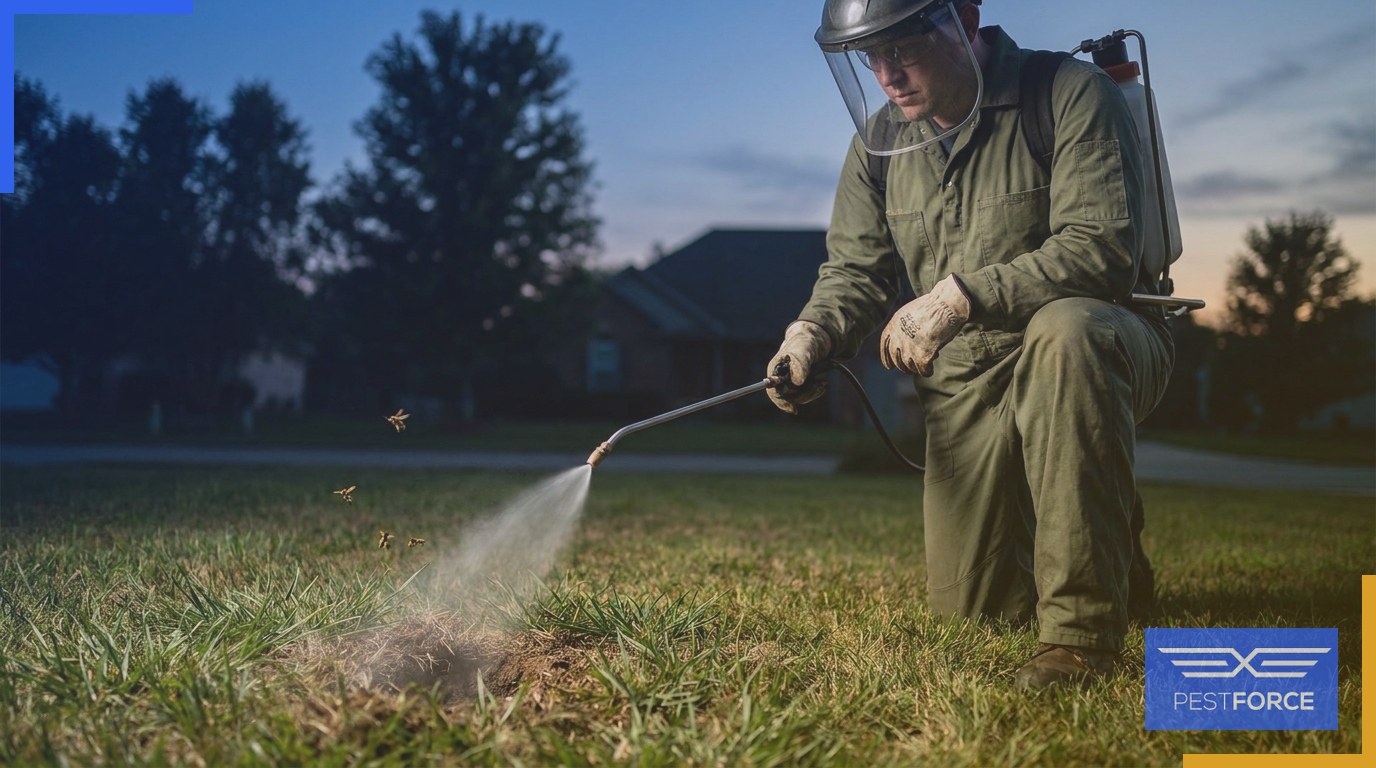
The University of Maine Cooperative Extension reports that hornets, wasps, and yellow jackets build grayish paper nests in trees, shrubs, and under building eaves, or nest in the ground, in logs, or in structural walls. Yellow jacket nests sit in underground burrows, wall voids, and aerial structures, which makes DIY removal dangerous without protective equipment.
1. Nest identification. The technician confirms whether the nest is aerial, underground, or hidden in a wall void, because each location type demands a different removal method. 2. Nighttime or early-morning treatment. Pest Force times the application for after dark or before dawn, when workers have returned to the nest and the colony takes full product contact. 3. Dust injection and sealed waiting period for wall voids. Technicians inject dust insecticide into the void entry and leave the void sealed for 48 to 72 hours before any structural access. Opening the void without sealing interior escape routes drives the colony deeper into the structure or straight into living spaces. 4. Nest destruction and harborage treatment. Wasps and yellow jackets return to previous nest sites even after removal, so Pest Force treats the harborage zone around the nest, not just the nest itself, to reduce recolonization. 5. Follow-up. Professional stinging insect removal includes nest destruction, void treatment, and follow-up to prevent recolonization at the same site.
Stinging insect venom causes anaphylaxis in sensitized individuals, so proximity to an active nest is a medical emergency risk, not a nuisance. The professional nest removal risks involved in these jobs explain why unprotected DIY attempts end in emergency rooms.
Timing changes the job. A nest the size of a quarter in May can hold 800 to 1,000 workers by September in Georgia, so late-summer calls mean larger, more defensive colonies and more involved removal.
When should Georgia homeowners call Pest Force for spider or stinging insect control?
Call Pest Force when a nest sits near entry doors or HVAC intakes, when someone confirms a black widow or brown recluse indoors, when a household member has a known sting allergy, or when a nest turns up in a wall void or crawl space.
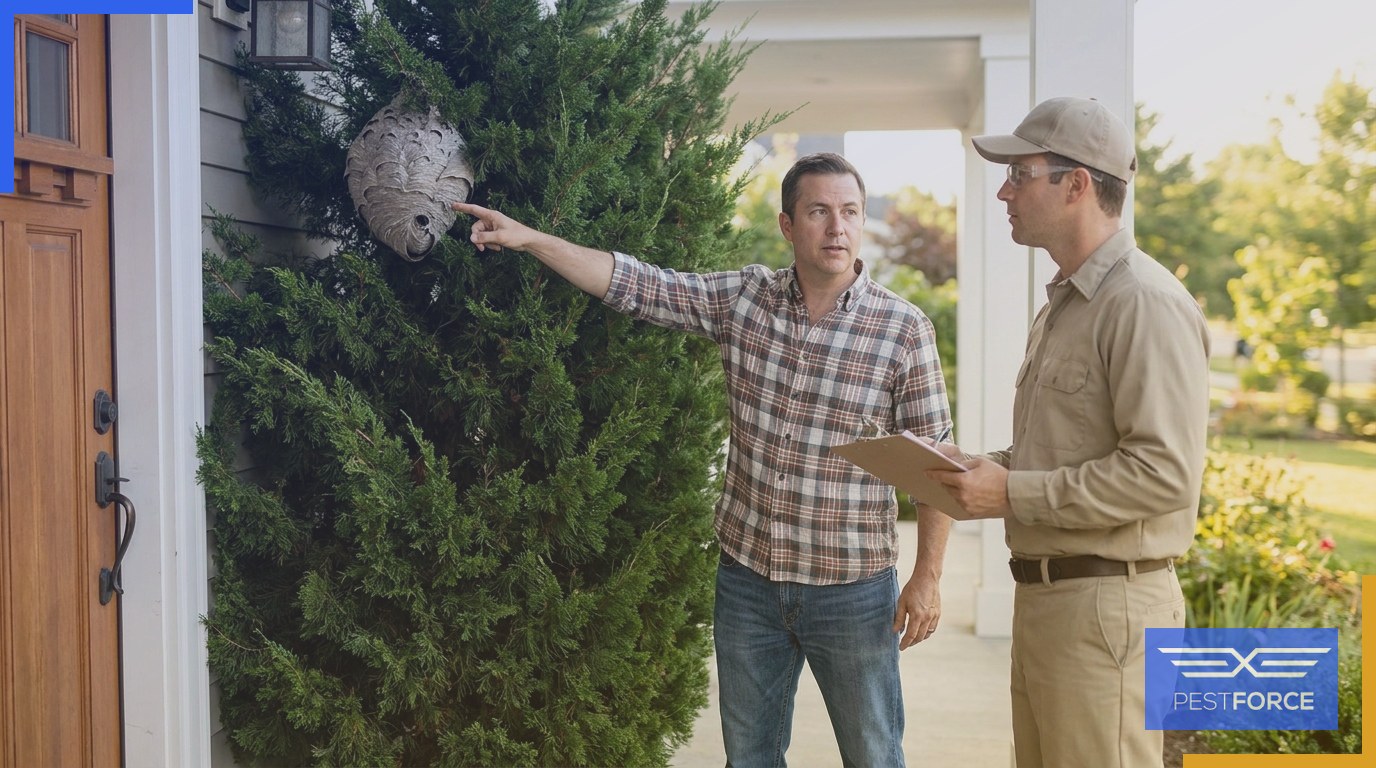
A nest in a wall void or crawl space resists DIY treatment because the colony stays hidden and the entrance hole gives a false sense of a small problem. Subterranean yellow jacket nests cause frequent accidental encounters, and bald-faced hornet nests hidden in plant foliage carry the same risk. Neither forgives a wrong step.
August and September mark peak stinging insect colony size in Georgia, and service complexity runs highest in that window. Mature colonies defend nests more aggressively and removal takes longer, so earlier treatment keeps the job simpler. The wasp and bee nest removal cost reflects colony size and nest location, which is why a June nest and a September nest are two different jobs.
One spider in a garage does not equal an infestation. The spider infestation vs. occasional invader comparison explains when a sighting warrants a professional inspection rather than a shoe.
The season does not end at Labor Day. The insects that invade in fall and winter push indoors as outdoor colonies collapse, which extends stinging insect and spider calls well past summer.
Commercial facilities such as warehouses, restaurants, outdoor dining patios, and landscaping businesses face higher liability exposure from stinging insects than residential properties, because a sting incident involving a customer or employee creates legal and reputational consequences that a homeowner never carries. Pest Force spider and stinging insect control applies to both residential properties and commercial facilities across Georgia, covering urgent nest removal and scheduled prevention for each property type.
Sources
- Cleveland Clinic, “Spider Bites: Symptoms & Treatment” (2026)
- Spider Identifications, “Spiders in Georgia: List with Pictures” (2020)
- First Response CPR, “Venomous Spiders & Insects in Georgia: Identification & First Aid” (2023)
- FOX 5 Atlanta, “Invasive Joro spider won’t leave Georgia any time soon” (2024)
- ScienceDaily, “Joro spiders well-poised to populate cities” (2024)
- Oklahoma State University Extension, “Paper Wasps, Yellowjackets and Other Stinging Wasps” (2016)
- University of Maine Cooperative Extension, “Hornets, Wasps and Yellowjackets” (2026)