
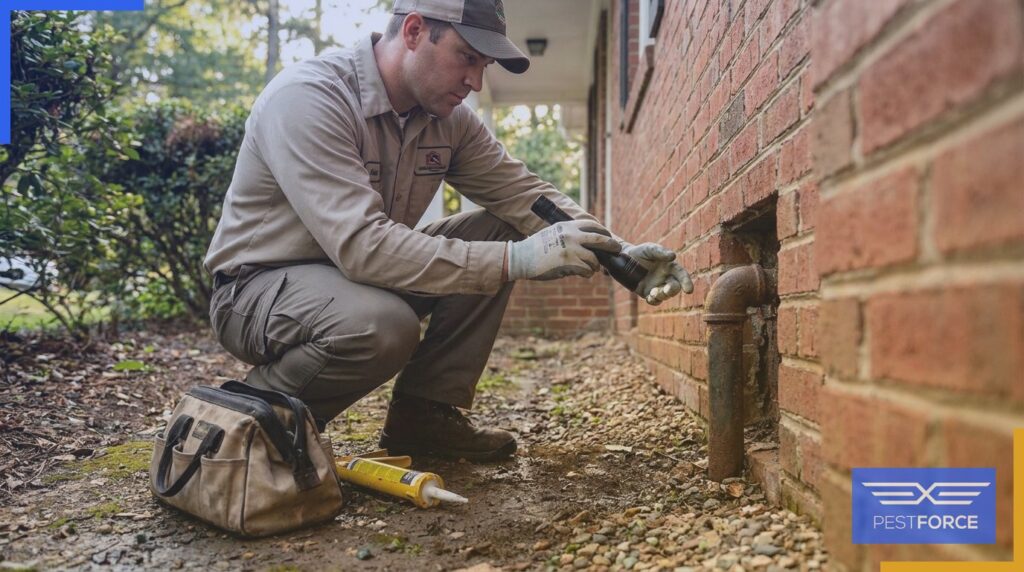
Rodent exclusion is the professional process of identifying and permanently sealing the structural gaps, cracks, and penetrations that let mice, rats, and squirrels enter Georgia homes and commercial buildings. Trapping and baiting alone turn into a never-ending cycle because new rodents keep entering through the same unsealed gaps. Rodent exclusion ends that cycle at the source. Pest Force provides full structural assessments and professional-grade entry point sealing for residential and commercial properties throughout Georgia.
What Is Rodent Exclusion and What Does the Process Involve?
Rodent exclusion is the permanent sealing of the structural gaps, cracks, and penetrations that mice, rats, and squirrels use to enter a building. The process involves two phases: a full-structure inspection that locates every active entry point, then systematic sealing with durable, rodent-resistant materials.
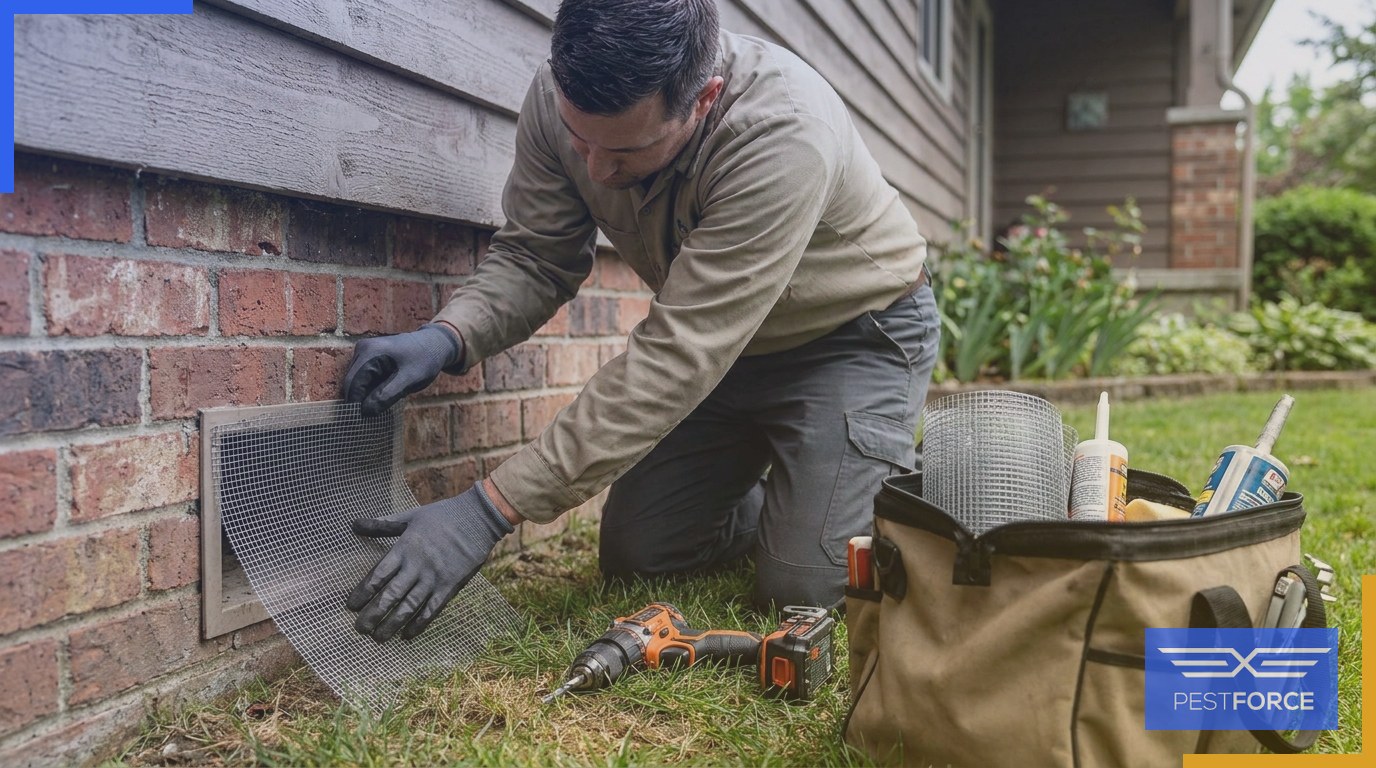
Rodent exclusion is a permanent structural solution that prevents rodent entry by sealing physical gaps. The method relies on hardware and sealants rather than poison or traps. Extermination removes rodents already inside a structure, while exclusion prevents future entry altogether. According to the Centers for Disease Control and Prevention (2026), sealing holes and gaps in a home or garage is the primary step for keeping rodents out, which places exclusion at the front of any serious rodent control program.
Trapping alone never ends an infestation when the building still has open entry points. A full trap line catches the rodents inside today, and the same gaps admit replacements tomorrow. Mice also reproduce fast enough that a small surviving population rebuilds quickly. University of Nebraska-Lincoln Extension (1994) calls rodent-proof construction the first and most important step in reducing rodent damage. The companion resource how pest exclusion works permanently explains why physical sealing outlasts any baiting or trapping program on its own.
The process runs in two phases:
1. Full-structure inspection. A technician examines the foundation, siding, roofline, soffits, vents, utility penetrations, and door thresholds to locate every gap rodents use or could use. Each finding is documented before any sealing begins. 2. Systematic sealing with durable materials. The technician seals each identified entry point with rodent-resistant materials: steel wool and hardware cloth for small gaps, metal flashing for larger openings, and mortar or concrete patch for foundation cracks. Material choice matters. Rodents gnaw through foam, rubber, and standard caulk, so every seal must resist chewing.
Squirrels are excluded with the same structural sealing methods, but squirrel work concentrates on roofline and fascia gaps that mice and rats rarely use as primary entry points. Attic and Crawl Space Rodent Control covers attic-focused squirrel exclusion for Georgia homes.
The child page what rodent exclusion involves contains the full definition and a detailed walkthrough of both phases.
Where do rodents find entry points in Georgia homes and buildings?
Rodents enter Georgia homes and commercial buildings through utility pipe penetrations, roofline and soffit gaps, foundation vents, worn garage door seals, and HVAC line sets. Older Georgia construction adds brick weep holes and pier-and-beam subfloor gaps to that list.
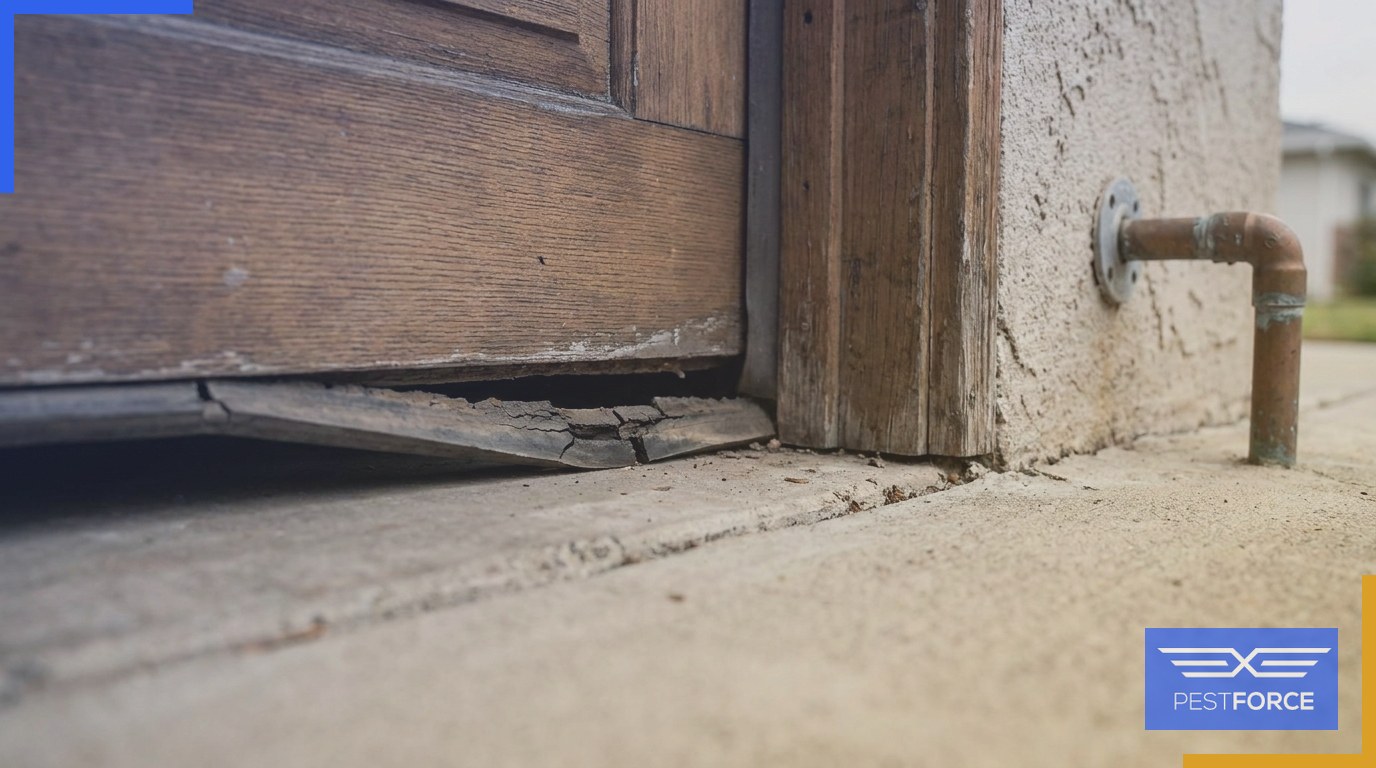
House mice can enter through gaps as small as 1/4 inch, roughly the diameter of a pencil. Rats can enter through gaps as small as 1/2 inch, including ground-level utility penetrations and damaged foundation vents. University of Nebraska–Lincoln Extension research from 1994 confirms that mice need only slightly more than a quarter-inch gap and rats only slightly more than a half-inch gap, so most entry points stay invisible at a casual glance.
Georgia’s brick-veneer and pier-and-beam construction, common in older Atlanta suburbs and rural counties, creates a specific class of entry points that national exclusion guides rarely address. Open weep holes along brick walls and unsealed subfloor gaps under pier-and-beam homes give rodents direct paths indoors, and Pest Force technicians treat both as primary inspection targets. Housing age raises the stakes: 2025 reporting from KKSA AM News-Talk-Sports found rodent presence in 16.4% of households in counties where the median home age is 70 years or more, compared with 6.8% in counties where the median home age is under 30 years.
Georgia’s humid subtropical climate causes seasonal rodent pressure in fall and winter as mice and rats seek warmth indoors through gaps in aging construction. Norway rats enter homes in the fall when outdoor food sources become scarce, typically nesting in basements, crawlspaces, and other undisturbed areas once inside, according to the U.S. Patent and Trademark Office. Rodents scout these gaps all summer. The first cold snap sends them through.
The how mice and rats get into homes covers ten entry points common in Georgia construction, and the rodent-proofing construction checklist details the materials and methods used to seal each one permanently.
What materials do professionals use to seal rodent entry points?
Professional rodent exclusion uses hardware cloth, galvanized steel flashing, copper mesh, and commercial-grade caulk, never steel wool alone, which compresses and degrades. Each material is matched to the type and location of the gap it seals.
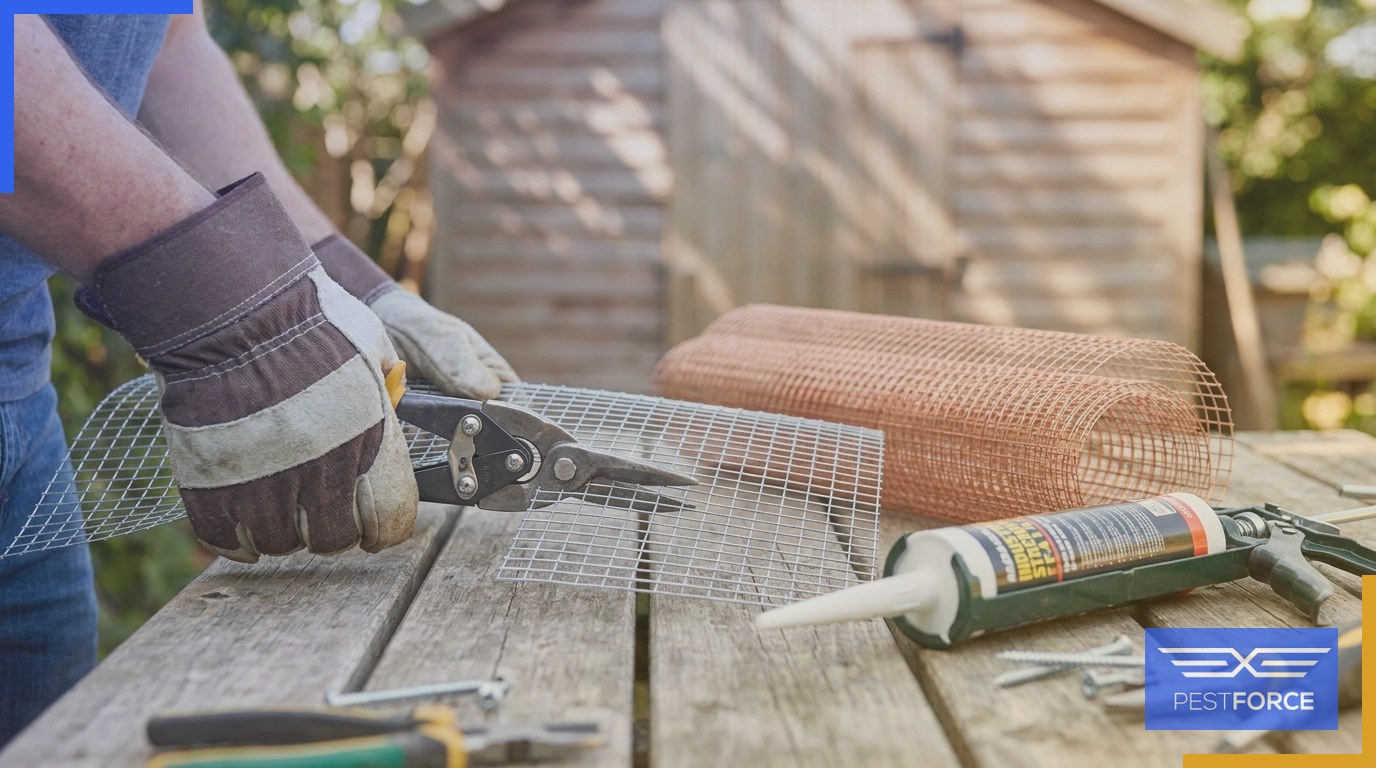
Hardware cloth is the standard. A 1/4-inch galvanized mesh, mechanically fastened with screws or masonry anchors, covers crawl space vents, gable vents, and large foundation gaps. According to a 1994 University of Nebraska–Lincoln Extension publication, rodents cannot gnaw through materials harder than iron, such as steel, and their curved incisors also struggle on flat surfaces and on round surfaces larger than 7/8-inch. Fastened hardware cloth gives a rat nothing to work with.
Copper mesh and steel flashing handle the spots where cloth cannot anchor flat. Copper mesh packs tightly around pipe penetrations and into weep holes. Galvanized flashing bridges roofline seams and the junctions where siding meets soffit.
Commercial-grade caulk over foam backer rod seals hairline cracks and failed mortar joints. The backer rod fills the depth of the joint, and the caulk skins over the face. Expanding foam sealant alone fails, and the same Nebraska Extension publication reports that rats and mice quickly gnaw through rubber or vinyl weather stops. Soft materials feed rodents rather than stop them.
Steel wool fails fastest in Georgia. Retailers market steel wool as a DIY exclusion material, but Georgia’s humidity rusts and compresses steel wool within one to two seasons, and the sealed gap reopens. Mechanically fastened hardware cloth stays in place for the life of the repair.
The professional exclusion materials used details each of these products, along with gauges and fastening methods suited to Georgia construction.
Should rodent exclusion be done before or after extermination?
Extermination comes first, and rodent exclusion follows. Technicians eliminate the active interior population through trapping or baiting, then seal entry points. Sealing before elimination traps live rodents inside walls, where trapped rodents damage wiring and leave odor-producing carcasses.
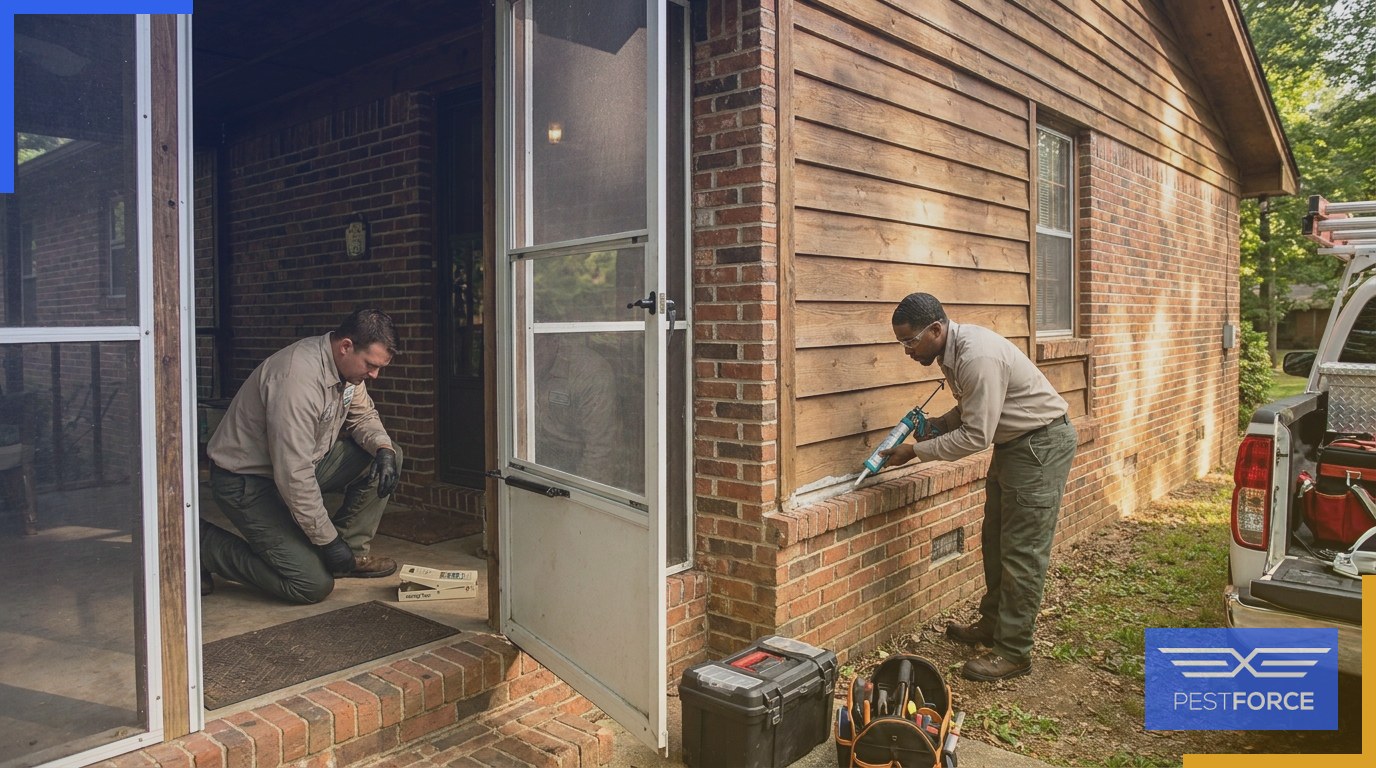
Simultaneous work is acceptable in one scenario: technicians seal low-level exterior perimeter gaps while an interior trapping program runs, so removal keeps pace with closure. Outside that scenario, rodent exclusion never precedes extermination. Exclusion follows extermination or runs concurrently with an active trapping program. Rats do not file out through the last open gap on cue.
According to 2024 guidance from the Centers for Disease Control and Prevention, rodent control means checking how rodents got inside, sealing holes, setting traps, and continuing to trap until no rodents remain. Even that homeowner sequence keeps sealing and killing in the same window rather than sealing alone.
The exclusion vs. extermination compared details how the two services differ in timing and method. The rodent kill and removal options cover trapping programs, baiting, and carcass removal for active infestations.
What does Pest Force’s rodent exclusion service include in Georgia?
Pest Force rodent exclusion service includes a structural inspection identifying all entry points, professional sealing with durable materials, and a follow-up verification check. The service covers residential and commercial properties across Georgia, from single-family homes to warehouses, restaurants, and office buildings.
A Pest Force technician maps entry points across the foundation, roofline, utility penetrations, and interior access zones, including attics and crawl spaces. The technician documents every gap before sealing begins, so no opening goes untreated.
Sealing uses hardware cloth, steel flashing, copper mesh, and commercial-grade caulk, not the expanding foam that rats gnaw through or the plain steel wool that rusts out of damp crawl-space gaps. The How to Rodent-Proof Your Georgia Home: A Construction Checklist catalogs the same entry zones for homeowners handling minor gaps themselves.
A follow-up verification visit confirms that no new rodent activity has appeared and that every seal is holding. Pest Force backs exclusion work with a service warranty.
Commercial buildings add exclusion complexity: loading dock doors, floor drains, and utility chases create entry corridors that demand specialized materials and more frequent inspection schedules than residential properties. For buildings with active infestations, Pest Force pairs exclusion with home rodent infestation control so technicians seal a structure that is already clear. The exclusion service price breakdown explains how inspection scope, entry-point count, and material choices shape the final cost.