
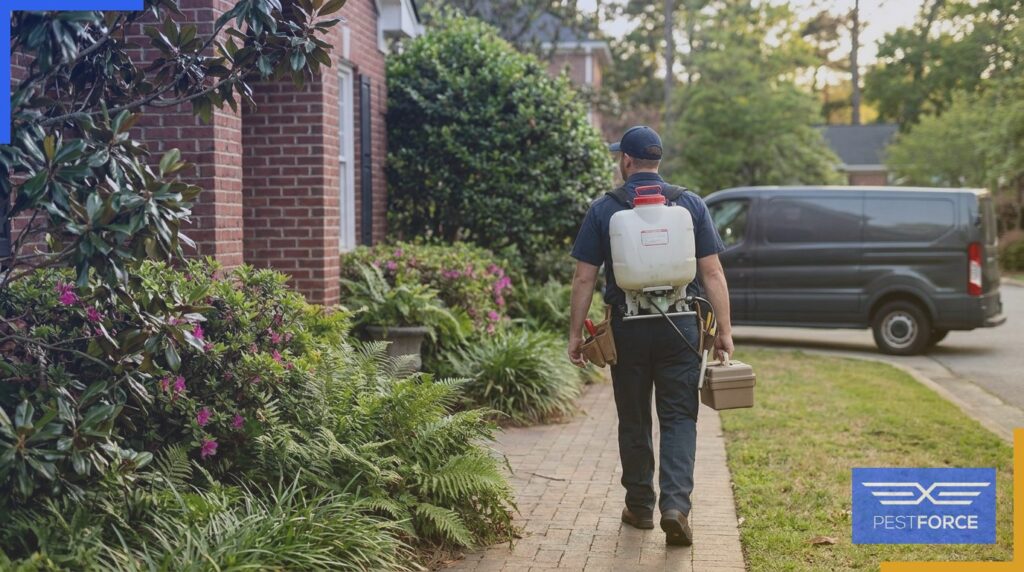
Pest control combines five distinct method categories: chemical pesticides, baits, mechanical traps, physical exclusion, and biological control. Each pest control method works through a different mechanism and suits different pests, environments, and risk tolerances. Georgia’s humid subtropical climate keeps pest pressure active nearly year-round, so homeowners and businesses get lasting results only by matching the right pest control method to the right problem.
What are the main categories of pest control methods?
Pest control methods fall into five main categories: chemical pesticides, baits, mechanical traps, physical exclusion, and biological control. Each category works through a fundamentally different mechanism, and professionals choose among them based on pest species, infestation severity, and environment.
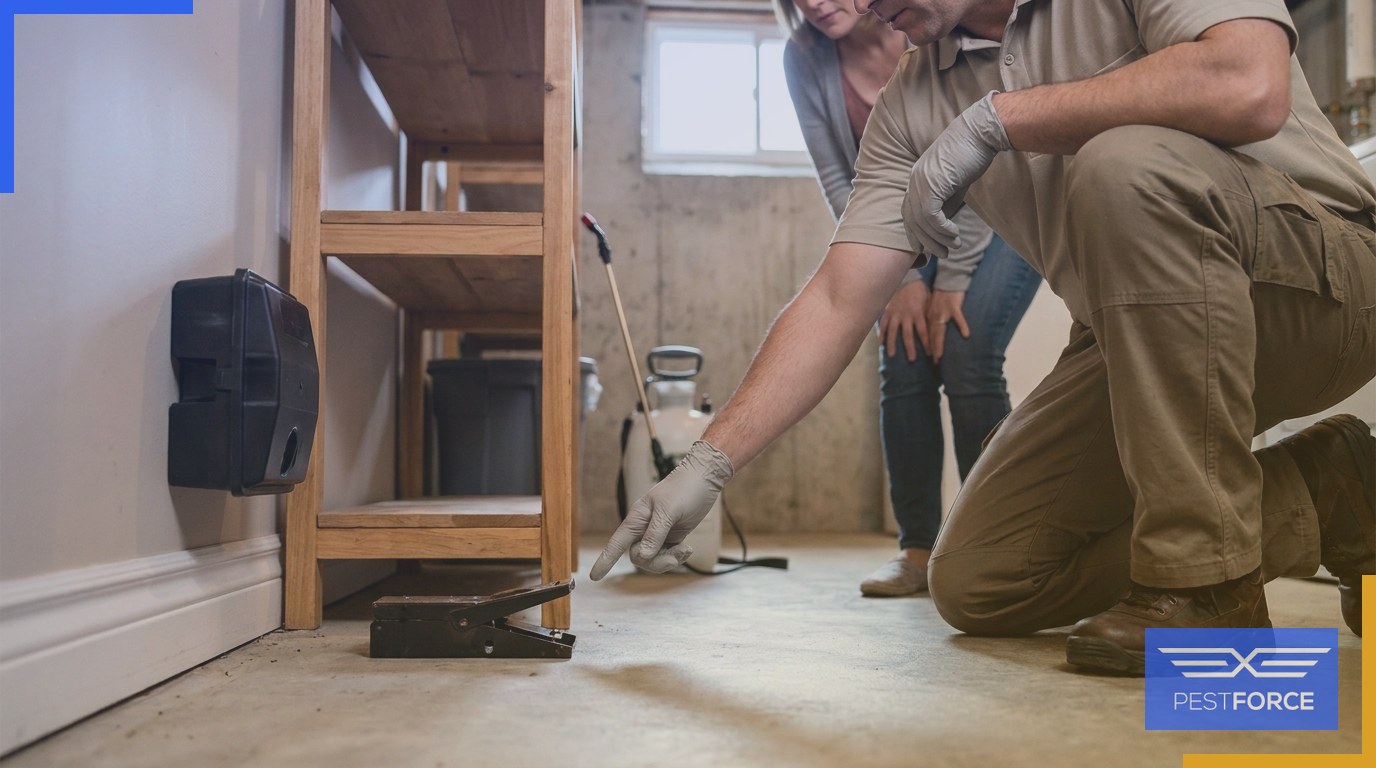
The five categories differ in the mechanism each one uses against the pest:
- Chemical pesticides work through the kill-on-contact mechanism. Contact sprays knock down exposed insects within minutes, and residual deposits keep killing pests that cross treated surfaces afterward. Georgia’s sun, heat, and rain wear those outdoor residues down faster than indoor applications.
- Baits work through the systemic toxicant mechanism. The pest eats a slow-acting poison and carries the poison back to the nest, spreading the toxicant to nestmates. That transfer effect is why baits handle ants and German cockroaches better than sprays, which scatter survivors into new hiding spots.
- Mechanical traps kill or capture pests physically through snap traps, glue boards, live traps, and electric traps. Professionals use mechanical traps mainly as monitoring and knockdown tools for rodents rather than as a primary population control strategy for large infestations, and the catch data collected between treatments shows where rodent activity is rising or falling.
- Physical exclusion works through the physical barrier mechanism. Sealing foundation gaps, screening vents, and fitting door sweeps keeps pests out of the structure entirely. Exclusion does nothing about pests already inside, so exclusion pairs with another method on almost every job.
- Biological control works through the population predation mechanism, introducing or conserving natural predators, parasites, or pathogens that suppress the pest population over time. Biological control shows up most often in Georgia mosquito and landscape work, and least often inside a kitchen.
No single category handles every pest or every situation. A flea problem in a carpeted home, roof rats in an attic, and a termite colony under a slab each demand a different mechanism, and the wrong pick wastes money while the infestation grows.
Georgia’s warm, humid climate raises the stakes on that choice. Pest seasons in Georgia run long, with mosquitoes, termites, and roaches active for most of the year, and outdoor treatments degrade faster in heat and rain than treatments do in cooler, drier states. A method that holds up fine in Ohio can wash out in an Atlanta summer.
Most professional treatments combine categories instead of relying on one. A rodent program pairs exclusion with trapping, and termite work often pairs bait stations with a liquid soil treatment. The overview of pest control methods across Georgia explains how licensed operators layer these categories against the state’s pest pressure, and the breakdown of treatment longevity by pest control method shows how long each approach keeps working between service visits.
How do chemical pesticides work, and what types are used in pest control?
Chemical pesticides kill or repel pests through toxic active ingredients, and professionals classify chemical pesticides by mode of action into contact kill, systemic ingestion, and residual barrier, each targeting pests differently. Product types split by target pest into insecticides, termiticides, and rodenticides.
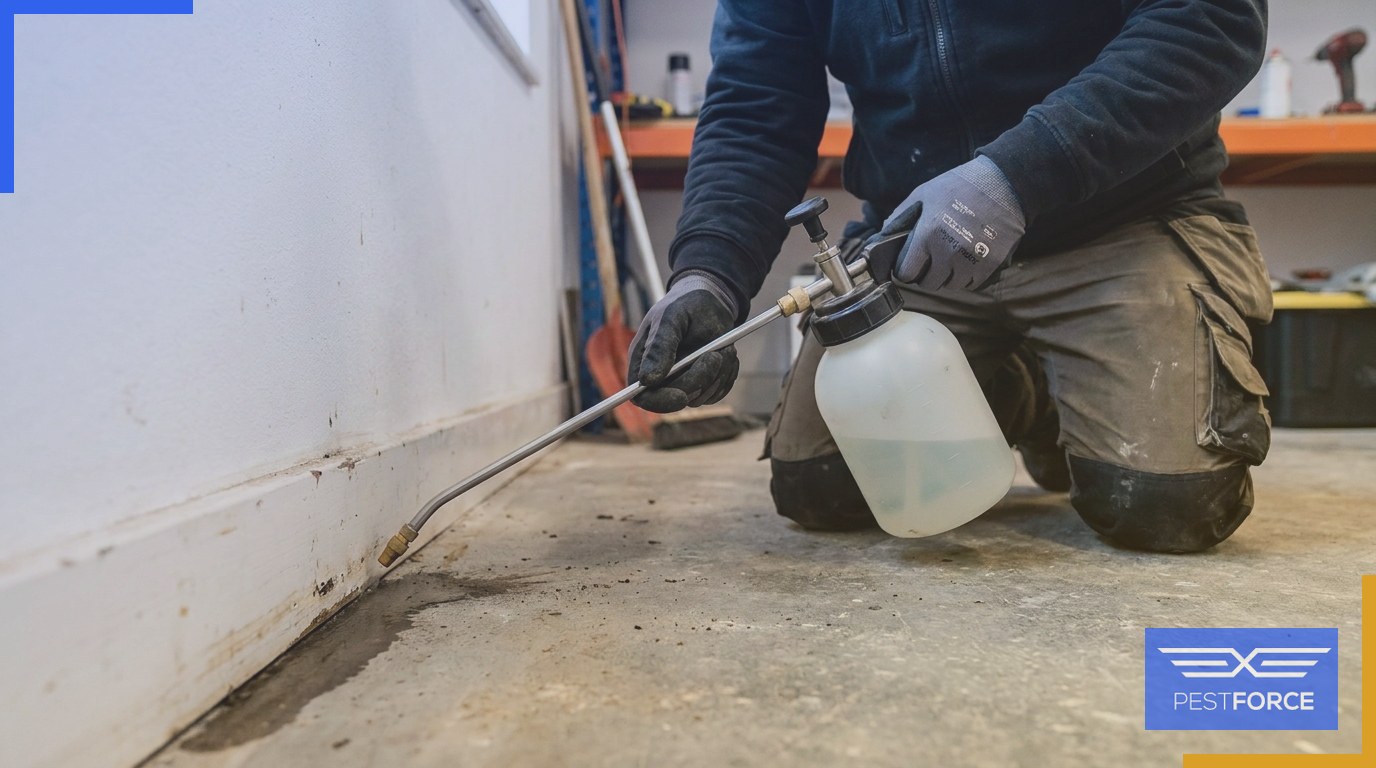
The three primary modes of action:
1. Contact kill delivers immediate knockdown when the active ingredient touches the pest. Technicians use contact products for fast relief against active crawling or flying insects. 2. Systemic/ingestion requires the pest to consume the product. Gel baits for cockroaches and ants work through ingestion, and foraging pests carry the toxin back to the colony. 3. Residual barrier leaves a long-lasting treated zone that keeps killing pests crossing that zone for weeks after application. Perimeter sprays around a Georgia foundation are the classic example.
The key product classes split by target pest. Insecticides cover insects, termiticides cover termites through soil and wood applications, and rodenticides cover rats and mice. The EPA registers and labels each product for specific pests and specific application sites, and the guide how pesticides work for homeowners explains how to read those labels before buying anything.
Professional-grade pesticide formulations differ from consumer over-the-counter products in concentration, active ingredient access, application equipment, and residual duration. Licensed applicators purchase restricted-use products that never reach store shelves, and restricted-use residuals outlast anything sold over the counter.
Under FIFRA, the EPA registers every pesticide sold or distributed in commerce. Pesticide labels carry safety information, application instructions, and re-entry intervals. FIFRA requires applicators to follow all label instructions, and state agencies certify workers who apply certain pesticides. FIFRA legally requires re-entry intervals, and label compliance serves as the primary safety mechanism for occupants: each interval states when a treated room is safe again. Occupants asking are pest control chemicals safe for kids and pets should treat the posted interval as the answer, because pesticide risks to children and pets drive the strictest precautions in homes with kids and animals.
One non-chemical physical method rounds out the options: heat treatment, used specifically for bed bugs and some stored-product pests, works without any pesticide. Heat penetrates wall voids and furniture where contact insecticides cannot reach, and the job requires whole-structure temperature management by a licensed operator.
How does bait-based pest control work, and when is it the right choice?
Bait-based pest control works by slow-acting toxicants carried back to the colony or nest, achieving population-level elimination rather than individual kill. Foragers eat the bait, share the bait with nestmates, and poison the reproductive core of the population.
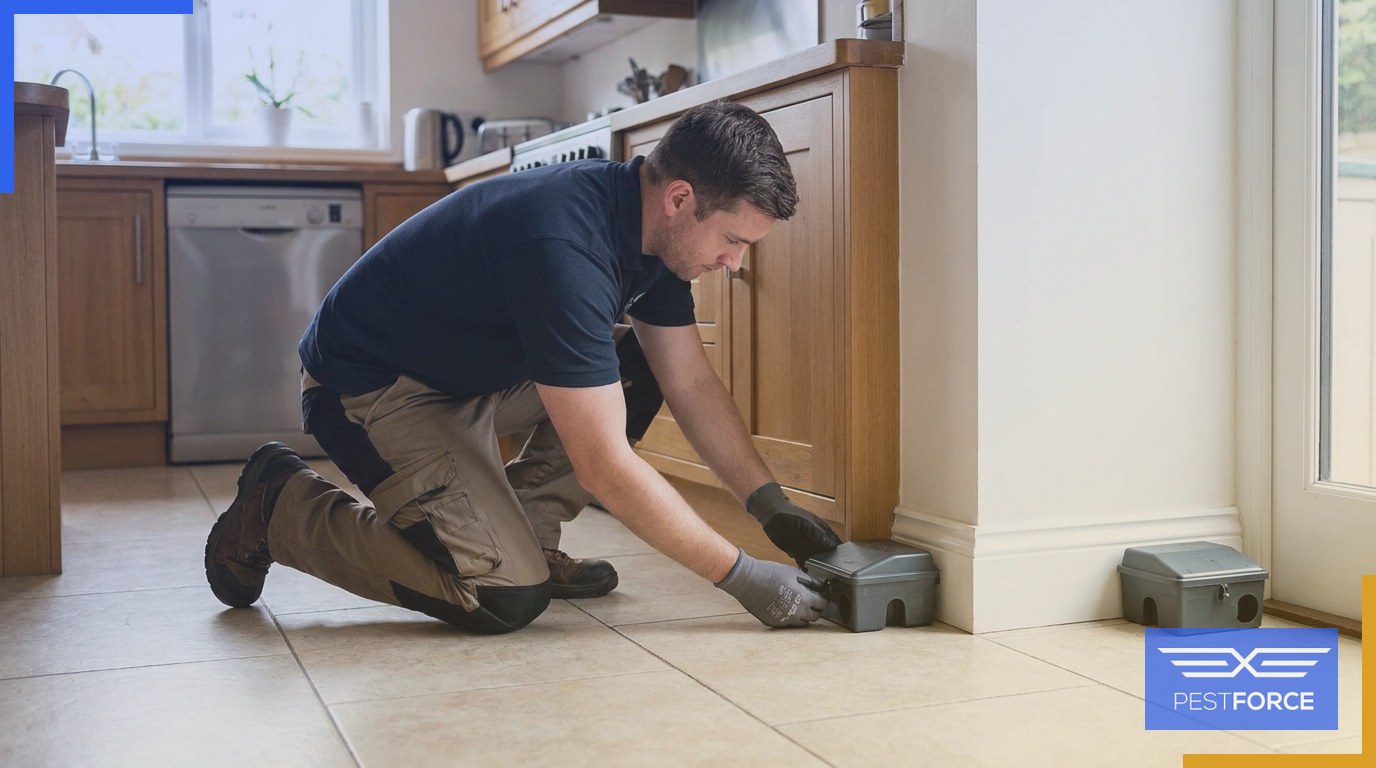
The transfer happens in three stages:
1. Attraction. Insect bait pairs a food or pheromone attractant with a delayed-action toxicant, so foragers collect the bait as ordinary food. 2. Transfer. Workers carry the toxicant home and spread the toxicant through feeding and grooming until the dose reaches queens and brood. 3. Colony collapse. The toxicant reaches the reproductive core, and the population dies at the source.
Bait is the right choice against social and communal pests: ants, cockroaches, termites, and rodents. Colonies give the toxicant somewhere to go; a solitary pest does not.
Placement decides everything. Stations belong along active foraging trails, wall voids, and runway edges. A station set ten feet off the trail is furniture.
Bait and spray treatments do not mix. Residual insecticides repel foragers, and repelled foragers break the transfer chain. Slow action is the advantage: a fast-acting contact product kills workers before the workers reach the nest, and the colony relocates instead of collapsing. Spray a Pharaoh ant colony with a fast-acting product and the colony buds, splitting into satellite nests across the structure.
For rodents, EPA regulation requires tamper-resistant bait stations wherever children or non-target wildlife can reach the placement, and consumer snap-lid boxes frequently fail that standard. The weighing professional methods against home remedies explains where consumer bait products fall short of professional-grade stations.
What is pest exclusion, and how does it compare to chemical treatment?
Pest exclusion seals the physical openings that pests use to enter a structure, including foundation gaps, utility penetrations, roofline voids, and door sweeps, while chemical treatment kills the pests already inside but leaves every entry point open to future pests.
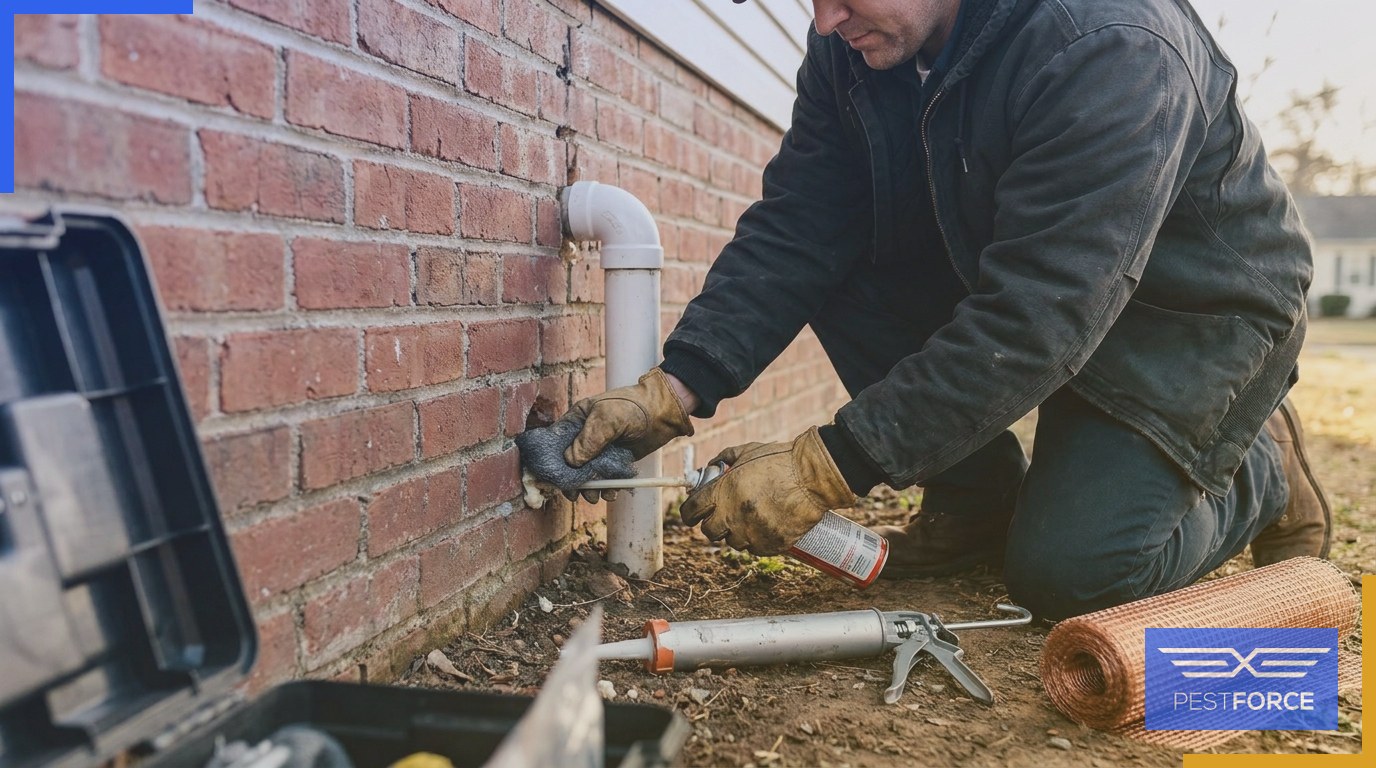
Pest exclusion is the only pest control method that removes the entry opportunity entirely rather than killing pests already inside. Pest exclusion targets the gaps a structure starts with or develops over time. The most common entry points on Georgia homes and commercial buildings:
- Foundation gaps and expansion joints in slab construction
- Utility penetrations and HVAC conduit gaps where service lines enter walls
- Roofline voids and worn door sweeps, the usual rodent routes into attics
- Weep holes in brick veneer, which admit insects and mice
- Crawl space vents, an open invitation to rodents and roaches
In Georgia crawl space construction, pest exclusion often includes encapsulation: vapor barriers and sealed vents. Encapsulation simultaneously corrects the moisture conditions that attract termites, rodents, and moisture-loving pests like silverfish.
Chemical treatment and pest exclusion do different jobs. Chemical pesticides and baits knock down an active population, while pest exclusion keeps the next population out. Pest exclusion addresses the cause, the entry opportunity, where chemicals address the symptom, pests already inside. Pest exclusion complements chemical treatment but does not replace chemical treatment for an active infestation, so the correct sequence is treat first, then exclude. Pest control professionals use mechanical traps as monitoring and knockdown tools rather than primary population control for large infestations, so traps support the chemical phase instead of replacing sealing.
Pest exclusion is also the only pest control method with a compounding return: every sealed entry point permanently reduces future pest pressure with no re-application cost, while chemical products wear off and require retreatment. Low-price providers routinely skip pest exclusion because pest exclusion demands labor-intensive inspection and structural work. That labor requirement separates professional pest control vs. DIY service tiers, and professionals classify exclusion as a structural pest method for exactly that reason.
How does biological pest control work, and is it practical for homeowners?
Biological pest control introduces or encourages natural enemies such as predators, parasitoids, and pathogens to suppress pest populations. Homeowners can apply biological control successfully against mosquitoes, grubs, and garden pests, but established indoor infestations require professional treatment.
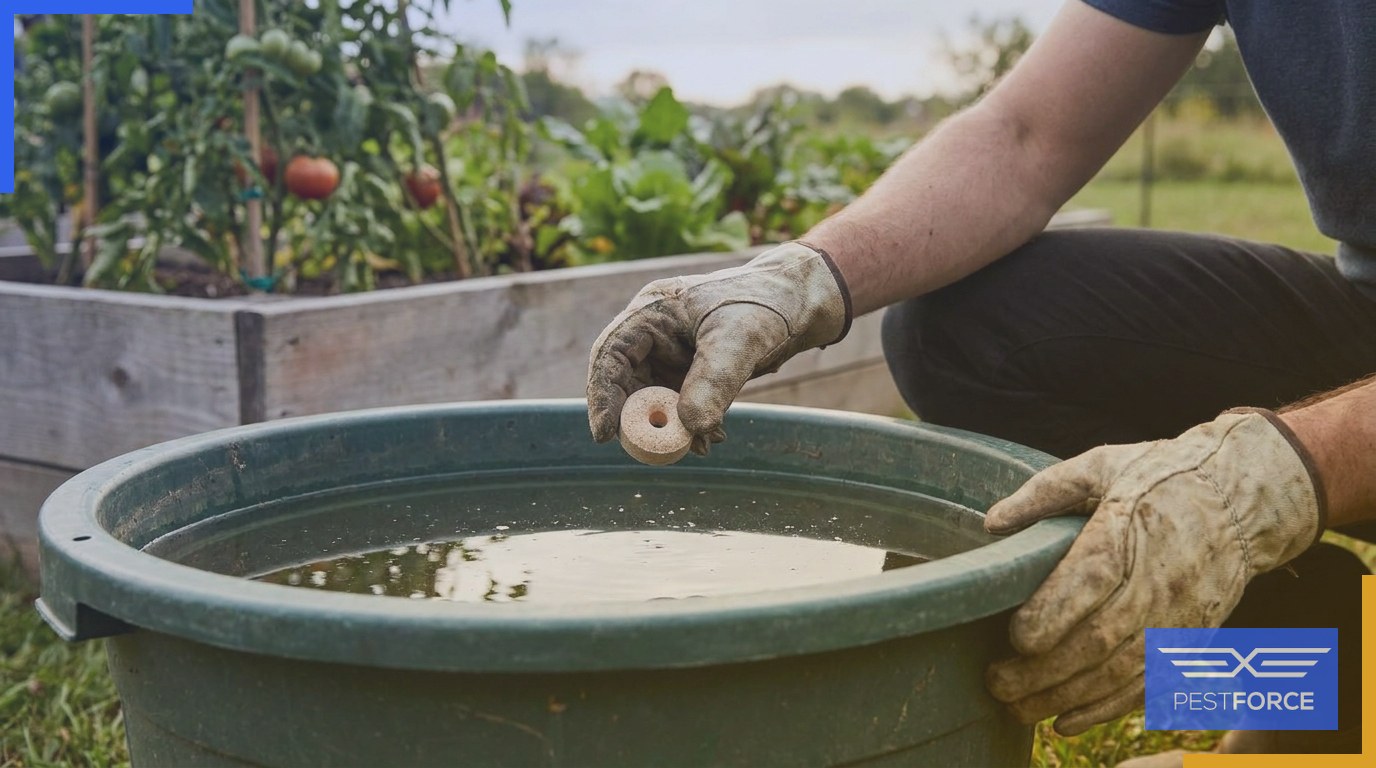
1. Match a natural enemy to the pest. Biological control applies to specific pest-agent pairings: predators eat the target pest, parasitoids develop inside the host, and pathogens infect the host. The U.S. Environmental Protection Agency (2026) reports that each Bacillus thuringiensis (Bt) strain produces a different mix of proteins and kills only one or a few related insect larvae, because the toxin must bind to a larval gut receptor, starving the larva.
2. Choose a proven residential agent. Bti, the israelensis subspecies of Bt, is a naturally occurring soil bacterium whose toxins affect only the larvae of mosquitoes, blackflies, and fungus gnats. The EPA (2026) has registered five Bti strains across 48 pesticide products approved for residential, commercial, and agricultural use, and no documented resistance to Bti as a larvicide exists. Beneficial nematodes attack soil-dwelling grubs, and predatory insects suppress garden pests. The EPA exempts insect predators, nematodes, and macroscopic parasites from FIFRA registration under 40 CFR 152.20(a), so these organisms sell without federal pesticide registration.
3. Meet the agent’s environmental needs. Living agents require specific moisture and temperature conditions to survive, and Georgia summers can exceed the viable range for some agents. A nematode application fails in bone-dry soil, and a predator shipment dies on a hot truck. A dead agent controls nothing.
4. Use biological control as one layer, not the whole plan. Biological control rarely eliminates an established indoor infestation alone. The method performs best as a preventive or supplementary layer and is rarely a standalone residential solution in Georgia without professional assessment.
Homeowners evaluating environmentally friendly pest treatments get the most from biological agents outdoors, where moisture and habitat support living control. For a side-by-side comparison, green extermination methods explained covers how biological products perform against standard pesticide treatments.
What is Integrated Pest Management (IPM) and how does it combine these methods?
Integrated Pest Management is a decision framework, not a product type. Integrated Pest Management contains chemical, biological, mechanical, and exclusion methods combined in a decision hierarchy based on pest pressure and risk tolerance. The hierarchy tells technicians when each method is appropriate.

The hierarchy runs in three stages:
- Prevention first: sanitation, habitat modification, and sealing entry points so pests never establish themselves.
- Monitoring second: scheduled inspections and traps that measure pest pressure before populations grow.
- Targeted treatment third: baits or pesticides applied only where monitoring shows an actual need.
IPM permits chemical treatment when pest populations exceed defined action thresholds. The framework defines when to treat, not what to treat with. That distinction kills the most common myth about IPM: the approach is not organic or chemical-free pest control, and any company selling IPM that way is mislabeling the service. According to the U.S. Environmental Protection Agency (2025), a sound IPM program uses the most effective, lowest-risk options available, weighing risks to the applicator, building occupants, and the environment.
A true IPM program for a Georgia home includes seasonal monitoring, exclusion maintenance on door sweeps and foundation seals, bait station rotation, and targeted chemical application as needed. A comparison of IPM versus conventional pest methods shows how threshold-based scheduling differs from calendar spraying, where a technician treats on a fixed date whether pests are present or not.
IPM is the framework underpinning Georgia’s school and state-facility pest control regulations, and this regulatory role makes IPM the professional standard in the state. The Georgia Department of Agriculture (2024) administers an IPM program for schools and child care facilities, listing sanitation, habitat modification, exclusion, repellents, pheromones, and pesticides as accepted control methods, and the agency describes IPM not as a goal to reach but as the way to achieve effective, sustainable pest management. Homeowners comparing pest control providers should ask whether the company runs a threshold-based IPM program or a spray route.
Sources
- Georgia Department of Agriculture, “Integrated Pest Management for Georgia Schools and Child Care Facilities” (2024)
- U.S. Environmental Protection Agency, “Introduction to Integrated Pest Management” (2025)
- U.S. Environmental Protection Agency, “Bti for Mosquito Control” (2026)
- U.S. Environmental Protection Agency, “Pesticide Registration Manual: Chapter 3 – Additional Considerations for Biopesticide Products” (2026)