
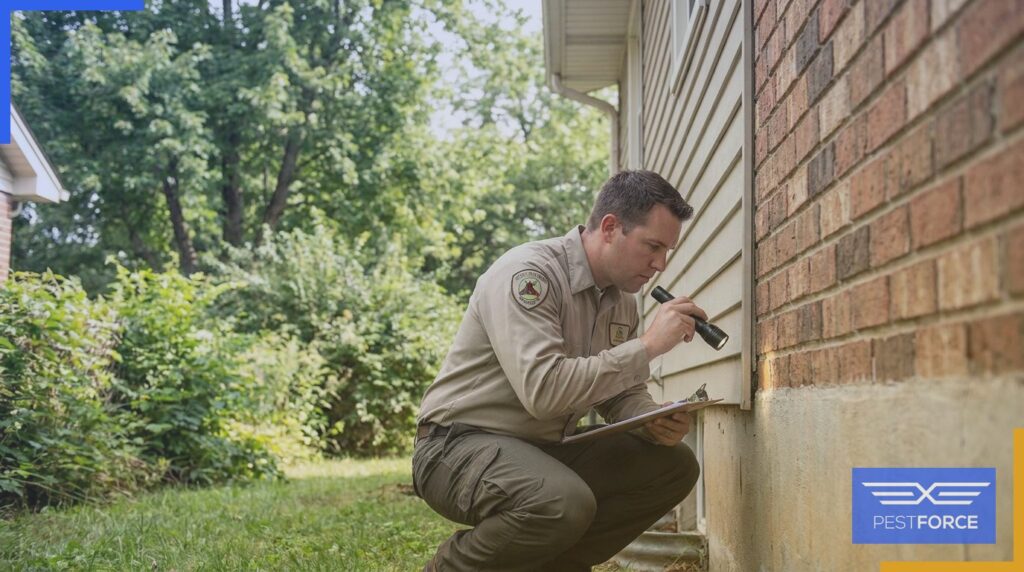
Rodent prevention is a permanent, proactive system that denies rodents food, shelter, and entry instead of reacting to infestations after they start. Trapping and baiting kill the rodents already inside a Georgia home but do nothing to stop the next ones, and Georgia’s mild winters and dense suburban greenbelts keep rodent pressure high in every season. Lasting rodent control combines food storage discipline, harborage reduction, physical exclusion, and professional prevention programs into one integrated strategy.
Why don’t traps and bait alone solve a rodent problem long-term?
Traps and bait remove individual rodents but leave entry points, food sources, and harborage untouched, so survivors and new rodents from the surrounding population re-colonize the property. Long-term control requires closing all three prevention layers at the same time.
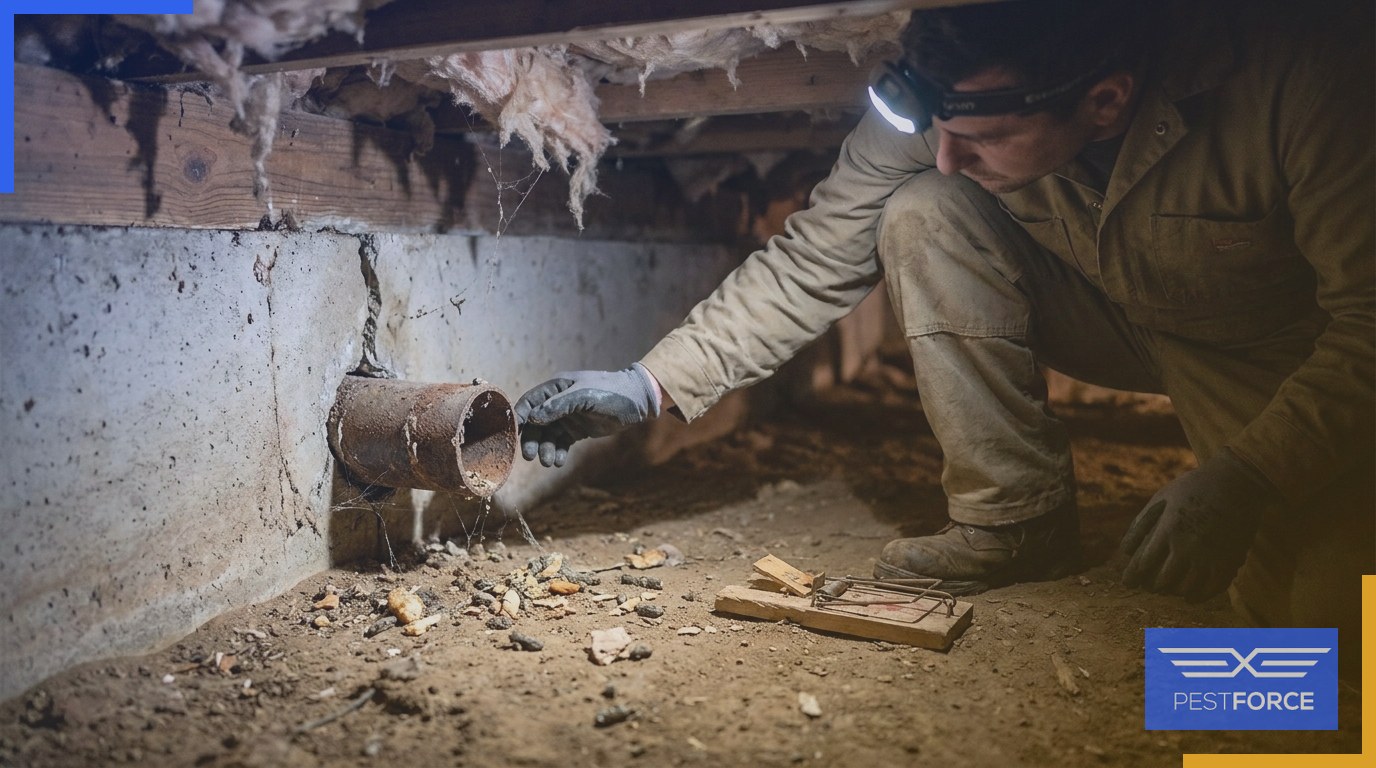
Reactive control removes individuals while the conditions that attracted those rodents stay in place. Every unsealed roofline gap, every open pet food container, and every cluttered crawlspace keeps recruiting replacements from the same pressure population outside. The University of Wisconsin Pesticide Applicator Training Program states the rule plainly: poisoning can temporarily reduce a rodent population, but permanent reduction is completely impossible unless food and shelter are also removed. That is why reactive baiting and trapping fails to produce long-term control when entry points and food sources remain unaddressed.
Georgia’s mild winters remove the one break homeowners used to count on. Rodent populations in Georgia never face a hard seasonal die-off, so pressure runs year-round instead of arriving as a single autumn invasion. Ten mice trapped in November say nothing about the breeding population still active in January.
Durable control works as a system. Rodent prevention is a multi-layer system combining food control, harborage reduction, and physical exclusion, and the layers only work together. Most prevention failures come from addressing a single layer, usually trapping, while food sources or entry points stay open. The product itself is rarely the problem. The question of which rodent control products actually work has the same answer across every category: each product removes rodents, and no product seals a gap.
Professional programs formalize that hierarchy as integrated pest management. Integrated pest management puts prevention first, uses monitoring to measure population pressure between visits, and reserves treatment for threshold-based intervention when activity crosses a defined level. Monitoring turns rodent control from a reaction into a measured system, and threshold-based intervention keeps treatment proportional to actual pressure rather than to habit. A technician working under integrated pest management acts on evidence from monitoring stations rather than on a calendar schedule.
Rodenticide holds a real but limited role inside the integrated system. Rodenticide cannot function as a sole prevention tool because rodenticide kills current residents without stopping replacements. Pest control professionals place bait stations along rodent travel routes beside walls and near suspected entry points, and tamper-resistant stations protect children, pets, and non-target wildlife. Within an integrated system, rodenticide supports exclusion work instead of substituting for it.
Trapping still earns a place for knockdown and monitoring, and safely disposing of trapped rodents completes the removal step without closing any prevention layer. Ultrasonic repellers sell as passive prevention, and homeowners who ask do ultrasonic rodent repellers work often delay structural repairs while waiting on a device that peer-reviewed research does not support. Common DIY prevention mistakes, including partial gap sealing, incorrect trap placement, and poison bait without exclusion, explain why rodent pressure persists despite real effort. The sustained rodent prevention strategies for Georgia properties detail monitoring schedules, exclusion upkeep, and sanitation standards. Across Georgia homes and businesses, long-term rodent prevention stands as the integrated alternative to the trap-and-hope cycle.
How does food storage and sanitation eliminate rodent attractants indoors?
Food storage in airtight hard-sided containers removes the primary indoor attractant that sustains rodent populations inside a structure. House mice chew through cardboard, paper, and thin plastic bags without effort, so every pantry staple belongs in glass, metal, or rigid plastic containers. Sanitation then removes the crumbs, grease film, and open waste that feed a mouse between meals.

1. Move pantry staples into hard-sided containers. Glass, metal, or rigid plastic containers with tight lids stop house mouse teeth and hold food odors in. Original cardboard boxes and thin plastic packaging do neither.
2. Seal the overlooked food sources. Pet food, birdseed, and grass seed stored on-site rank among the most common indoor food sources homeowners forget. To a house mouse, an open bag of birdseed in the garage is a standing buffet. These items belong in lidded metal or rigid plastic bins, never in the bags they shipped in.
3. Clean where mice actually eat. Grease residue under appliances, crumbs behind pantry shelves, and poorly managed waste bins feed mice nightly. Degrease beneath the stove and refrigerator, clear crumbs from behind pantry shelving, and use tight-lidded waste bins emptied on a regular schedule.
4. Elevate stored items. The University of Wisconsin Pesticide Applicator Training Program recommends storing supplies, materials, and woodpiles at least 18 inches off the ground and away from walls to eliminate rodent harborage. The City of Royal Oak, MI municipal code applies the same 18-inch rule to building materials and lumber that could shelter rats. In Georgia garages and utility rooms, that elevation removes the floor-level hiding spots mice prefer.
The rodent-proofing your pantry and kitchen covers container selection, shelf placement, and the full sanitation routine for putting these steps into practice.
What exclusion materials and methods permanently seal rodent entry points?
Permanent rodent exclusion seals entry points with 1/4-inch galvanized hardware cloth and rigid sheet metal flashing bonded with construction adhesive. Foam and steel wool alone fail: rodents gnaw through foam, and steel wool rusts and compresses until the gap reopens.
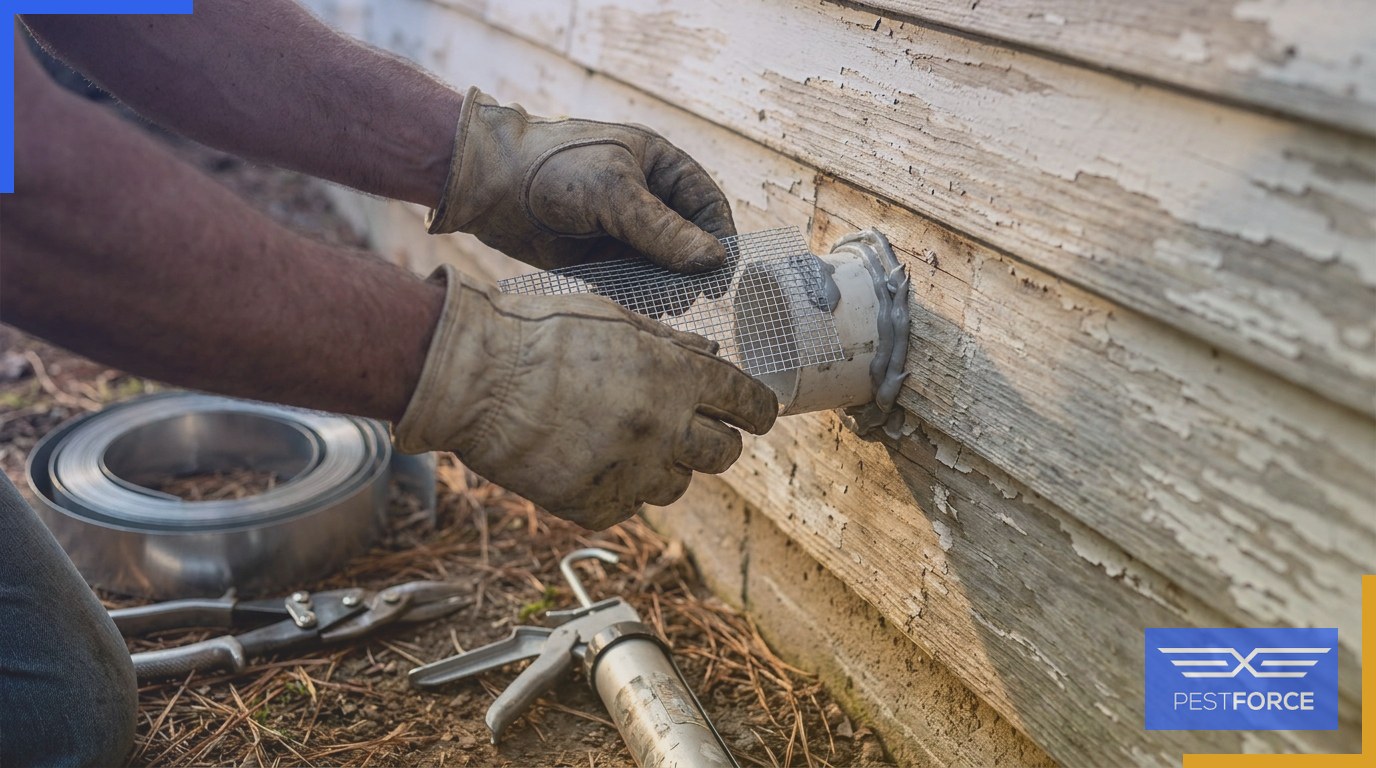
The Wildlife Damage Management Extension confirms the house mouse requires a gap of only 1/4 inch to enter a structure, and the brown rat requires a gap of only 1/2 inch. Most homeowners dramatically underestimate which openings are usable. The top DIY rodent errors to avoid documents the quarter-inch gaps homeowners miss during a routine walkaround. A gap that small does not look like a doorway. To a mouse, it is one.
Inspect five priority entry zones first: pipe penetrations, weep holes, soffit-fascia junctions, garage door weatherstripping, and crawl space vents. The rodent-proofing your home construction checklist walks through each zone in the order Georgia rodents use them most.
Pest control professionals use steel wool and hardware cloth as primary exclusion materials for gap sealing, but the two materials do different jobs. Hardware cloth with 1/4-inch galvanized mesh, at the 16 to 19 gauge the National Park Service specifies, forms a permanent barrier. The Wildlife Damage Management Extension classifies steel wool, copper gauze, and screen wire packed tightly into openings as a good temporary plug, not a permanent seal. Xcluder reports that caulk and spray foam are not reliable rodent barriers because mice can easily chew through them. Only rigid materials bonded with construction adhesive, or sheet metal flashing fastened over the opening, hold up over years of gnawing pressure, which is why rigid exclusion forms the backbone of long-term structural rodent prevention.
Which landscaping changes reduce rodent harborage and pressure around a Georgia home?
Landscaping modification reduces the outdoor harborage that supports rodent colonies adjacent to a structure. Georgia homeowners lower rodent pressure by clearing vegetation from the foundation, removing wood and debris piles, managing compost bins, and cutting tree branches and vines off the roofline.
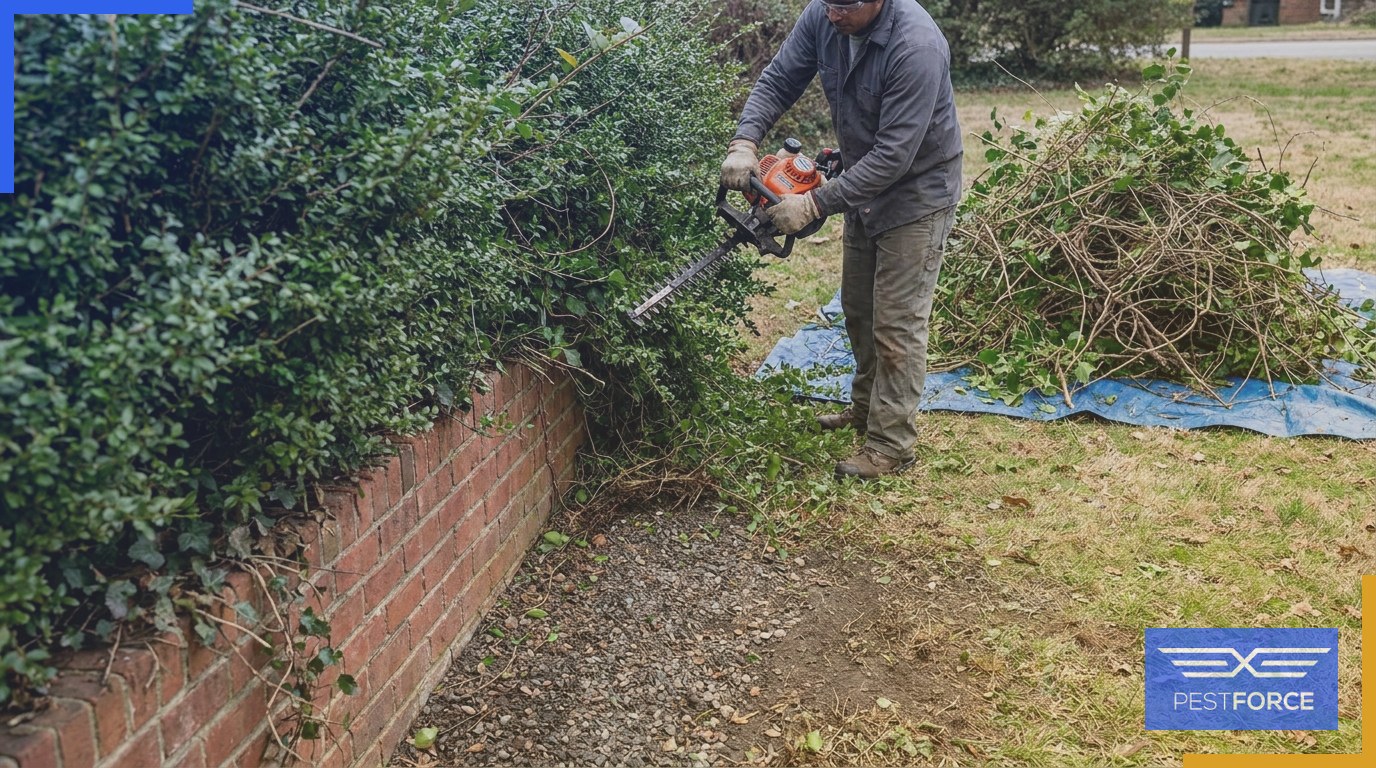
Ground cover, dense shrubs, and ivy planted within 18 inches of the foundation create protected rodent runways directly against the structure. University of Florida IFAS Extension guidance holds that plants installed less than two feet from a house at maturity sit too close and provide harborage for rodents, and that tight plantings give pests ideal hiding cover. University of Nebraska–Lincoln Extension recommends a clean, 3-foot-wide, weed-free buffer around foundations and concrete slabs to discourage burrowing. Burrowing matters here: the brown rat digs burrow systems in soil along foundations, and bare ground removes that foothold.
Wood piles, debris piles, and compost bins serve as primary brown rat harborage in Georgia residential landscapes. Stack firewood off the ground and away from exterior walls, and enclose compost in rodent-resistant containers. Rats do not need much of an invitation.
Tree branches and vines touching the roofline give roof rats and squirrels aerial entry routes into attics. Trim branches back so no limb or vine bridges the gap to the roof.
The long-term rodent exclusion through landscaping covers plant spacing, buffer maintenance, and outdoor storage practices for Georgia properties. The landscaping changes that reduce rodent pressure explains how each modification removes a specific harborage feature around foundations, storage areas, and rooflines.
What does a professional rodent prevention program include, and when is it worth it?
A professional rodent prevention program includes initial exclusion, scheduled monitoring visits, trap and bait station maintenance, and a re-exclusion guarantee. The program pays off for multi-unit buildings, properties with repeated DIY failures, older homes with crawl spaces, and Georgia properties bordering wooded lots or farmland.
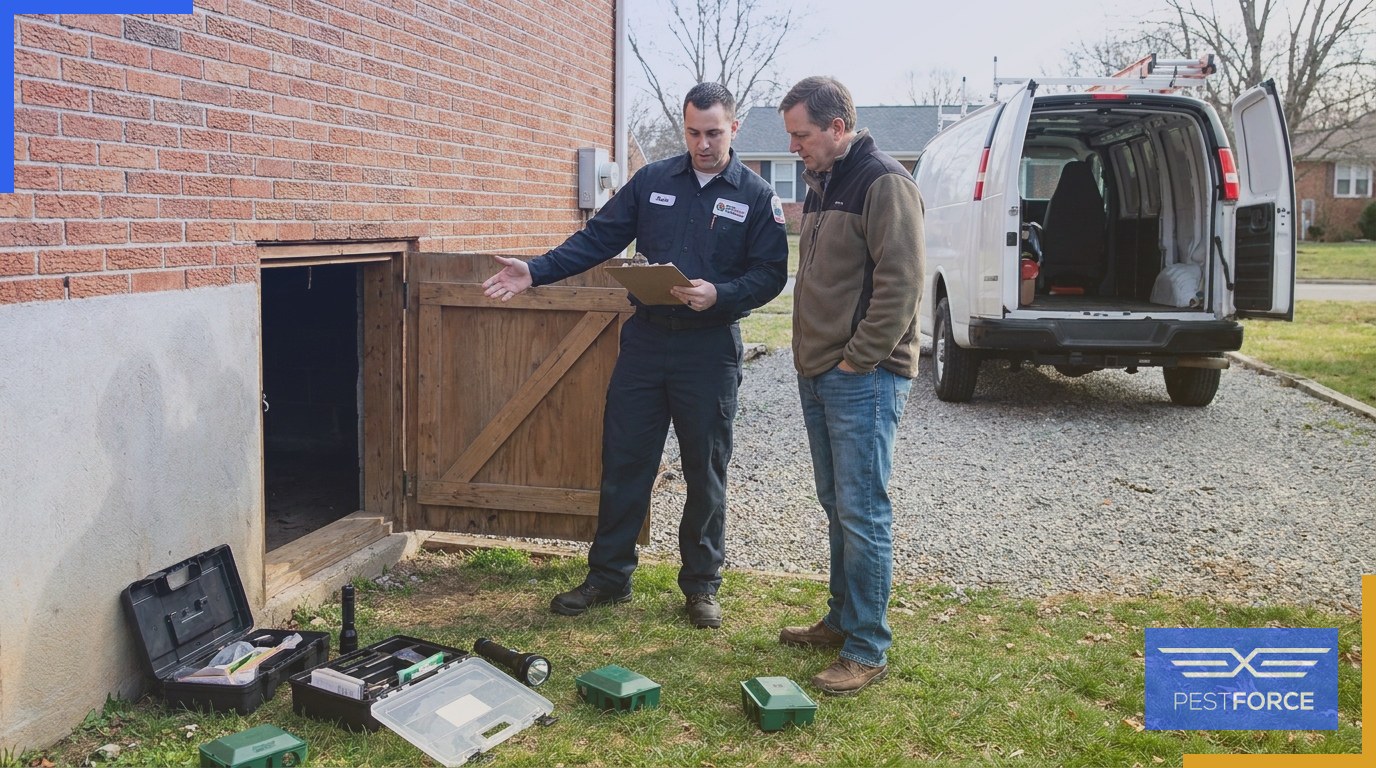
Professional rodent prevention programs differ from one-time extermination visits by providing scheduled monitoring and re-exclusion. A one-time extermination visit removes the rodents currently inside the structure. The visit ends there. A prevention program keeps the structure sealed afterward and re-inspects after structural changes. National Park Service guidance recommends exclusion inspections twice a year: in spring to evaluate winter damage, and again in fall before rodents try to move into buildings. National Park Service guidance also directs inspectors to document new structural defects, repairs, and accidents, because each one can open a fresh entry point.
Judge any program on its re-inspection and re-exclusion guarantee, not on a promise to retreat live rodents. A sealed structure still develops new entry points from settling, storm damage, and contractor work. A program without re-exclusion reverts to reactive control the day a new gap opens, and the owner pays twice for the same problem.
Fall is the highest-risk season for rodent entry in Georgia, because dropping temperatures push rodents toward buildings and expand their foraging ranges. Exclusion performed in summer, before pressure peaks, beats emergency exclusion after scratching in the walls confirms an active infestation.
Pest Force, a family-owned pest control company serving Georgia homes and businesses, builds prevention programs on construction knowledge. Technicians who understand how Georgia houses are framed, where crawl space vents meet plumbing penetrations, and how rooflines settle find entry points a generalist walks past. The small-company accountability in rodent management covers how a family-owned pest control company approaches rodent problems differently: the technician who seals the structure answers for that seal later.
Sources
- Xcluder, “What Size Opening Can a Mouse Fit Through? Common Entry Points You Might Be Missing” (2026)
- University of Wisconsin Pesticide Applicator Training Program, “APPENDIX – Rodent and Pest Bird Management”
- City of Royal Oak, MI, “Rodent Harborage”
- University of Nebraska – Lincoln Extension, “University of Nebraska – Lincoln Extension Publication G1530” (2003)