
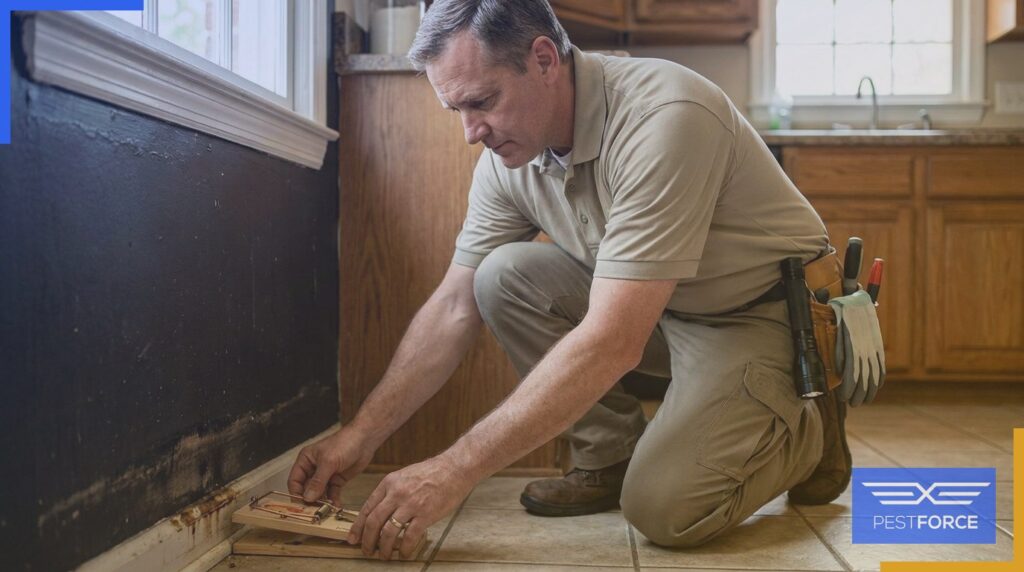
Mouse and rat extermination eliminates active rodent infestations through trapping, baiting, and removal before any exclusion work seals entry points permanently. Georgia homes and businesses with live rodent activity need extermination first, because sealing a structure while rodents remain inside traps the problem indoors. Pest Force delivers mouse and rat extermination across Georgia for residential and commercial properties, applying species-specific methods for both mice and rats.
What is mouse and rat extermination, and how does it fit into the full rodent control process?
Mouse and rat extermination is the active elimination phase of rodent control: technicians trap, bait, and remove live rodents from an infested structure until activity stops, and the phase must always finish before exclusion sealing work begins. Mouse and rat extermination precedes rodent exclusion and entry point sealing, because sealing a structure while rodents remain inside traps the rodents inside the structure.
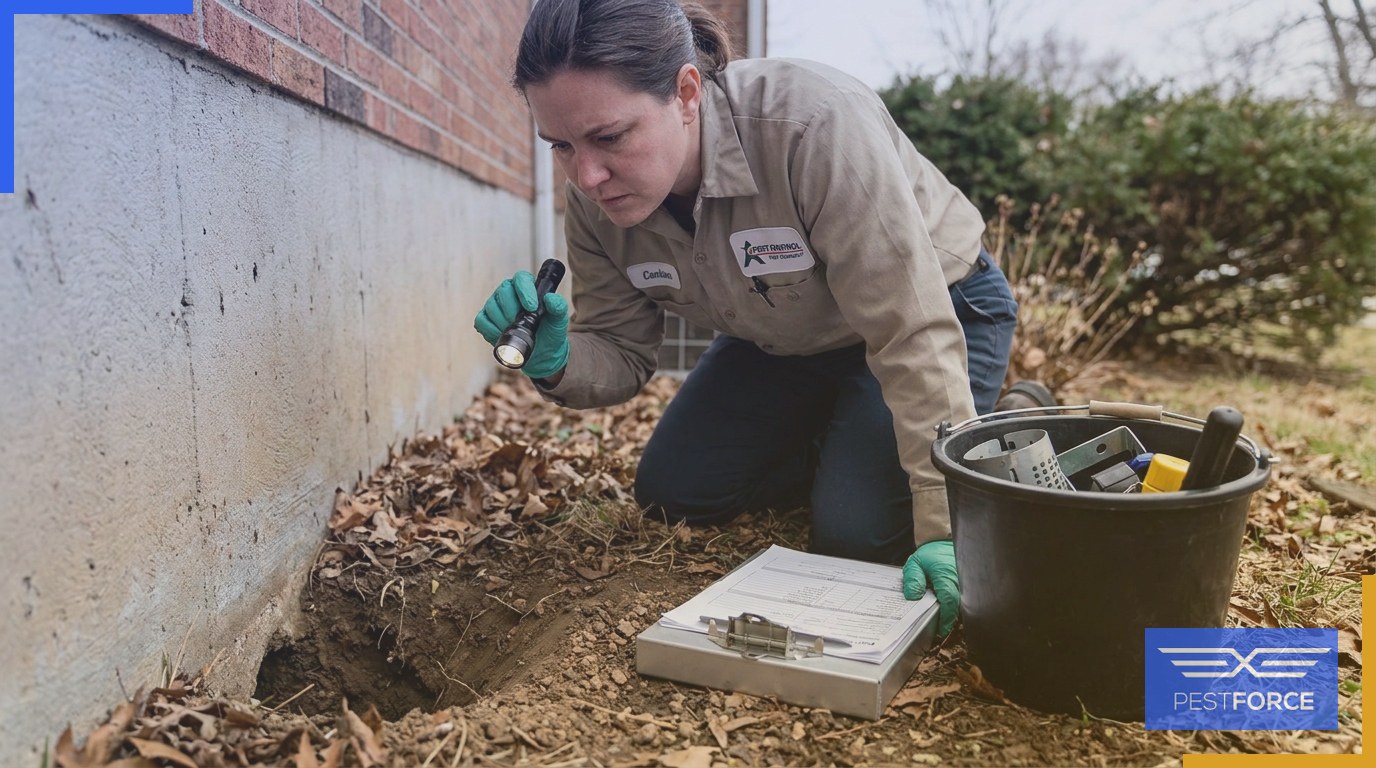
Georgia structures host two target species: the house mouse and the Norway rat, often called the brown rat. House mice stay small and curious. House mice investigate new objects in their territory. Technicians answer that curiosity with many small traps set along runways. Norway rats grow larger and burrow at foundations. Norway rats avoid unfamiliar objects. Technicians counter that wariness with larger traps and bait stations, often pre-baiting before setting anything. Species drives method.
Pest Force applies rat and mice extermination services to both residential homes and commercial properties across Georgia, treating single-family houses, restaurants, warehouses, and office buildings. The same trapping and baiting principles hold in a Marietta kitchen and an Atlanta loading dock; scale and station placement change, rodent biology does not.
The extermination phase follows a fixed sequence inside the larger rodent control process. In the inspection step, the technician confirms house mice or Norway rats and maps runways, droppings, and harborage areas. In the trapping step, the technician sets snap traps and multi-catch traps along runways and behind appliances, never in open floor space. In the baiting step, the technician places tamper-resistant bait stations where rodenticide fits the situation, typically on exteriors and in secured commercial zones. In the removal and monitoring step, the technician removes carcasses, resets traps, and rechecks the structure until no new activity appears. Once monitoring confirms a clear structure, Pest Force treats exclusion as a complement to extermination and begins sealing entry points.
Reversing this order is the most common mistake homeowners make with DIY rodent control. A homeowner who seals entry points while live rodents remain inside traps those rodents in the structure. Trapped rodents die inside wall voids. The carcasses produce an odor that can linger for weeks. The remains also draw blow flies and carpet beetles into the structure.
What methods does Pest Force use to exterminate mice and rats?
Pest Force uses a combination of snap traps, live traps, and commercial-grade bait stations depending on species and infestation scale. Snap traps kill on contact, bait stations eliminate large populations over several days, and live capture traps serve sensitive commercial settings.
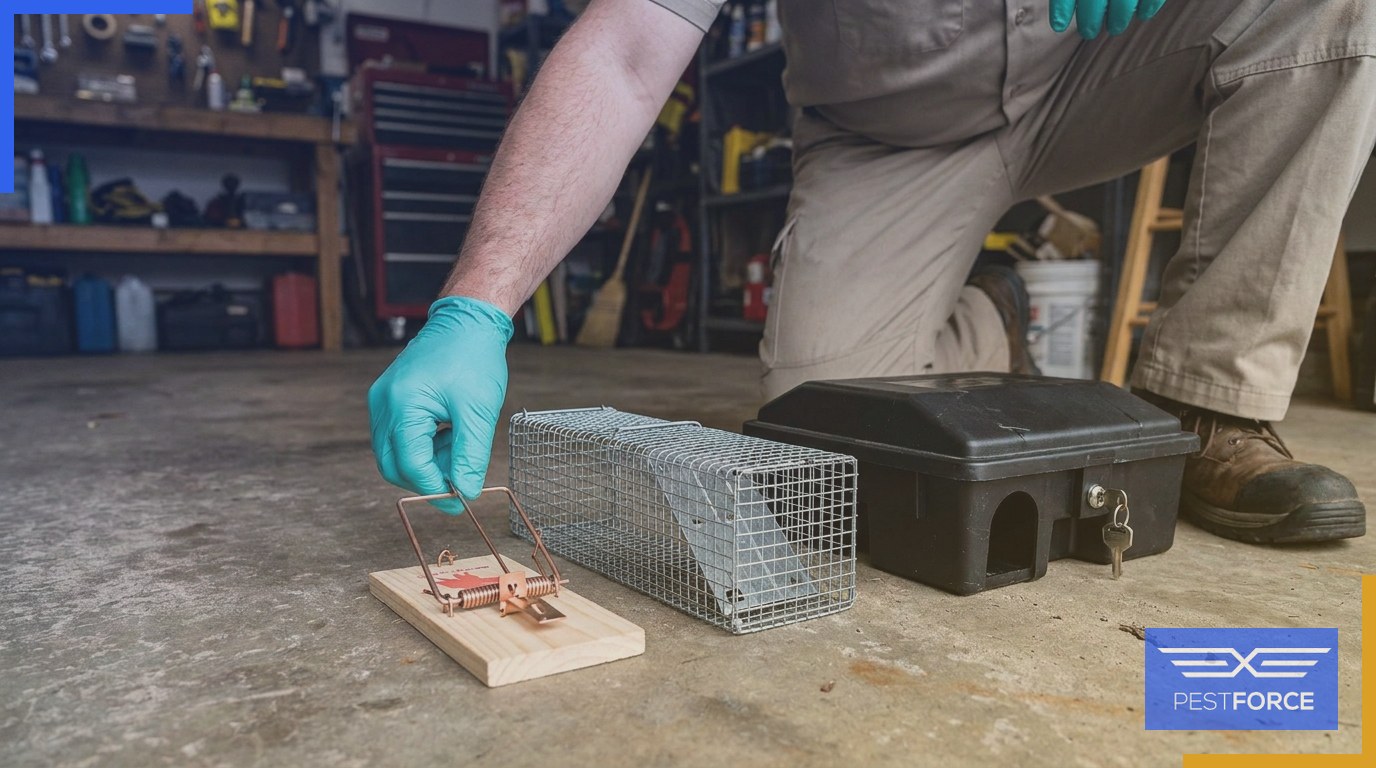
Each method solves a different problem. Snap traps deliver an immediate kill, which lets technicians confirm every catch and removes any risk of secondary poisoning to pets or wildlife. Commercial-grade bait stations work more slowly because rodents feed and return to harborage before the active ingredient takes effect, and that delayed mortality makes stations the right tool for heavy infestations with many animals competing for food. Live capture traps hold rodents for removal and appear mainly in commercial kitchens, healthcare facilities, and similar settings where a dead rodent inside a wall void is unacceptable.
Commercial-grade rodenticide bait stations differ from consumer store-bought bait products in active-ingredient concentration, tamper-resistance, and placement precision, and suppliers sell these stations only to licensed pest control operators. The tamper-resistant bait station design blocks children, pets, and non-target animals from contacting the bait while still admitting target rodents. Pest Force details station construction, bait formulations, and servicing intervals in Rodent Bait Stations: What They Are and How Professionals Use Them.
Placement follows species behavior. Mice hug vertical surfaces and run established runways, so technicians set snap traps tight against walls, behind appliances, and along droppings trails. Technicians apply the same placement logic used for rodent control in hidden home spaces, setting traps inside attics, crawl spaces, and wall voids where mice actually nest. Rats behave differently: rats show neophobia, a suspicion of new objects in their territory, so bait stations sit along known travel routes and remain in place through an acclimation period before rats feed confidently. Skipping that acclimation window is the most common reason amateur rat baiting fails.
Commercial properties such as restaurants, warehouses, and multi-family housing typically require ongoing bait station programs with documented service logs, because health department inspectors request those records during audits. A standard residential extermination job rarely carries that paperwork burden.
Does extermination work differently for mice versus rats?
Yes. Mice and rats require species-specific extermination strategies because they respond differently to trap placement and bait type. Mice accept new traps quickly, while rats avoid unfamiliar objects for days to weeks, so the species identified determines the method, timeline, and follow-up schedule.
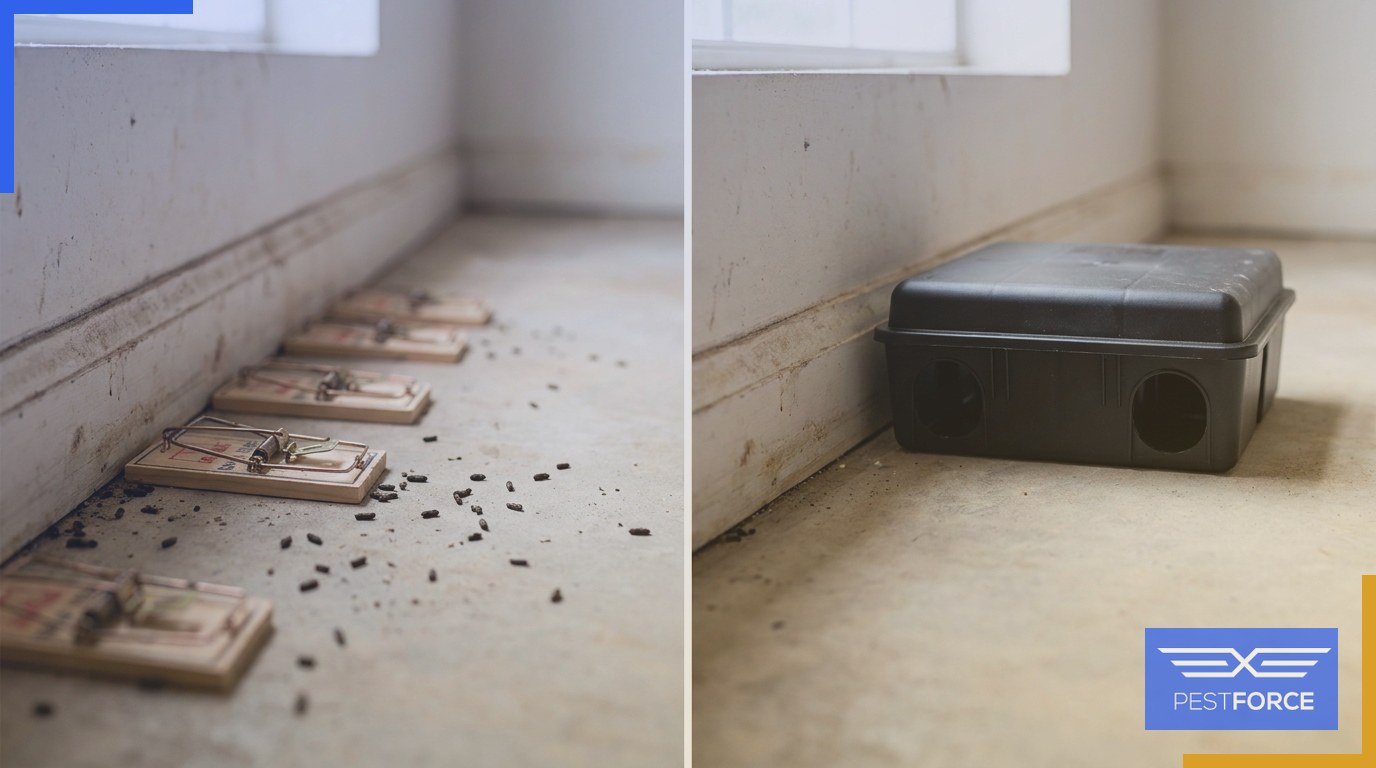
Mice investigate new objects, so technicians set high-density snap traps along wall runways and expect fast captures. Rats are a different story. A 2021 National Institutes of Health review reports that wild brown rats typically exhibit neophobia, an avoidance of novel objects, and a 2024 ScienceDirect study found neophobic Norway rats actively avoid new traps. Mice are neophobic as well, but mice are neophobic for a shorter period than rats. Rats dodge freshly placed traps and bait stations for days to weeks, so rat work calls for slower bait introduction through pre-baited stations and longer active monitoring intervals than mouse jobs of equivalent infestation size. A rat ignoring a bait station in week one is normal rat behavior, not a failed treatment.
Species confirmation comes before any trap is set. The physical differences between mice and rats cover the dropping, size, and track cues that pin down the species. Those identification cues reveal which species is present, and the identified species determines how long treatment takes once work starts.
The University of Georgia Cooperative Extension (2025) counts three rodent species living with people in Georgia structures: the house mouse, the Norway rat, and the roof rat. Roof rats turn up less often than Norway rats but appear in coastal and wooded areas, and roof rats call for elevated trap placement along rafters and pipes instead of ground-level bait stations. Species biology and behavior details for the house mouse (Mus
Why is professional rodent extermination necessary in Georgia? Can’t I handle it myself?
Professional rodent extermination is necessary in Georgia because mild winters let mouse and rat populations breed year-round, so partial DIY knockdowns rebound within weeks. Untreated infestations damage structures, turn gnawed wiring into a fire hazard, and expose occupants to serious disease.
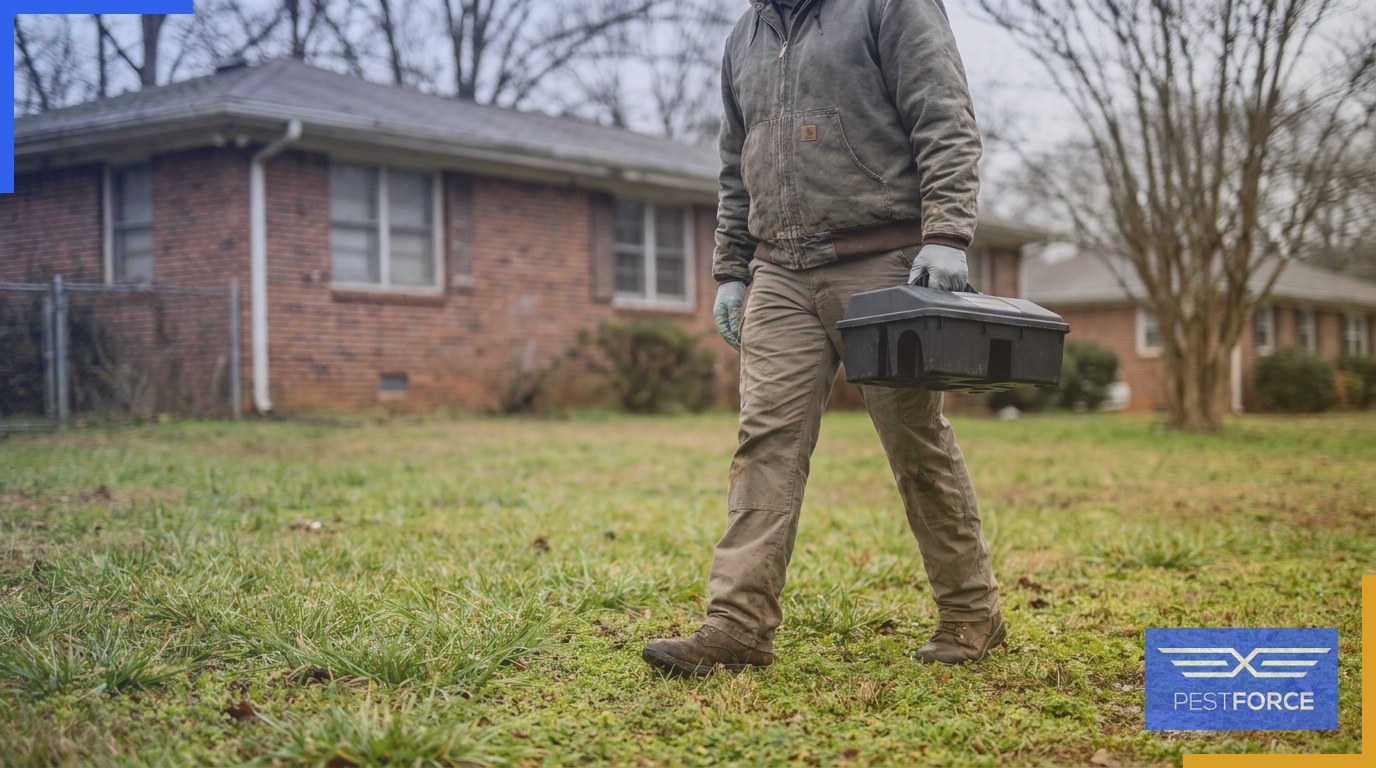
Georgia winters never get cold enough to kill rodent populations back the way northern winters do. According to the Internet Center for Wildlife Damage Management, Norway rats breed throughout the year whenever food and shelter are available, and Texas A&M University Extension Entomology reported in 2020 that house mice produce 6 to 10 litters per year and reach reproductive maturity at 6 to 10 weeks. An infestation that starts in a Georgia attic in October is still breeding in March. That is why one treatment without follow-up monitoring consistently fails here.
Untreated rodent infestations in Georgia cause structural damage, electrical fire risk from gnawed wiring, and exposure to hantavirus, leptospirosis, and salmonella. The CDC reports that people contract hantavirus through contact with rodent urine, droppings, and saliva, and that hantavirus pulmonary syndrome is severe and potentially deadly. The rodent disease risks in Georgia also include contaminated food and surfaces, a point the University of Georgia Cooperative Extension underscored in 2025. Homeowners who notice the droppings and gnaw mark warnings along baseboards or in pantries are already looking at an established population.
Store-bought traps and bait products are under-dosed and placed by guesswork, not where rodents actually travel. The result is partial knockdown: a few dead mice, then survivors that hit breeding age within weeks and rebuild the colony. Professional deployment puts the right dose at the right harborage points and schedules the follow-up visits Georgia’s breeding cycle demands. The typical exterminator fees in Georgia reflect those repeat visits, which are exactly the part DIY never includes.
What happens after extermination: what does post-treatment follow-up include?
Post-treatment follow-up includes scheduled return visits to check trap and bait station activity, dead rodent removal, sanitation of contaminated areas, and confirmation of population knockdown. Pest Force schedules exclusion sealing only after technicians verify the extermination is complete.
Follow-up visits track how the treatment is working. Pest Force technicians inspect every trap and bait station, remove dead rodents, re-bait stations where activity continues, and confirm population knockdown before anyone books exclusion work. The typical rodent removal timeline documents how many return visits a standard Georgia infestation requires before technicians call the job done.
Dead rodent removal and sanitation after extermination is a separate step from the trapping itself. Carcasses left in wall voids or crawl spaces produce strong odor and attract secondary pests such as blow flies and carpet beetles. Technicians performing carcass removal after rat treatment locate hidden carcasses, bag them, and sanitize the contaminated area so the smell does not spread through the structure.
Exclusion sealing begins once technicians confirm the extermination is complete. Pest Force then moves the job to rodent exclusion and entry point sealing, closing gaps around foundations, rooflines, and utility penetrations so new rodents cannot re-enter. Sealing too early traps live rodents inside the walls. That order matters.