
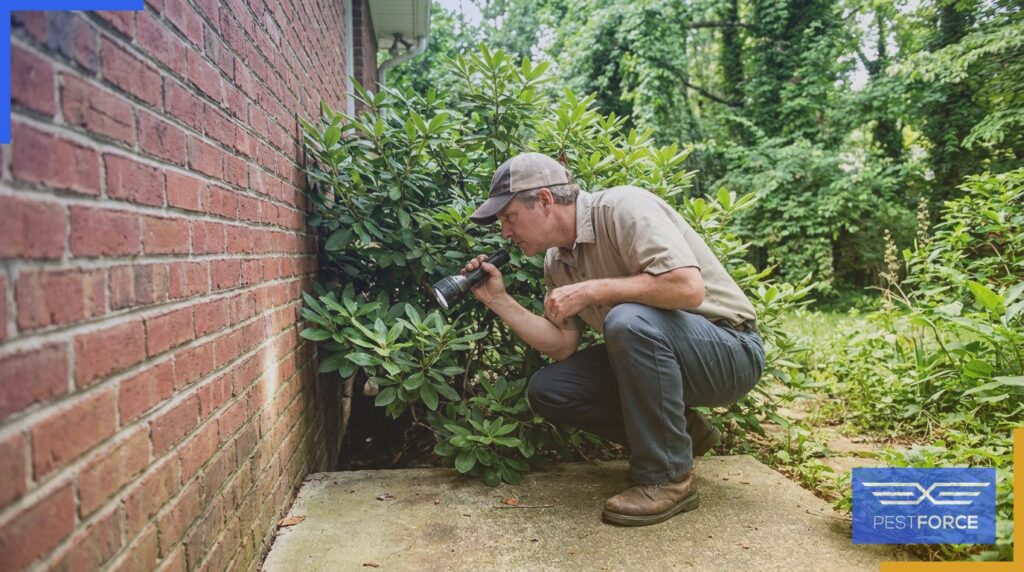
Georgia’s humid subtropical climate, mild winters, and long growing season support one of the broadest household pest rosters in the United States. Georgia homeowners face year-round pressure from cockroaches, termites, rodents, spiders, and bed bugs instead of a short seasonal window. Correct pest identification determines which treatment works, because a bait that kills one cockroach species does nothing against another. Guessing wrong wastes money and lets the infestation grow.
Why does pest identification matter before treatment, and what makes Georgia’s pest landscape unique?
Correct pest identification precedes effective treatment selection because each pest species responds to different products, harborage points, and entry methods. A treatment calibrated for German cockroaches fails against Smoky Browns, and a bait that clears Argentine ants does nothing for carpenter ants nesting in wall voids.

Identification is the fork in the road that decides the whole job. Some pests, like the occasional house spider or boxelder bug, warrant nothing more than exclusion work: sealing gaps, fixing screens, tightening door sweeps. Others, like odorous house ants trailing from a single entry point, respond to targeted DIY baiting. And species like Formosan termites or established German cockroach populations demand professional treatment because the colony structure, breeding speed, or concealment puts them beyond retail products. Misidentification sends homeowners down the wrong fork, and the costs stack up in a predictable pattern: the wrong product gets bought, the money is wasted, and the infestation persists or actively worsens while the real species keeps breeding untouched. Photo-based confirmation through the Georgia Pest Identification Guide 2026 removes the guesswork before a single dollar gets spent, and ten Georgia home invaders ranked by threat gives homeowners a fast way to gauge urgency once a species is confirmed.
Georgia’s climate is the second half of the equation. According to WeatherSTEM (2017), Georgia is classified under the Köppen humid subtropical climate, with warm-to-hot summers, cold-to-mild winters, and no consistent dry season. Georgia’s humid subtropical climate causes year-round activity among pest species that are seasonal elsewhere, which means homeowners here face simultaneous pressure from multiple species in months when northern states see none. Georgia also spans USDA Plant Hardiness Zones 6b through 9a, a geographic spread that supports an unusually wide spectrum of pest species, according to GeorgiaPestAuthority.com.
That geography puts Georgia inside the native range of pests most national guides treat as afterthoughts. Formosan termites, imported fire ants, and Smoky Brown cockroaches are routine service calls in Georgia, yet national identification content underrepresents all three. A homeowner following generic advice built for Ohio or Oregon will misread what is actually in the walls. The mechanics behind this pressure, covered in why Georgia weather accelerates infestations, explain why small problems here compound faster than the same problems would up north.
The practical takeaway is simple: name the species correctly, weigh it against Georgia’s regional pest profile, then choose the treatment tier that fits. Georgia pest identification and treatment work as a matched pair, and skipping the first half guarantees paying for the second half twice.
How do you identify the cockroach species found in Georgia homes?
Georgia homeowners identify cockroach species by size, color, pronotal markings, and behavior. Four species account for most indoor sightings: the German cockroach, the American cockroach, the Smoky Brown cockroach, and the Asian cockroach. Each carries different control implications, so a correct ID matters before treatment starts.
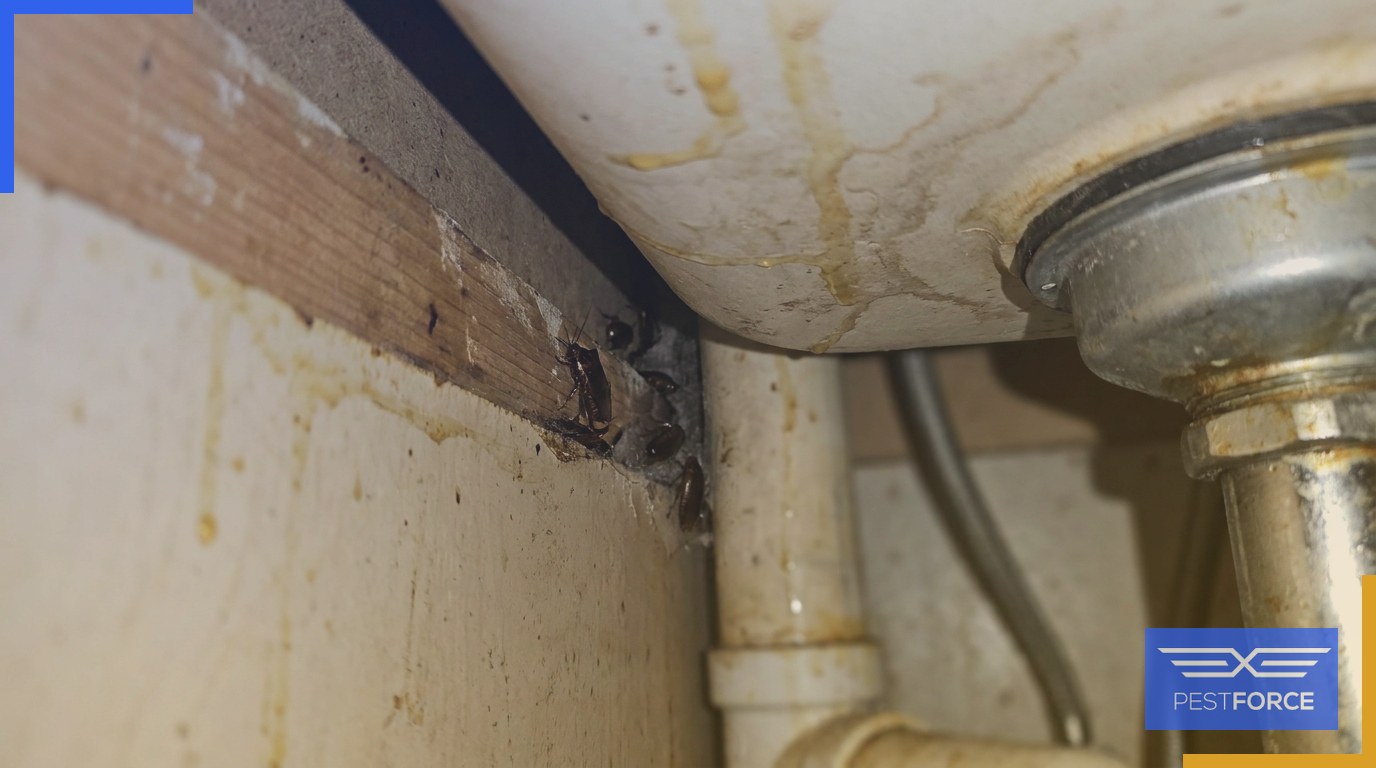
1. German cockroach. Adults measure 1/2 to 5/8 inch, tan with two dark stripes running down the pronotum behind the head. German cockroaches live in kitchens and bathrooms, and the German cockroach has an indoor-only reproductive cycle that makes infestations self-sustaining without treatment. One missed egg case restarts the whole problem.
2. American cockroach. The largest of the four at 1.5 to 2 inches, reddish-brown with a pale figure-8 marking on the pronotum. American cockroaches originate in sewers and crawl spaces and enter homes during warm weather.
3. Smoky Brown cockroach. Uniform dark mahogany, 1 to 1.5 inches, with no pale markings. Smoky Brown cockroaches are especially prevalent in Atlanta’s tree-canopy suburbs and along Georgia’s coast. Homeowners commonly mistake them for American cockroaches, but Smoky Browns are uniformly dark and more likely to enter through gaps around rooflines, vents, and upper stories.
4. Asian cockroach. Nearly identical in appearance to the German cockroach, but attracted to light and a strong flier. That behavioral difference changes the treatment approach entirely, since Asian cockroaches live outdoors and fly toward porch lights and lit windows rather than breeding in kitchens.
Behavior separates look-alikes faster than a ruler does. The guide to nocturnal vs. daytime pests in Georgia explains how activity timing narrows a species ID, and identifying roach types by region covers which species dominate in different parts of the state.
The costly mistake is treating all four the same way. German cockroaches demand targeted interior baiting because they breed entirely indoors. American and Smoky Brown cockroaches originate outdoors and enter seasonally, so exclusion and exterior treatment do the heavy lifting. Same bug family, three different jobs.
How do you identify termites in a Georgia home, and how do you tell them apart from flying ants?
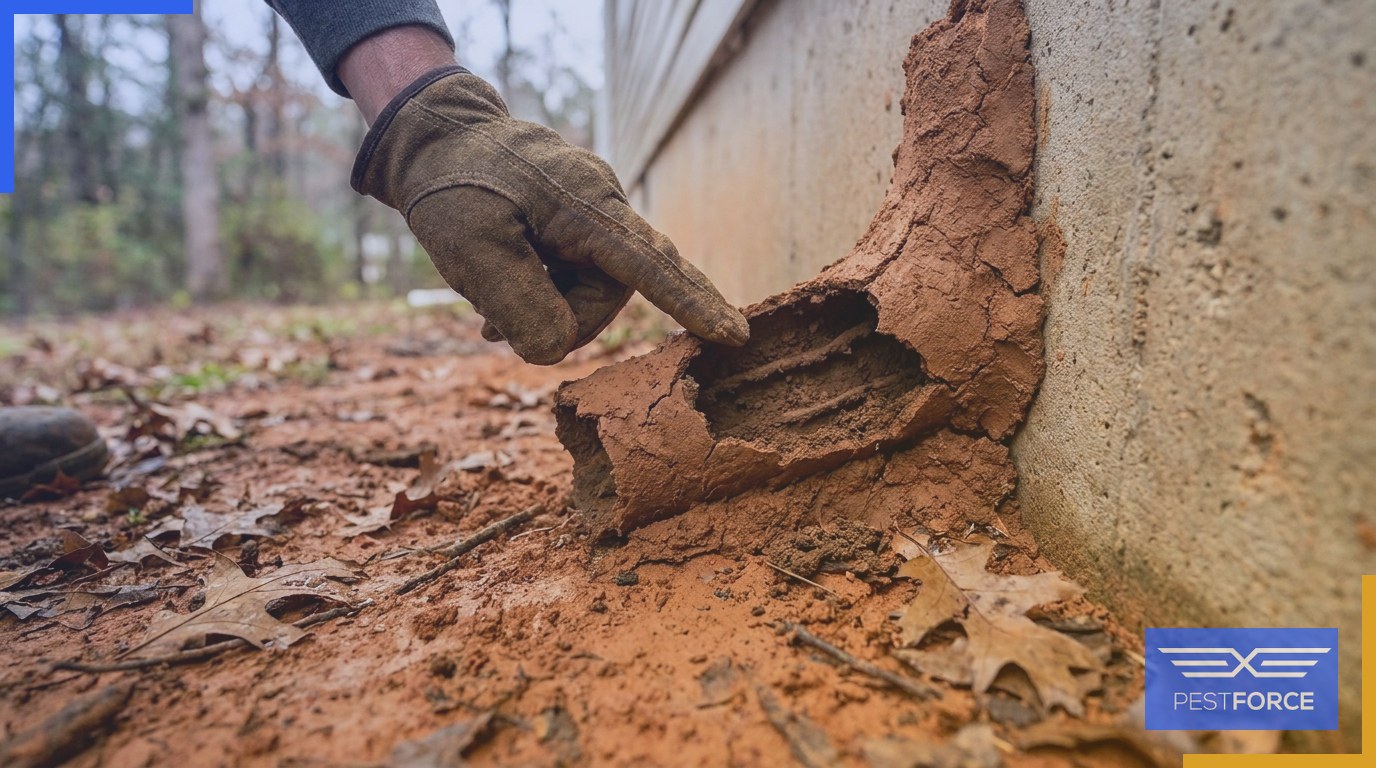
You identify termites in a Georgia home by checking for black swarmers with straight antennae, equal-length wings, and thick waists, plus pencil-thin mud tubes along foundations. Flying ants have elbowed antennae, unequal wings, and a pinched waist.
1. Check the workers. Eastern subterranean termites are the most common termites in Georgia, and the workers are cream-colored, soft-bodied, and about 1/8 inch long. Workers stay hidden in soil and wood.
2. Compare the swarmers. Termite swarmers are commonly confused with flying ants; termites have straight antennae, equal-length wings, and thick waists, while ants have elbowed antennae and a pinched waist, according to HomeYou (2026). Several of the ant species found in Georgia also swarm in spring. The field guide to look-alike dangerous insects covers other winged look-alikes.
3. Look for mud tubes. Mud tubes on foundation walls, piers, or crawlspace walls are the most reliable non-swarmer evidence of subterranean termites. Beaver Maids describes the tunnels as pencil-thin runs of soil and saliva built as protected travel highways.
4. Tap the wood. Beaver Maids notes that a stud or floor joist producing a papery, hollow sound signals termite activity, and 10 or more winged insects near a window or light source in spring points to a colony inside the walls.
5. Mind the calendar. Georgia’s termite swarm season peaks February through April, earlier than most national references state. GeorgiaPestAuthority.com reports Eastern subterranean termites start swarming when soil temperatures at a 4-inch depth reach 68 to 70°F. Mild winters let Georgia colonies reach swarm maturity faster, so homeowners waiting for the April-to-May window in national resources miss the earliest, largest swarms.
Formosan subterranean termites (Coptotermes formosanus) are established in parts of coastal and southern Georgia and are significantly more aggressive than Eastern subterranean termites. Homeowners in Savannah, Brunswick, and coastal metro areas should treat any swarm as possibly Formosan.
Subterranean termites are a structurally destructive pest requiring professional treatment, not DIY management. Damage is silent and cumulative: active infestations can show no outward symptoms for years.
How Do You Identify Rodents Invading Georgia Homes, and Which Species Is It?
You identify rodents in Georgia homes by matching body size, coat color, droppings, and entry points to one of three species: the house mouse, the roof rat, or the Norway rat. Each species leaves distinct physical evidence and follows a predictable fall entry pattern.
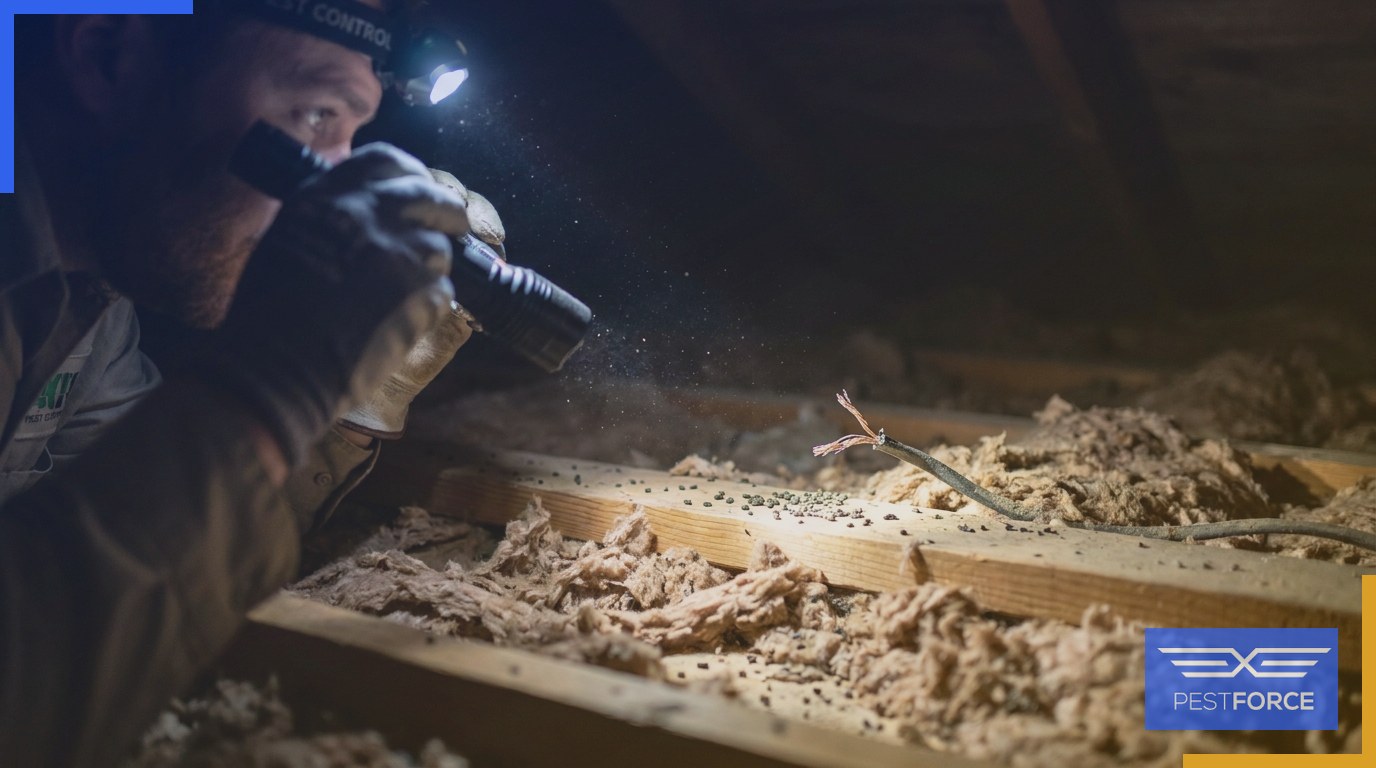
1. Check droppings and size for the house mouse. The house mouse measures 2.5 to 3.5 inches in body length with dusty gray fur, and it leaves small rod-shaped droppings about a quarter inch long. The house mouse is the most common home invader in Georgia. Mice enter through gaps as small as a dime, while rats use openings the size of a quarter.
2. Look overhead for the roof rat. The roof rat has a sleek black or dark brown coat, a 6 to 8 inch body, a pointed nose, and large ears. Roof rats climb, so they enter through rooflines, attic vents, and overhanging tree branches, which makes them common in older Georgia homes. Roof rats show up disproportionately in historic Georgia neighborhoods where mature tree canopy creates aerial access to rooflines.
3. Inspect the foundation for the Norway rat. The Norway rat is heavier, blunt-nosed, and brown-gray, and it burrows near foundations instead of climbing. Norway rats rarely reach upper stories the way roof rats do, and they turn up more often in commercial or waterfront areas.
4. Time the invasion. Georgia rodents seek warmth when temperatures drop below 50°F, and the entry surge runs from October through December. Timing narrows the suspect list.
5. Read the indirect evidence. Gnaw marks on wood or wiring, dark grease trails along baseboards, and scratching sounds in the walls after dark all confirm rodent activity. The Nocturnal vs. Daytime Pests guide explains why nighttime noise points to rodents rather than daytime intruders like squirrels. Georgia rodents feed and travel primarily at night.
Which spiders in Georgia homes are dangerous, and how do you identify them?
Only two spiders commonly found in Georgia homes carry medically significant venom: the black widow and the brown recluse. The black widow displays a red hourglass on a shiny black body, and the brown recluse displays a violin-shaped marking behind its eyes. Every other large spider in a Georgia home is harmless.
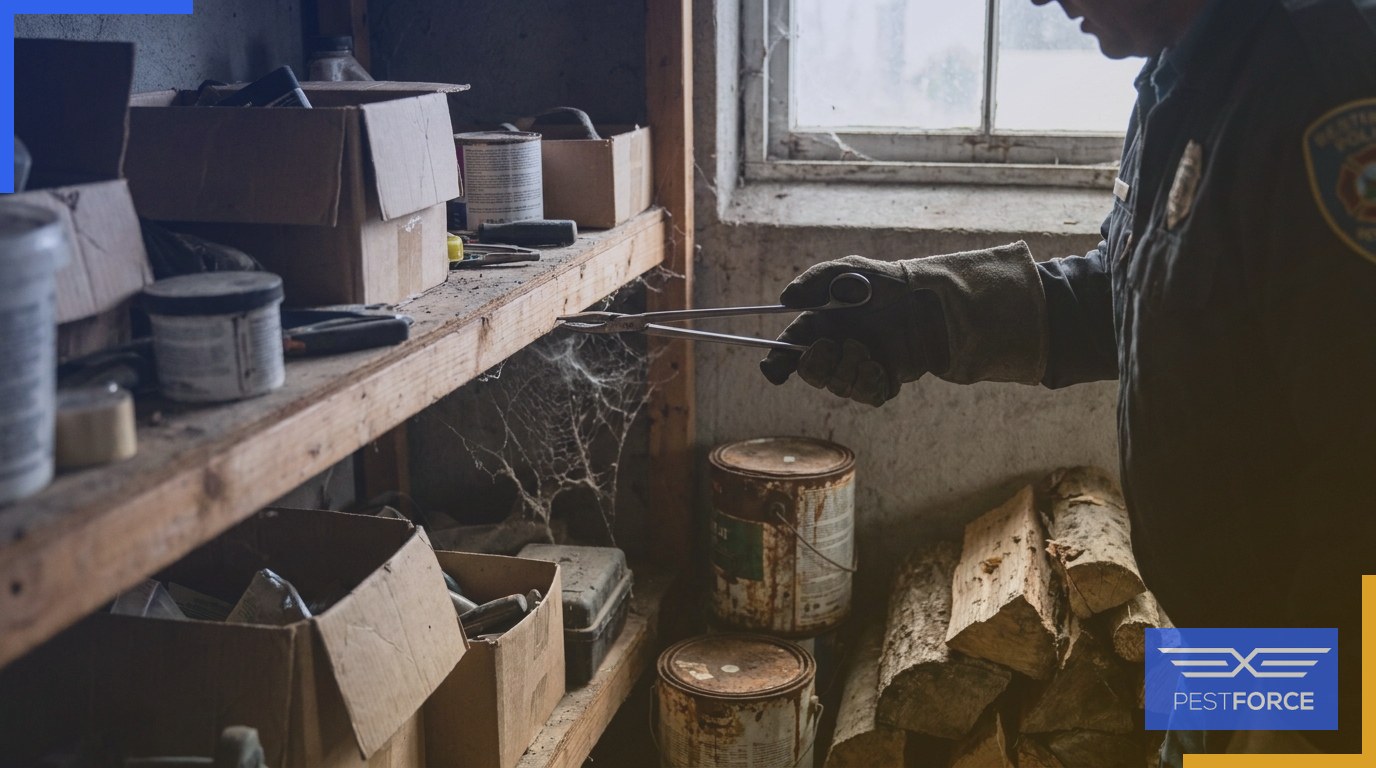
The black widow reaches a 1.5-inch leg span and shows a glossy black body with a red hourglass on the underside of the abdomen. Black widows favor garages, woodpiles, and undisturbed storage areas. Black widow venom is neurotoxic, and a black widow bite warrants prompt medical attention. The Georgia Pest Identification Guide 2026 documents the hourglass shape and irregular web patterns that confirm black widow activity around a structure.
The brown recluse is tan to dark brown with a 1/4 to 3/4 inch body and a violin-shaped marking on the cephalothorax. Brown recluse spiders do live in Georgia, but Georgia sits on the southeastern margin of the brown recluse’s native range, according to a 2009 Journal of Medical Entomology study. UGA’s College of Agricultural and Environmental Sciences reports that researchers confirmed only 19 brown recluse spiders statewide over a six-year period, most in northwest Georgia. Most spider bite reports Georgia residents attribute to the brown recluse actually come from other species.
The usual suspect is the Southern house spider (Kukulcania hibernalis), the most commonly misidentified brown recluse in Georgia. Southern house spiders are dark brown and similar in size, but Southern house spiders lack the violin marking and their bite is harmless. The misidentification drives unnecessary anxiety and misdirected treatment.
The wolf spider is large, hairy, and fast, and a wolf spider sprinting across the garage floor has scared more Georgians than any black widow ever bit. Wolf spiders are not medically dangerous. Wolf spiders are one of several intimidating but harmless species found in Georgia homes.
How do you identify a bed bug infestation in a Georgia home?
You identify a bed bug infestation by finding physical evidence: live apple-seed-shaped adults, translucent nymphs, rust-colored fecal stains, shed exoskeletons, and a sweet musty odor near sleeping areas. Bite marks alone cannot confirm bed bugs because reactions vary widely between individuals.
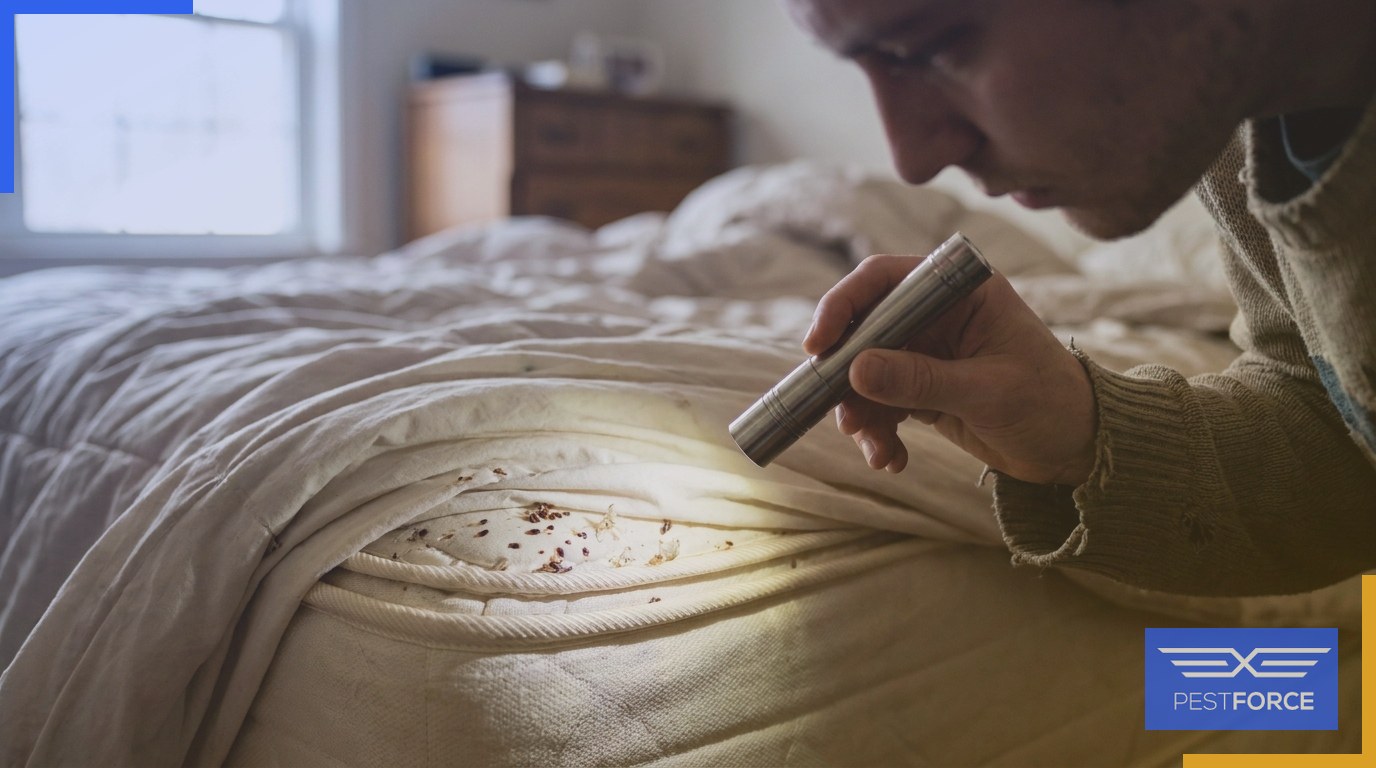
1. Inspect the harborage sites. Adult bed bugs measure about 4 to 5 millimeters, resemble flat apple seeds, and appear mahogany-brown, turning red after a blood meal. Bed bugs hide in mattress seams, tufts, and box spring joints, so strip the bed and check those spots first. Nymphs are translucent to pale yellow and so small that most people overlook them without magnification.
2. Search for indirect evidence. Bed bugs leave indirect evidence, including blood spots, shed skins, and fecal staining, that is more reliably diagnostic than bite marks alone. A sweet musty odor in a heavily infested room points the same way. Some bitten people show no marks at all, so only a physical specimen or a professional inspection of harborage sites confirms an infestation.
3. Check the introduction routes. Georgia’s climate does not suppress bed bugs; they stay active indoors all year. Hotel stays, secondhand furniture, and multi-unit housing introduce most Georgia infestations, which keeps bed bugs among the most common household pests in the state.
Knowing how to identify a pest infestation early keeps a few hitchhikers from spreading through every bedroom, and Pest Infestations vs. Occasional Invaders explains the difference between a one-off intruder and a breeding population.
What other common pests should Georgia homeowners know how to identify?
Georgia homeowners should know how to identify fire ants, Asian tiger mosquitoes, silverfish, and brown marmorated stink bugs. Fire ants build dome-shaped mounds, tiger mosquitoes bite in daylight, silverfish signal indoor humidity, and stink bugs enter homes each fall.
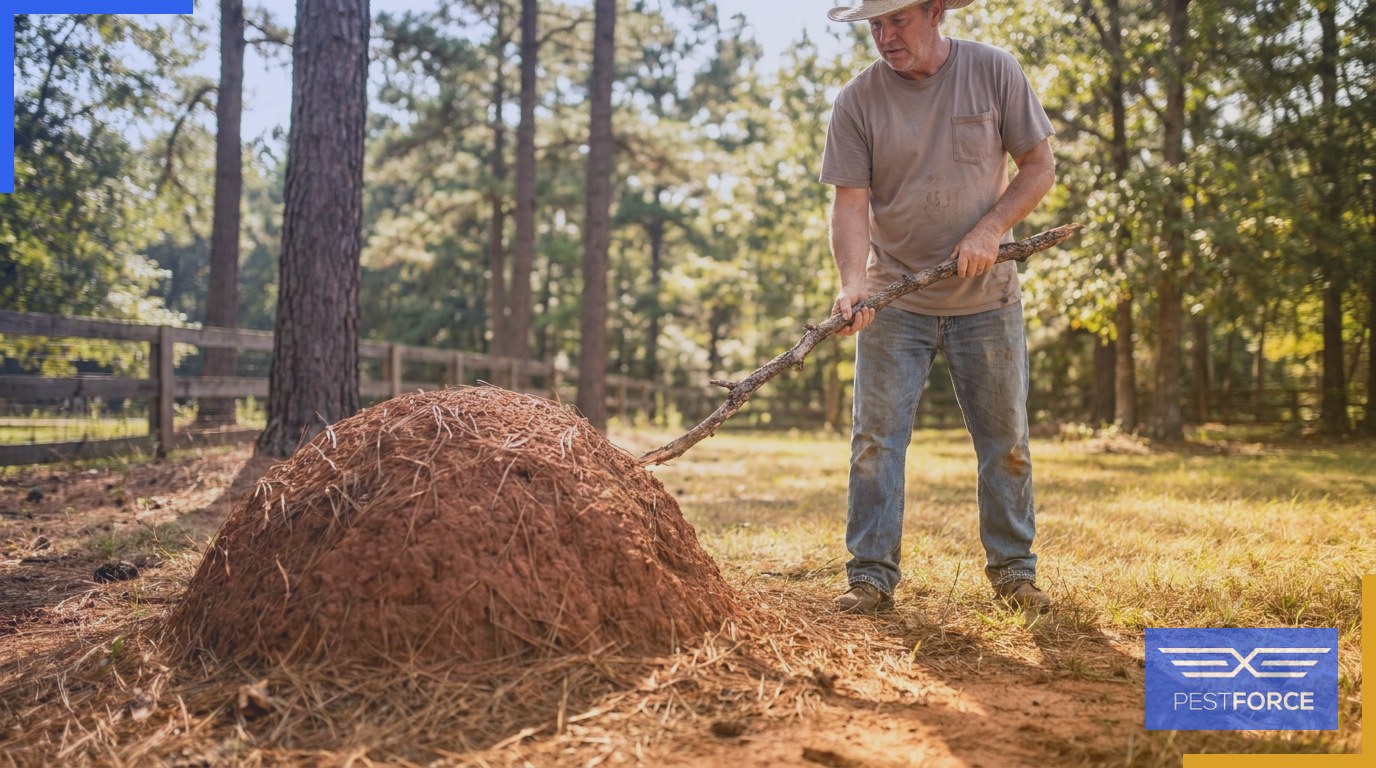
The fire ant (Solenopsis invicta) is reddish-brown and measures 1/8 to 1/4 inch long. Homeowners identify fire ants most reliably by their dome-shaped mounds, which show no visible entry hole on top. The smooth mound top is the tell. Fire ant stings produce burning pustules, and sensitive individuals face an anaphylaxis risk. Georgia’s heat and humidity, a pattern detailed in How Georgia’s Climate Creates Ideal Conditions for Pest Infestations, keep fire ant colonies active across most of the state.
The Asian tiger mosquito (Aedes albopictus) is Georgia’s most aggressive daytime biter, identified by black-and-white striped legs and a small body, with peak season running April through October. Aedes albopictus can transmit dengue and chikungunya viruses, while Culex mosquitoes spread West Nile virus in Georgia. Culex species bite at dusk and dawn, so a homeowner bitten in full daylight is almost certainly dealing with tiger mosquitoes. The 2026 pest identification guide with photos shows both groups side by side.
Silverfish are carrot-shaped, silver-gray, about 3/4 inch long, and fast-moving. Silverfish hide in humid areas such as bathrooms and crawl spaces, and they damage paper, glue, and fabric.
The brown marmorated stink bug is shield-shaped, mottled brown, and roughly 5/8 inch long. Stink bugs overwinter indoors, entering Georgia homes in fall through gaps around windows and doors. They are a nuisance, not a destructive pest.
Centipedes, earwigs, and pill bugs enter Georgia homes during heavy rain events seeking dry refuge. These occasional invaders are not infestations, and they typically self-resolve while signaling a moisture problem rather than a pest problem that needs treatment.
The split between home-damaging pests vs. nuisance pests runs straight through this group: silverfish and fire ants cause real harm, while stink bugs and pill bugs mostly annoy.
Sources
- WeatherSTEM, “Köppen Climate Classification | Georgia Climate” (2017)
- GeorgiaPestAuthority.com, “Seasonal Pest Activity Patterns in Georgia”
- Beaver Maids, “What Do Termites Look Like in Georgia? A Visual Identification Guide”
- HomeYou, “Termite Control in Atlanta, GA – Costs 07 / 2026 – homeyou” (2026)