
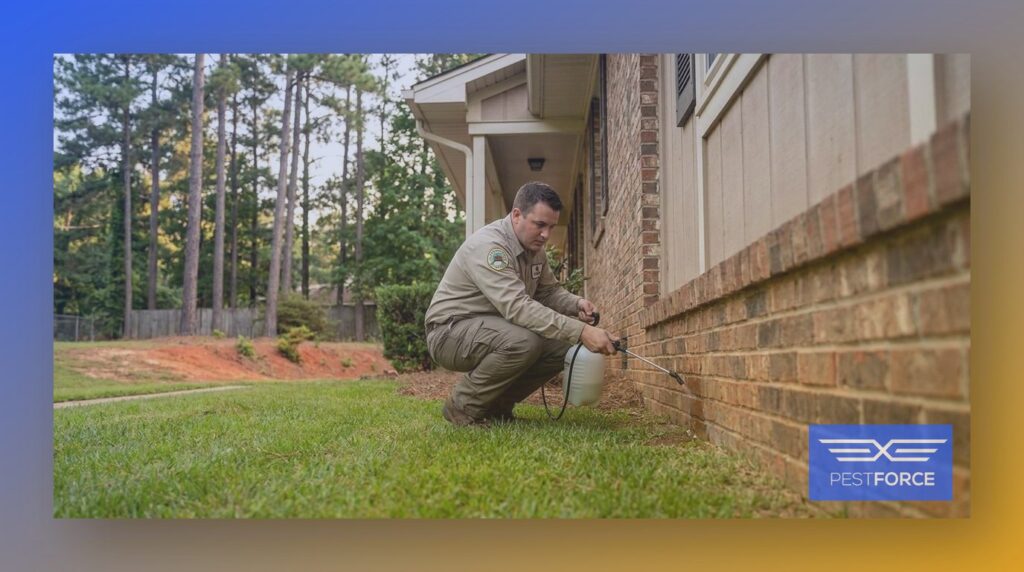
Georgia’s humid subtropical climate, red-clay soil, and dense tree canopy create year-round pest pressure that exceeds most other U.S. states, making professional pest control a continuous necessity for homeowners and businesses across Monroe, Loganville, Winder, and surrounding communities. Pest Force combines deep knowledge of Georgia-specific conditions with proven treatment methods to protect residential and commercial properties from termites, mosquitoes, rodents, and other destructive pests.
Why is Georgia one of the most pest-pressured states in the U.S.?
Georgia ranks among the most pest-pressured states because Georgia’s Köppen Cfa humid subtropical climate, moisture-holding red clay soil, dense tree canopy, and crawl-space construction give insects and rodents year-round survival conditions that colder states’ winters routinely destroy.
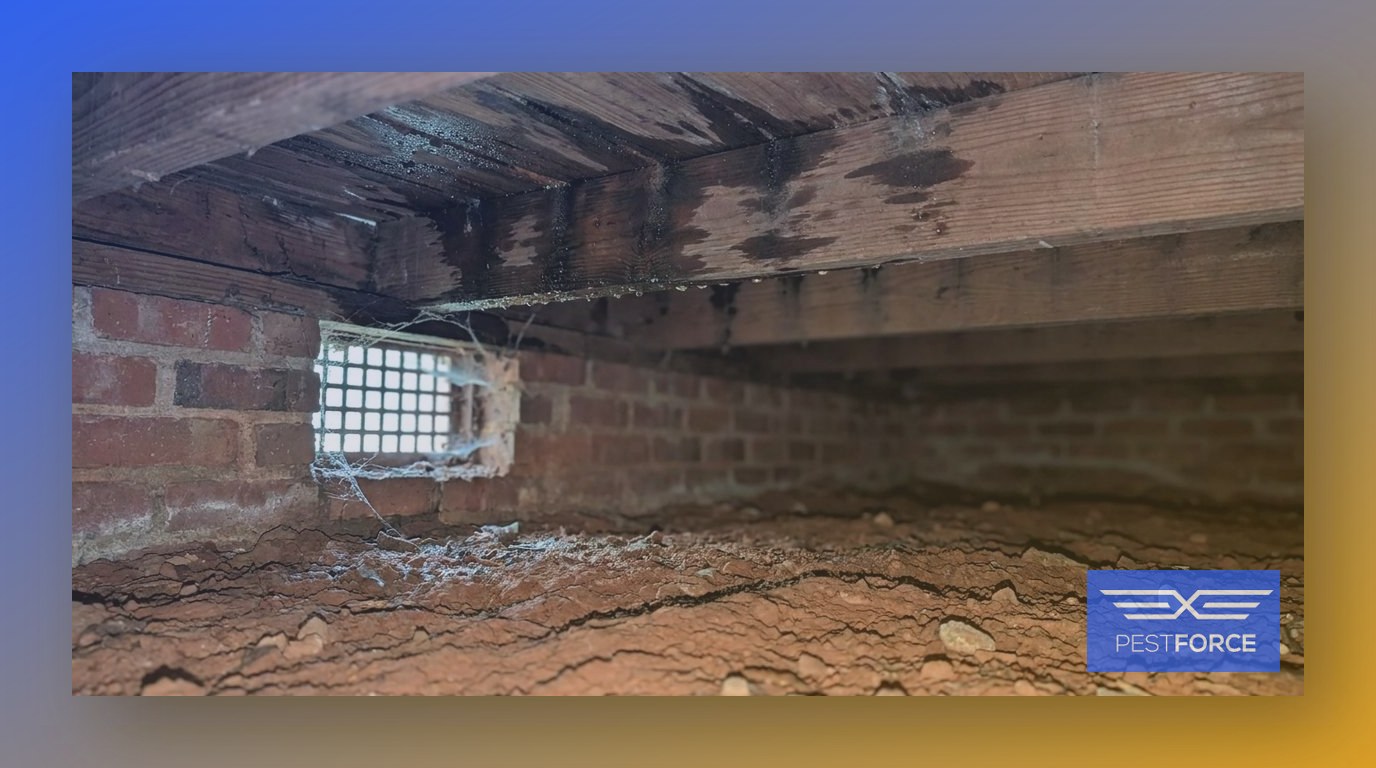
In the Köppen system, the Cfa label denotes a humid subtropical climate: hot summers, precipitation that falls across all twelve months, and coldest months that stay mild. Georgia’s Köppen Cfa classification causes mild winters that fail to kill overwintering colonies, and Georgia’s humid subtropical climate causes year-round pest activity that never undergoes the hard winter die-off northern U.S. states rely on to reset insect and rodent numbers. Georgia Pest Authority reports statewide relative humidity averaging between 70 and 75 percent, which keeps soil, leaf litter, and structural wood damp enough for pests to stay active between storms.
The hardiness data makes the boundary condition concrete. According to Gardenia.net’s 2025 mapping, Georgia spans USDA plant hardiness zones 6b through 9a, and much of the state now charts roughly a half-zone warmer than older maps. In Georgia’s southern third, winter temperatures never deliver a killing frost, so German cockroaches, fire ants, and subterranean termites maintain active colonies every month of the year with no natural population reset. No hard freeze means no seasonal die-off. That single fact explains why Georgia’s pest pressure runs structurally higher than consumer intuition expects.
Georgia’s Piedmont red clay holds water long after storms pass, and subterranean termites depend on that retained soil moisture to survive. Saturated clay sustains termite and ant colonies within foraging range of foundations in every season. Above ground, Georgia’s dense hardwood and pine canopy drops leaf litter that blankets the soil beside structures, supplying harborage and food for cockroaches, ants, and rodents while shading the ground so moisture evaporates slowly.
Georgia’s construction patterns share three characteristics that create direct pest entry pathways not found in slab-dominant markets: vented crawl spaces that trap humid air and shelter rodents, brick veneer walls whose weep gaps admit insects, and wood framing near soil that gives termites a short bridge from ground to structure.
The North Georgia mountains fall around USDA zones 6b to 7a, with longer, cooler winters and shorter frost-free seasons, so North Georgia’s mountains keep a partial winter reset the rest of Georgia lacks. The coastal plain stays warmest longest and supports Georgia’s longest termite and cockroach season. The Piedmont region, where Monroe, Loganville, and Winder sit, combines the worst of both Georgia climate zones: warm enough for year-round termite activity, yet cold enough each fall to drive rodents and stink bugs indoors, producing a dual-season pressure spike that single-season homeowners underestimate. Because these pressures overlap rather than alternate, comprehensive household pest solutions for Georgia properties are built around continuous protection instead of one-time treatments.
Which pests are most common and most damaging in Georgia homes and businesses?
Subterranean termites inflict the costliest structural damage per infestation of any Georgia pest, while American and German cockroaches, fire ants, rodents, mosquitoes, stinging insects, and bed bugs complete Georgia’s most consequential pest threats for homes and businesses, each following a distinct infestation pattern.
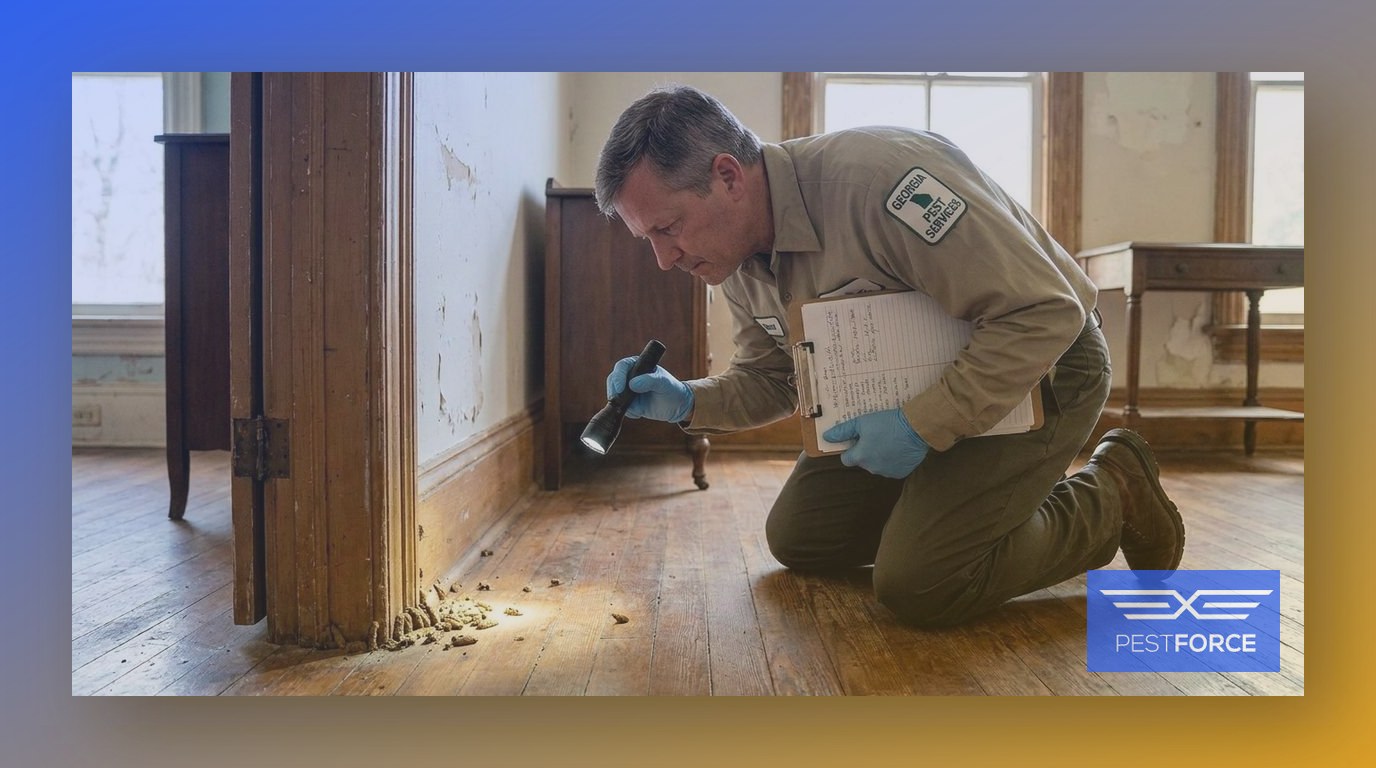
Subterranean termites account for roughly 80% of all termite damage nationwide, according to PestControlPricing.com in 2026, and Americans spend an estimated $5 billion annually on termite control and repairs, Orkin reports. The termite risks for Georgia homeowners include Formosan colonies that can damage a home extensively in less than six months in warm, moist conditions, according to Orkin.
Cockroaches split into two distinct problems. American cockroaches enter buildings from exterior harborage, whereas German cockroaches establish populations indoors near food and water. American cockroach infestations also create direct health risks: cockroach saliva, droppings, and shed skins carry allergens that trigger asthma attacks, and cockroaches transport bacteria such as Salmonella and E. coli from drains and sewers onto food-preparation surfaces. German cockroach infestations in Georgia restaurants and multi-unit housing resist single-treatment approaches because egg cases glue-bonded to surfaces survive most spray applications, so technicians schedule follow-up treatments against the three-week hatch cycle.
Fire ants colonize Georgia lawns, intrude into structures, and deliver stings that pose a genuine hazard to children and pets. Fire ant colonies also resist elimination because colonies frequently shelter multiple queens, bud off satellite colonies when a mound is disturbed, and extend tunnel networks deep below the visible mound, so treatments that kill only surface workers leave the colony intact. Mice and rats pressure Georgia properties year-round, squeezing through gaps as small as a dime.
Mosquitoes and stinging insects peak seasonally but carry medical significance. Axios Atlanta reported in 2025 that the CDC counted 53 Georgia cases of West Nile virus in humans in 2024, up from 19 confirmed infections in 2023. Georgia mosquitoes also transmit eastern equine encephalitis, a frequently fatal infection that causes brain inflammation, coma, and lasting neurological damage in survivors, with Georgia cases concentrated near the wooded freshwater swamps of south Georgia.
Bed bugs spread through travel rather than climate, so rural and urban Georgia properties face equal risk. The task of identifying household pests across Georgia trips up many homeowners on spiders: the brown recluse lives in Georgia but remains far less common than reports suggest, because most reported sightings actually involve the harmless native Southern house spider, and accurate identification before treatment matters.
What makes Georgia pest control different from pest control in other states?
Georgia pest control differs from pest control in most other states because the state’s humid subtropical climate, crawl-space construction, and year-round pest overlap force operators to run multi-pest, season-long programs instead of single-target treatments.
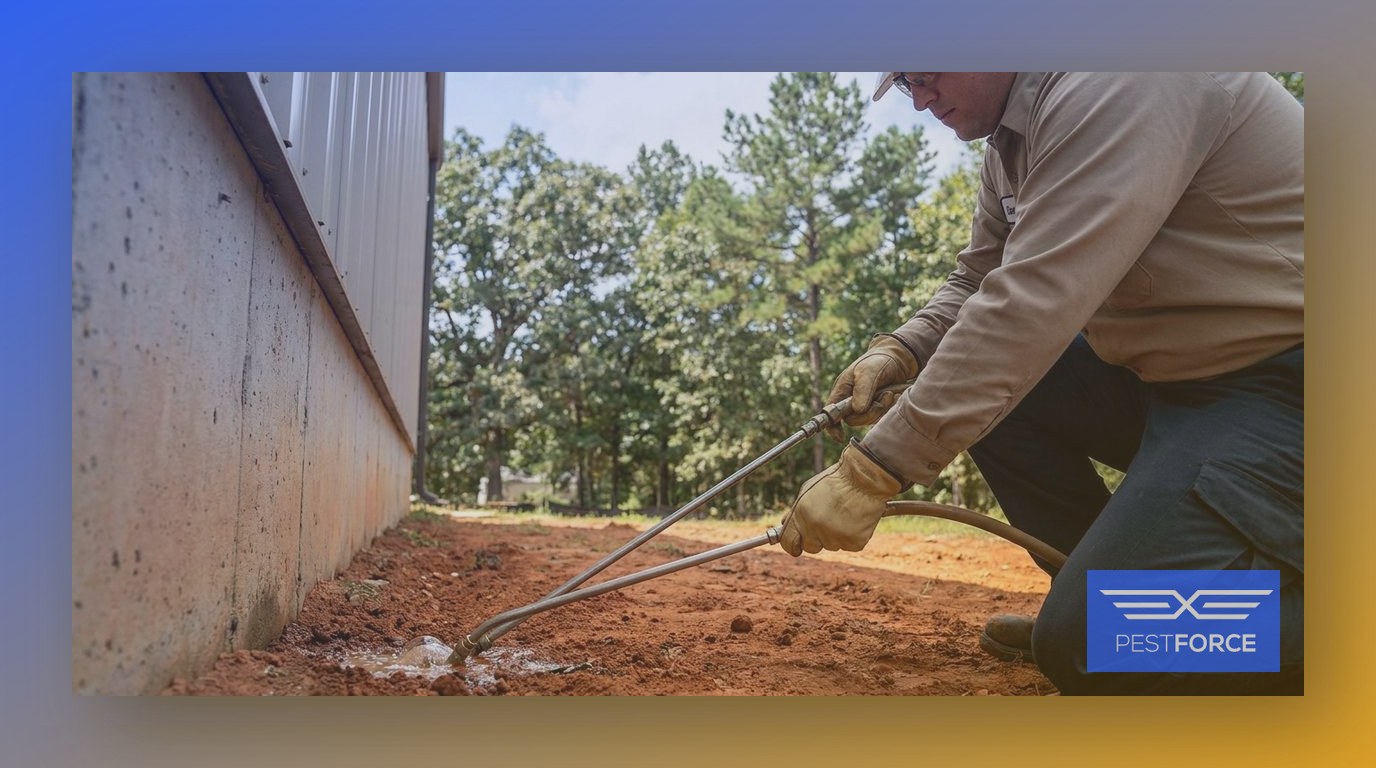
Subterranean termites are the single most structurally destructive pest in Georgia, exploiting the state’s moist red-clay soil and pier-and-beam construction. Georgia’s soils range from clay-heavy in the Piedmont region to sandy in the Coastal Plain, according to Planta Greenhouses (2024), and each zone supports termites, roaches, fire ants, and mosquitoes concurrently. A homeowner who treats only one species still carries exposure from the other three, so Georgia pest control programs must address multiple species at once.
Crawl-space construction separates Georgia from slab-on-grade states. Anthem Pest Control (2026) reports that crawl-space homes often require more extensive barrier work and moisture management than slab-on-grade foundations during termite treatment. The humid void beneath a pier-and-beam home also shelters rodents, so rodent control in Georgia relies on comprehensive rodent exclusion techniques that seal foundation vents and utility penetrations. Active Pest Control, a pest control company serving Georgia (2026), reports that Georgia homeowners often face termite repair bills double or triple the national average, partly because termite damage co-exists with fungal wood rot requiring moisture remediation.
The belief that one general spray treats every pest equally fails in Georgia, because subterranean termites, rodents, and bed bugs each require completely separate protocols. Homeowners who assume a single treatment covers all pests discover the error only after termites or rodents cause significant damage. Integrated pest management (IPM) defines the professional standard for pest control: IPM replaces blanket spraying with a cycle of inspection, exclusion, sanitation, and targeted treatment. Georgia’s year-round moisture makes the IPM inspection step a practical necessity rather than an optional upgrade, because damp crawl spaces accelerate termite damage and fungal rot between scheduled treatments.
Regulation adds another difference: the Georgia Department of Agriculture licenses pest control operators, and homeowners should verify that license before hiring. Detection practices differ as well. Dense vegetation and inaccessible crawl spaces make visual-only inspections unreliable for bed bugs and termites, so Georgia operators deploy K9 detection dogs that locate infestations human inspectors miss.
When Should Georgia Homeowners and Businesses Schedule Pest Control Treatments?
Georgia pest seasons have four distinct treatment windows tied to temperature thresholds that govern pest reproduction and foraging behavior. Homes and businesses schedule spring termite and fire ant treatments, summer interior perimeter service, fall rodent exclusion, and winter preventive termite work.
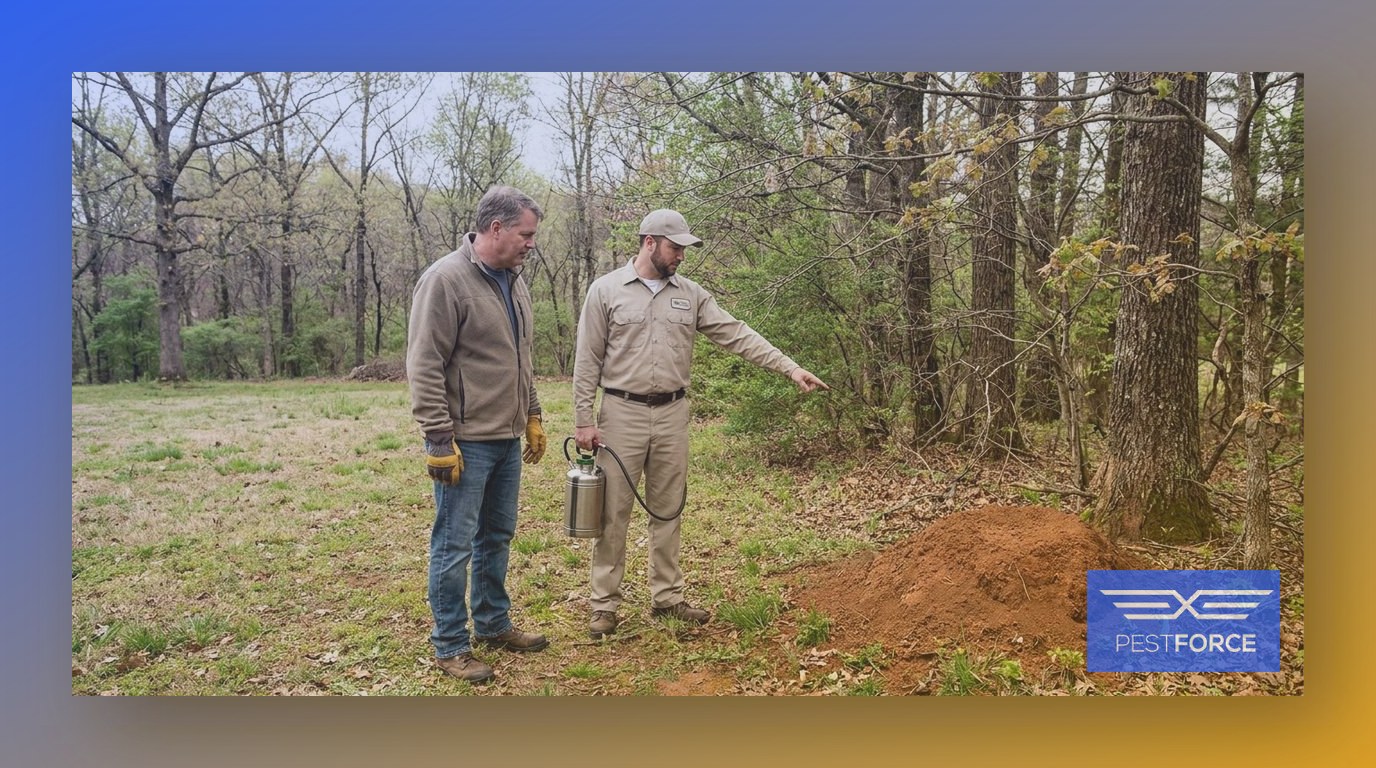
Spring, from February through April, is the highest-stakes treatment window in Georgia because termite swarmers emerge and fire ant queens begin founding colonies. Soil temperature crossing 55°F triggers the spring surge, typically in mid-March in north Georgia and late February in the coastal plain, rather than the calendar date. According to the Georgia Pest Authority, most insect species become active when soil or ambient temperatures consistently exceed 50°F, so treatment timing must track soil temperature data, not the calendar, to intercept queens and swarmers before colony establishment.
Summer, from May through August, produces peak mosquito, roach, and ant pressure, and interior perimeter treatments become most critical during these months. Recurring service maintains the protective barrier as rainfall and humidity break down exterior products.
Fall, from September through November, drives rodents and stink bugs toward structure entry as both pests seek warmth, making exclusion and baiting the priority before winter harborage begins.
Winter, from December through February, reduces pest activity without eliminating that activity entirely. Dry soil makes winter the ideal season for preventive termite treatments and crawl space inspections.
Turf and yard pest control, covering fire ants, armyworms, and mosquito larvicide treatment, runs as a distinct program from structural pest control. Pest Force schedules both programs around seasonal pest pressure across Georgia and delivers yard treatments through the company’s separate turf care service.
Should Georgia homeowners hire a professional pest control company or use DIY methods?
Most Georgia homeowners get better results from a licensed professional pest control company. Professionals eliminate colonies, nests, and entry points; DIY products suppress only visible pests, and recurring professional programs typically cost less over three years than repeated DIY purchases.
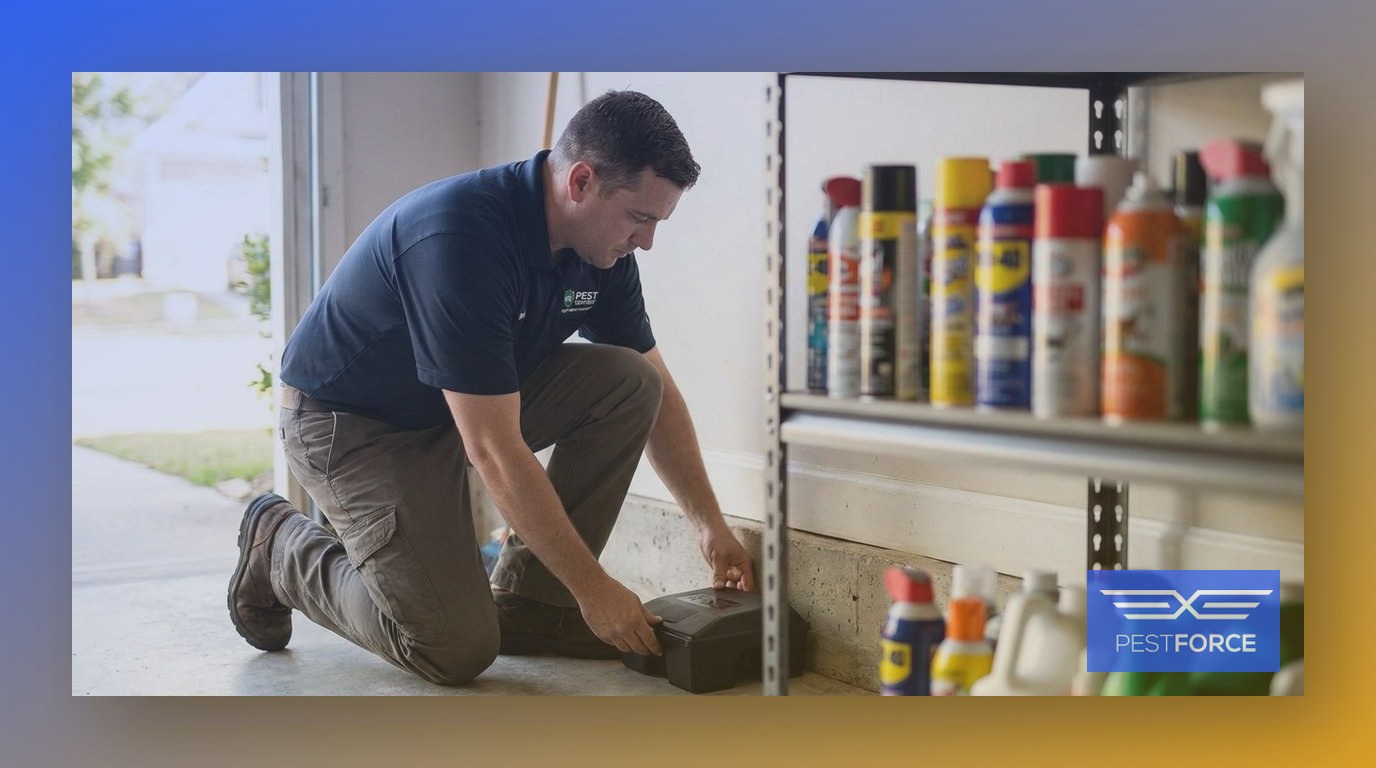
Hardware stores stock a full range of pest control products, but DIY pest control products apply to surface-level suppression only, not colony elimination or structural exclusion. A spray kills the ants on the counter; the colony inside the wall survives and sends new foragers within days. The predictable reinfestation cycle is the pattern most Georgia homeowners experience with store-bought treatments.
Some infestations exceed DIY reach. Termites, bed bugs, and rodents require licensed applicators, restricted-use products, and structural knowledge of Georgia construction, including crawlspaces and slab foundations. The financial stakes justify professional treatment: Smart Solutions Pest Control (2026) reports Georgia companies charge $4 to $16 per linear foot for termite treatment, while Active Pest Control (2026) estimates crawlspace repair from termite damage in Georgia at $2,000 to $5,000. Kyko Pest Prevention (2020) notes that most home insurance policies do not cover termite treatment or termite damage.
Professional pest control applies to both preventive and reactive treatment strategies, with preventive recurring programs being more cost-effective for Georgia homeowners. Recurring quarterly or bi-monthly service spreads cost predictably across a three-year horizon, while episodic DIY spending repeats with every reinfestation. PestControlPricing.com (2026) reports termite bonds cost $200 to $500 per year for renewal, a small fraction of repair bills under Georgia’s heavy termite pressure.
A guarantee removes the remaining risk. Pest Force is a family-owned company that Georgia homeowners know as Georgia’s trusted family pest company. Pest Force provides residential and commercial pest control in Monroe, Loganville, Winder, and surrounding Georgia communities. Pest Force backs its service with a written 100% Happy or You Don’t Pay guarantee. Pest Force meets the standard homeowners apply when selecting a qualified Georgia exterminator: state licensing and a written service guarantee.
Sources
- Gardenia.net, “Georgia Planting Zones – Growing Zones Guide” (2025)
- Georgia Pest Authority, “Seasonal Pest Activity Patterns in Georgia”
- Planta Greenhouses, “Georgia Planting Zones” (2024)
- Orkin, “Termite Damage Statistics & Costs”
- PestControlPricing.com, “Subterranean Termite Treatment Cost: 2026 Pricing Guide” (2026)
- Active Pest Control, “How Much Does Termite Damage Cost To Repair In Georgia?” (2026)
- Kyko Pest Prevention, “Here Is the Real Cost of a Termite Infestation” (2020)
- Anthem Pest Control, “Termite Control Cost Loganville, GA (2025 Pricing Guide)” (2026)
- Smart Solutions Pest Control, “Termite Treatment Cost in Georgia: What Affects the Price” (2026)
- Axios Atlanta, “Mapped: West Nile Virus activity in Georgia” (2025)